By Louis ‘Barok‘ C. Biraogo
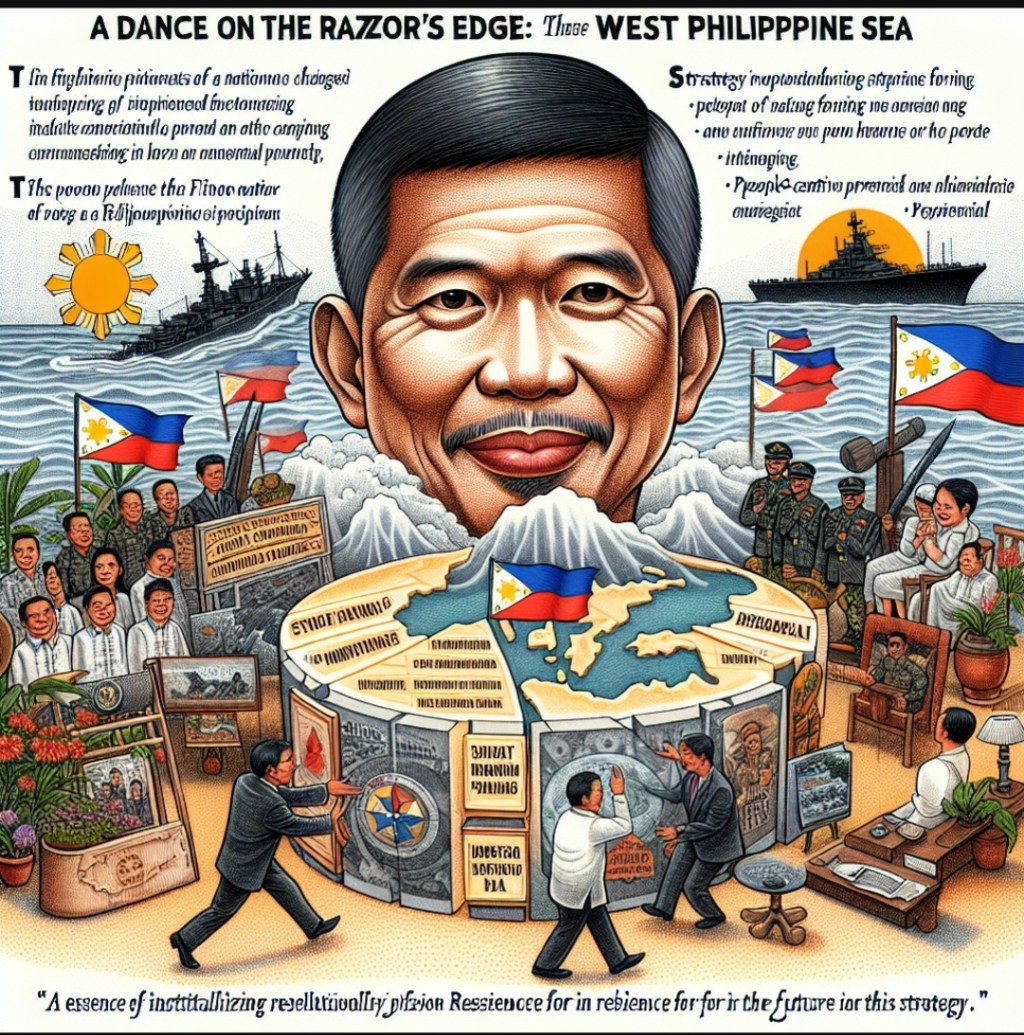
In the shadow of China’s relentless advance, the Philippines stands at a perilous crossroads. President Ferdinand Marcos Jr. has adopted a bold, multifaceted strategy to defend the West Philippine Sea, but the future is fraught with uncertainties. As we look into the abyss of potential conflict and political upheaval, Manila must craft a strategy that safeguards its sovereignty while navigating the treacherous waters of international diplomacy.
China’s ambitions in the South China Sea have transformed the region into a simmering cauldron of tension. With the construction of artificial islands and the aggressive deployment of naval forces, Beijing has cast a long shadow over the waters that rightfully belong to the Philippines. President Marcos Jr. has responded with a two-pronged approach: a people-centric strategy and robust defense-oriented policies. But as the political winds shift, the question remains—can this strategy endure?
A PEOPLE-CENTRIC APPROACH: RALLYING THE THE NATION
Marcos Jr. has deftly framed the West Philippine Sea issue through a people-centric lens, galvanizing national support. The Maritime Zones Act and the Comprehensive Archipelagic Defence Concept aim to safeguard the nation’s resources and ensure that every Filipino can reap the benefits of their waters. These efforts have struck a chord with the public, creating a unified front against China’s transgressions.
Transparency initiatives have further bolstered this approach. By bringing journalists aboard Philippine Coast Guard vessels, Manila has exposed the aggressions of the Chinese Coast Guard, rallying both national and international support. The government’s Livelihood Activities to Enhance Fisheries Yields and Economic Gains from the West Philippine Sea (LAYAG-WPS) project empowers fishermen to assert their rights, transforming them into frontline defenders of sovereignty.
Yet, this approach is not without its challenges. The specter of a Duterte presidency in 2028 looms large. Sara Duterte, daughter of former President Rodrigo Duterte, has shown a troubling ambivalence towards China’s provocations. Her potential ascension to power threatens to unravel the carefully woven tapestry of national unity and resolve. The Marcos Jr. administration must, therefore, cement these people-centric policies, making them resilient to political changes.
A DEFENSE-ORIENTED STRATEGY: STRENGTHENING EXTERNAL TIES
Marcos Jr.’s administration has also sought to enhance the Philippines’ defense capabilities through strategic partnerships. By deepening ties with the United States, Japan, and other like-minded nations, Manila has positioned itself at the nexus of a powerful network aimed at maintaining a free and open Indo-Pacific. This external balancing act includes increasing U.S. rotational bases, negotiating reciprocal access agreements with Japan, and establishing maritime security subcommittees with the European Union.
Economic resilience is another cornerstone of this strategy. The Luzon Economic Corridor, a joint venture with the U.S. and Japan, aims to reduce dependency on Chinese imports by diversifying trade routes and strengthening local industries. Initiatives like the revitalization of Subic Bay’s shipbuilding industry further anchor the Philippines in a broader economic and security framework that can withstand Chinese coercion.
Yet, as with the people-centric approach, this defense-oriented strategy faces potential disruptions. The fluctuating dynamics of U.S. politics, exemplified by a possible return of Donald Trump, could complicate Manila’s efforts to maintain consistent support from its most powerful ally. Additionally, the internal challenges of sustaining a robust defense budget in the face of economic constraints cannot be overlooked.
A STRATEGY FOR THE FUTURE: INSTITUTIONALIZING RESILIENCE
To protect its sovereignty and avoid war with China, the Philippines must institutionalize its current strategies, ensuring they are not vulnerable to the whims of political change. This means embedding the people-centric and defense-oriented approaches into the fabric of national policy, making them resilient to electoral outcomes.
First, Manila should create bipartisan support for its West Philippine Sea strategy. By engaging all political factions and securing broad legislative backing, the government can ensure that the policies endure beyond the current administration. Educational campaigns and public consultations can further entrench these policies in the national consciousness, making them a permanent fixture of Filipino identity.
Second, the Philippines must formalize its external partnerships through binding agreements that outlast any single administration. Expanding the scope of defense treaties and economic partnerships will provide a sturdy framework that can weather political storms. Regular joint military exercises and economic summits with allies can reinforce these ties, demonstrating a united front against any external threats.
Finally, Manila should invest in long-term economic diversification. By reducing reliance on Chinese imports and expanding its trade network, the Philippines can diminish Beijing’s leverage. Initiatives like the Luzon Economic Corridor must be expedited and expanded, creating alternative pathways for economic growth and security.
CONCLUSION: NAVIGATING THE ABYSS
The Philippines’ journey in the West Philippine Sea is a dance on the razor’s edge, fraught with peril but also rich with potential. By institutionalizing a people-centric and defense-oriented strategy, Manila can navigate the treacherous waters of international diplomacy and secure its sovereignty without resorting to war. The specter of political change looms, but with a steadfast commitment to resilience and continuity, the Philippines can emerge stronger, a beacon of stability in an uncertain world.
In the end, the fate of the West Philippine Sea may rest not in the hands of any single leader, but in the enduring spirit of the Filipino people and their unwavering resolve to defend what is rightfully theirs.
(This editorial draws on insights from Don McLain Gill’s article, “A Nuanced Look at Manila’s Contemporary West Philippine Sea Strategy,” published by the Observer Research Foundation in May 2024.)

- “Forthwith” to Farce: How the Senate is Killing Impeachment—And Why Enrile’s Right (Even If You Can’t Trust Him)

- “HINDI AKO NAG-RESIGN!”

- “I’m calling you from my new Globe SIM. Send load!”

- “Mahiya Naman Kayo!” Marcos’ Anti-Corruption Vow Faces a Flood of Doubt

- “Meow, I’m calling you from my new Globe SIM!”





 KWEBA ni BAROK
Leave a comment