By Louis ‘Barok’ C. Biraogo
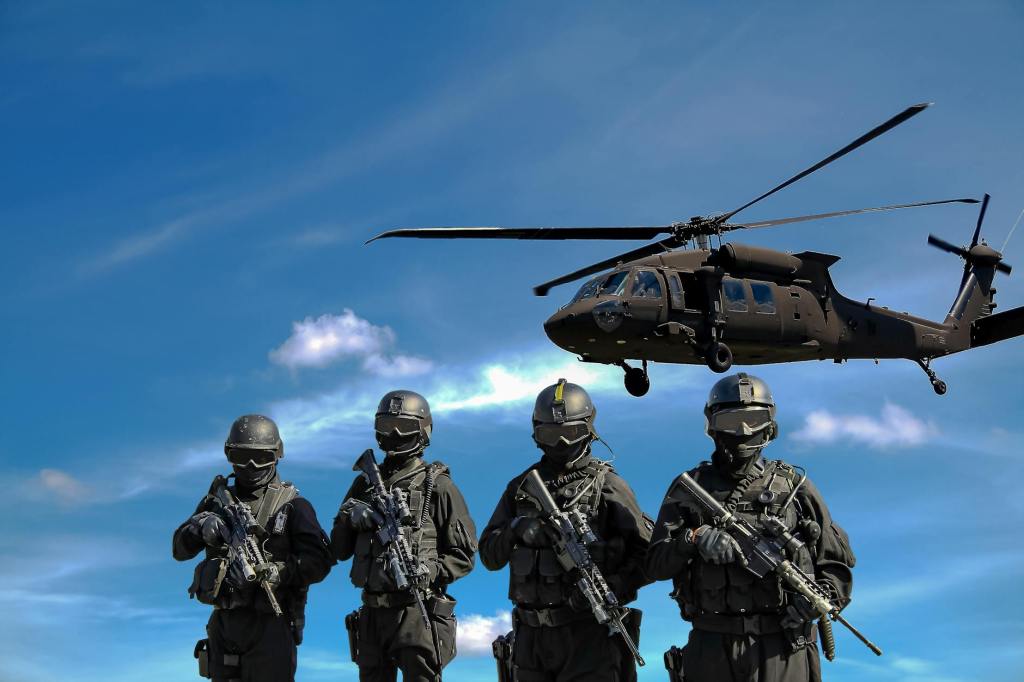
Taiwanese Foreign Minister Lin Chia-lung’s recent alarm over China’s incremental aggression reflects a long-standing, high-stakes geopolitical struggle. Beijing’s strategy of military drills and diplomatic strangulation is not just an ominous display of power but an insidious campaign to reshape the status quo—one bite at a time. As the drums of war echo faintly yet persistently across the Taiwan Strait, the world must ask: how did we arrive here, and where might we be headed?
The roots of this tension plunge deep into the mid-20th century. In 1949, the Chinese Civil War culminated in a bifurcated nation. The defeated Nationalist government retreated to Taiwan, establishing the Republic of China (ROC), while the victorious Communists declared the People’s Republic of China (PRC) on the mainland. Ever since, Taiwan’s political limbo has teetered between existential threat and de facto independence. Beijing’s stance is unyielding: Taiwan is a rogue province that must, and will, be reunified with the mainland.
China’s recent maneuvers—military drills, new air routes near Taiwan-controlled islands, and naval patrols—are not isolated acts but part of a meticulous strategy to establish a “new normal.” This method of gradual encroachment is disturbingly reminiscent of other territorial disputes. Consider the South China Sea, where China’s creation of artificial islands has established de facto control, despite international legal rulings against its claims. Similarly, Russia’s annexation of Crimea in 2014 began with covert military actions and local destabilization tactics that were later justified under the guise of protecting ethnic Russians.
In contrast, historical precedents show that aggressive incrementalism can be countered, though not easily. The Berlin Airlift of 1948-49, where Western powers bypassed the Soviet blockade to supply West Berlin, demonstrated a successful defiance of an overpowering aggressor. Taiwan, lacking such a direct lifeline from its allies, relies on diplomatic and military support that is symbolically strong but practically uncertain.
In the current scenario, which side holds the upper hand? China’s economic clout and military might are undeniably formidable. Its strategy, though slow and seemingly patient, is relentless. Yet, Taiwan has a powerful tool: international sympathy and strategic alliances, particularly with the United States and Japan. While these alliances have not yet committed to direct military intervention, their presence acts as a potential deterrent to overt aggression.
However, the current impasse is fragile. The international community, especially the United States, faces a perilous choice: either enhance military and diplomatic support for Taiwan, risking a direct confrontation with China, or continue a policy of cautious ambiguity, potentially emboldening Beijing further. History suggests that appeasement of such assertive tactics rarely yields long-term peace.
To defuse this simmering crisis, clear, resolute actions are essential. First, the international community must unequivocally support Taiwan’s participation in global organizations, reaffirming its right to exist as a separate entity. Second, enhancing Taiwan’s defensive capabilities through advanced military aid and strategic partnerships is crucial. Lastly, diplomatic channels should be kept open, emphasizing that any attempt to change the status quo unilaterally will face significant global opposition.
Taiwan’s plight is not merely a regional issue; it is a global litmus test for the principles of sovereignty and self-determination. As the world watches this delicate dance of diplomacy and power, it must remember that allowing one’s neighbor to be nibbled away is to risk being devoured oneself, eventually. The time for decisive, unified action is now, lest history repeat itself with another tragic, preventable loss of freedom.



 KWEBA ni BAROK
Leave a comment