By Louis ‘Barok’ C. Biraogo
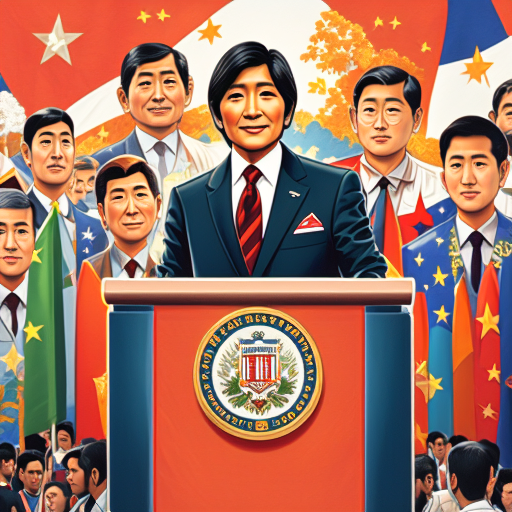
In an era fraught with geopolitical tensions and economic uncertainties, President Ferdinand “Bongbong” Marcos Jr.’s recent call for responsible management of US-China rivalry at the 2024 IISS Shangri-La Dialogue is not just timely, but crucial. His message, delivered with a sense of urgency and clarity, resonates deeply with the need for a balanced approach to international relations, emphasizing the shared responsibility of these two superpowers in maintaining regional peace and stability.
Marcos’ address at Asia’s premier defense summit underscored a fundamental truth: the intertwined destinies of the United States and China are pivotal to the security and economic evolution of the Asia-Pacific region. By asserting that “both countries are important,” Marcos highlighted a nuanced understanding of the geopolitical landscape that goes beyond mere power politics. His emphasis on the permanent influence of China and the stabilizing presence of the US is a clarion call for diplomacy and cooperation over confrontation and rivalry.
In his speech, Marcos adeptly navigated the complex dynamics of US-China relations, calling for a responsible management of their rivalry. This is not merely a diplomatic platitude but a strategic imperative. The current strategic competition between these two giants has indeed exacerbated flashpoints and created new security dilemmas, constraining the strategic choices of regional states. Marcos’ assertion that the future of the region should not be driven by the whims of one or two powerful nations, but by the collective voices of all states, is a powerful advocacy for multilateralism and inclusivity.
Furthermore, Marcos’ call for the reduction of nuclear stockpiles by the US and China underscores a critical aspect of global security. Pending the total elimination of nuclear weapons, it is incumbent upon these superpowers to lead by example, taking concrete measures to reverse the recent increase in nuclear arms and alleviate the risks of nuclear conflict. This plea is a stark reminder of the delicate balance that must be maintained to prevent catastrophic outcomes.
Marcos’ stance on an independent foreign policy for the Philippines, refusing to pick sides or raise tensions, is a testament to his commitment to national sovereignty and regional stability. By acting in the nation’s best interests, especially in contentious areas like the West Philippine Sea, Marcos is reinforcing the principle that smaller nations need not be pawns in the geopolitical games of larger powers. This approach not only preserves the dignity of the Philippines but also sets a precedent for other nations in the region to follow.
Highlighting the Philippines’ economic progress and aspirations for a high-income economy by 2040, Marcos paints a picture of a nation on the rise, determined to play a constructive role on the global stage. His vision of the Philippines as a force for good, a champion of regional and global unity, and a defender of the rules-based international order is both ambitious and inspiring. It speaks to a broader desire for peace, stability, and prosperity not just for the Philippines, but for the entire region.
In light of these insights, several recommendations emerge. Firstly, the international community should heed Marcos’ call for a responsible management of US-China rivalry, promoting dialogue and cooperation over confrontation. Secondly, efforts should be intensified to engage all regional states in a collective security framework that respects the sovereignty and voices of all nations. Thirdly, superpowers must prioritize nuclear disarmament initiatives to mitigate the risks of nuclear conflict. Finally, nations should support and emulate the Philippines’ independent foreign policy, which balances national interests with regional stability.
President Marcos has articulated a vision that transcends narrow national interests, advocating for a peaceful, stable, and prosperous region. His ideas are not just commendable but essential in navigating the complex geopolitical landscape of our times. As we look to the future, the international community must rally behind these principles, working together to build a world where peace and stability are not just aspirations, but realities.






 KWEBA ni BAROK
Leave a comment