By Louis ‘Barok’ C. Biraogo
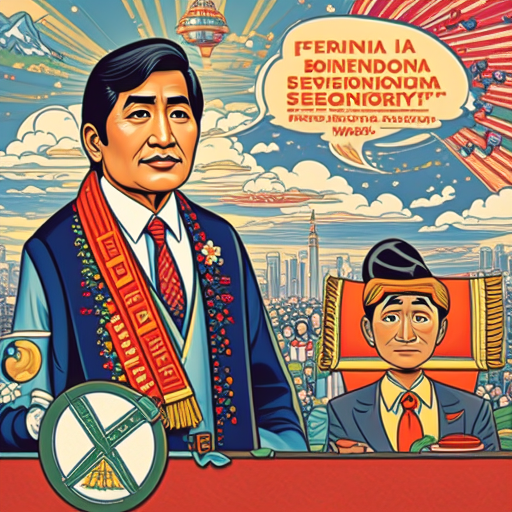
In a world increasingly polarized by the interests of superpowers, President Ferdinand “Bongbong” Marcos Jr.’s emphatic declaration, “I don’t work for Beijing, I don’t work for Washington, I don’t work for Moscow. I work for Manila,” resounds as a clarion call for sovereignty and pragmatic nationalism. This assertion, made during his bilateral meeting with Lithuanian Prime Minister Ingrida Šimonytė, underscores a pivotal moment in geopolitical strategy and international relations.
Marcos’ Independent Stance: A Breath of Fresh Air
In an era where global politics is often dominated by the agendas of mighty nations, Marcos’ commitment to the Philippines’ national interest above all is both refreshing and commendable. His pronouncement comes at a critical juncture where the Philippines is embroiled in a territorial dispute with China over the West Philippine Sea. By taking a firm stance, Marcos is reinforcing the country’s sovereignty and the primacy of its national interests, rather than allowing it to be a pawn in the strategic games of larger powers.
This independent approach is crucial for several reasons. Firstly, it allows the Philippines to navigate its foreign policy with greater flexibility and agency. By not aligning too closely with either the United States or China, Marcos can pursue a balanced diplomatic strategy that seeks the best outcomes for the Filipino people. Secondly, it sends a strong message to both superpowers that the Philippines will not be easily swayed or coerced, thereby demanding a higher level of respect and consideration in bilateral engagements.
A Partnership in Principles: Lithuania’s Support
Lithuanian Prime Minister Ingrida Šimonytė’s endorsement of Marcos’ stance further amplifies this message. Lithuania, a small state facing its own challenges with Russian aggression, stands as a testament to the power and importance of international law and rules-based order. Šimonytė’s statement, “Small states matter… international law matters because this is a safety network for small states,” resonates deeply. It emphasizes that in the anarchic world of international relations, adherence to international law is the only bulwark against the predations of stronger states.
Lithuania’s backing not only validates Marcos’ position but also highlights a shared commitment to upholding international norms. This partnership underscores a broader coalition of like-minded nations advocating for peace, stability, and sovereignty. In an interconnected world where regional conflicts can have far-reaching consequences, such alliances are vital.
A Call for Responsible Rivalry Management
Marcos’ keynote address at the 2024 IISS Shangri-La Dialogue underscores another crucial point: the necessity for the United States and China to manage their rivalry responsibly. His balanced view acknowledges the indispensable roles both nations play in regional stability—China’s economic influence and America’s stabilizing military presence. “It’s never a choice. Both countries are important,” he asserts, calling for a pragmatic approach to geopolitics.
This is a sophisticated stance, recognizing that the binary view of choosing sides is outdated and counterproductive. Instead, Marcos advocates for a dynamic equilibrium where both powers can coexist and cooperate, thereby ensuring the stability of the Indo-Pacific region. This approach not only benefits the Philippines but also promotes broader regional peace and security.
Recommendations for a Sustainable Future
To further cement this principled stand, several recommendations are pertinent. Firstly, the Philippines should continue to strengthen its diplomatic engagements with other small and medium-sized states that share similar values and challenges. Building a coalition of nations committed to upholding international law can serve as a formidable counterbalance to the influence of larger powers.
Secondly, the Philippines must invest in enhancing its own defense and economic capabilities. By doing so, it can assert its sovereignty more effectively and reduce dependency on external powers. This includes modernizing the military, fostering economic resilience, and pursuing technological advancements.
Lastly, the international community should heed Marcos’ call for responsible rivalry management between the United States and China. Multilateral forums and dialogues should be leveraged to facilitate constructive engagement and conflict resolution, ensuring that regional stability is maintained.
In an increasingly complex world, President Marcos’ declaration of working solely for the Philippines is not just a statement of national pride; it is a strategic doctrine that champions sovereignty, balance, and the rule of law. His leadership, alongside the principled support of allies like Lithuania, sets a compelling example for other nations navigating the tumultuous waters of global politics. As the world watches, the Philippines stands tall, charting its course with determination and integrity.







 KWEBA ni BAROK
Leave a comment