By: Louis ‘Barok’ C. Biraogo
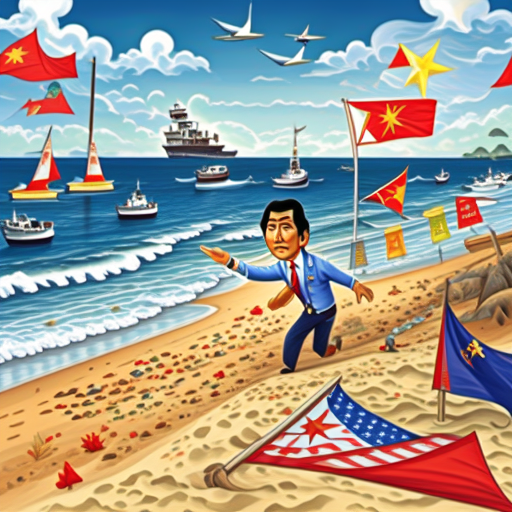
In a region fraught with tension and territorial disputes, President Ferdinand Marcos Jr. of the Philippines has drawn a definitive line in the sand. His stern warning to China—that any Filipino death in the South China Sea could be construed as an act of war—resonates with the gravity and urgency that the situation demands.
Marcos’ declaration at the Shangri-la Dialogue in Singapore is not merely a rhetorical flourish; it is a necessary stance against China’s increasingly aggressive maneuvers. Over recent months, Chinese patrol ships have escalated their provocations, firing water cannons at Philippine vessels in a clear attempt to assert dominance over disputed waters. Such actions are not just provocations; they are deliberate affronts to international norms and the sovereignty of the Philippines.
In a world where territorial integrity should be respected and upheld, China’s actions in the South China Sea stand in stark contrast to these principles. Beijing’s insistence on defending its “sovereignty” through force and intimidation undermines the stability of the entire region. The South China Sea, a vital maritime corridor for global trade, should be a zone of peace and cooperation, not a flashpoint for potential conflict.
President Marcos’ firm stance is commendable for several reasons. Firstly, it sends a clear message to Beijing that the Philippines will not be bullied into submission. By delineating a red line, Marcos is asserting the Philippines’ right to protect its citizens and sovereignty against any external threat. This is a stance rooted in both national dignity and international law.
Secondly, Marcos’ position underscores the importance of international alliances. The U.S.-Philippines Mutual Defense Treaty, which commits the United States to defend the Philippines in the event of an attack, adds a layer of deterrence against Chinese aggression. By invoking this treaty, Marcos reinforces the notion that the Philippines is not isolated; it is backed by powerful allies committed to maintaining peace and stability in the Indo-Pacific region.
Moreover, Marcos’ call for accountability resonates on a human level. The injuries sustained by Filipinos in recent clashes, though not fatal, highlight the escalating dangers posed by China’s aggressive tactics. A death, as Marcos pointed out, would be a tragic and unacceptable escalation—an irreversible crossing of the Rubicon.
While the situation remains tense, the path forward must be paved with diplomacy and dialogue. The recent efforts by U.S. Secretary of Defense Lloyd Austin and his Chinese counterpart to reopen lines of communication are steps in the right direction. The establishment of a crisis communications working group and the resumption of direct military dialogues can serve as critical mechanisms to de-escalate potential conflicts and foster mutual understanding.
It is imperative that all parties involved commit to peaceful resolution of disputes. The South China Sea should not be a theater for military brinkmanship, but a space for cooperative and lawful engagement. The Philippines’ quest for justice and security in its territorial waters is not just a national issue—it is a call for the preservation of international order and respect for sovereignty.
Viewed from this perspective, President Marcos Jr.’s firm stance shines as a symbol of hope and a powerful appeal for peace. It is a reminder that in the face of intimidation, standing firm on principles of sovereignty and international law is not just an option—it is a necessity. As the world watches, the collective goal must be to ensure that the South China Sea remains a sea of peace, stability, and shared prosperity.







 KWEBA ni BAROK
Leave a comment