By Louis ‘Barok’ C. Biraogo ||
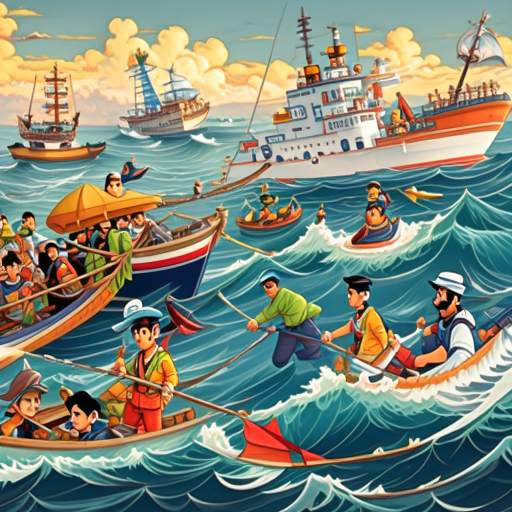
The waters of the South China Sea have long been troubled, but the recent actions of the China Coast Guard (CCG) represent a new low in their brazen aggression. On May 19, Filipino soldiers stationed on the BRP Sierra Madre—a decaying warship serving as a sentinel at Ayungin Shoal—faced not just routine harassment but a targeted campaign of obstruction and violence. Supplies essential for their sustenance were seized and thrown overboard by the CCG, an act of needless cruelty that speaks volumes about Beijing’s disdain for international norms and human decency.
What transpired at Ayungin Shoal was more than mere harassment; it was a flagrant violation of both international law and basic human rights. Filipino troops, isolated and far from home, were deprived of food and medical aid. This wasn’t an isolated incident but part of a systematic strategy by the CCG to undermine and intimidate. The water cannon attack on a medical evacuation, intended to aid sick soldiers, is particularly egregious—targeting those in dire need of medical care is an act of barbarism.
The CCG’s behavior on May 24, when they used water cannons against a Filipino fishing boat, further illustrates China’s blatant disregard for the well-being of the region’s inhabitants. These actions aren’t just aggressive; they are hostile, unlawful, and dangerous. They underscore a ruthless determination to assert dominance over waters that the 2016 Hague ruling unequivocally declared belong to the Philippines.
China’s justification for these actions, as claimed by its state media, is laughably thin. A 29-second video purportedly showing Filipino personnel “pointing guns” at the CCG does little to vindicate Beijing’s thuggish behavior. The true aggressors are the Chinese vessels that encroach on Philippine waters, disrupt critical resupply missions, and endanger lives with reckless maneuvers.
In stark contrast, the Philippines has shown remarkable restraint and adherence to international law. President Ferdinand Marcos Jr.’s measured denunciation of Beijing’s actions during the Shangri-La Dialogue reflects a commitment to peaceful resolution and stability. The Filipino government’s efforts to sustain their troops under constant threat, and their unwavering stance despite provocations, deserve commendation. They have demonstrated a principled dedication to sovereignty and international law, standing as a pillar of hope for a rules-based order in the region.
This ongoing conflict demands a concerted diplomatic effort to avert further escalation. The international community, especially Southeast Asian nations, must rally to support the Philippines in its rightful claims and condemn China’s actions. Diplomatic channels should be leveraged to bring Beijing to the negotiating table, pressing for adherence to international rulings and respect for sovereign rights.
China’s narrative, as articulated by Defense Minister Dong Jun, paints the Philippines as a provocateur, emboldened by outside powers. This is a gross distortion of reality. The Philippines is defending its rightful territory and the well-being of its citizens against an overwhelmingly powerful neighbor. Beijing’s portrayal of itself as a guardian of sovereignty is laughable when viewed against its actions, which are nothing short of imperialistic.
To prevent further destabilization, several steps must be taken. First, the Association of Southeast Asian Nations (ASEAN) should form a unified front, reinforcing the region’s commitment to a rules-based order. Second, increased patrols and joint exercises in the South China Sea by international allies can serve as a deterrent against further Chinese aggression. Third, economic and diplomatic pressures should be applied to Beijing, highlighting the global disapproval of its actions.
The world must not turn a blind eye to the plight of the Philippines and the creeping expansionism of China. The rule of law, human rights, and regional stability are at stake. The Philippines, through its unwavering courage and adherence to international law, has shown the path forward. It is incumbent upon the global community to support Manila, ensuring that justice prevails and that the South China Sea remains a region of peace and cooperation, not of fear and domination.






 KWEBA ni BAROK
Leave a comment