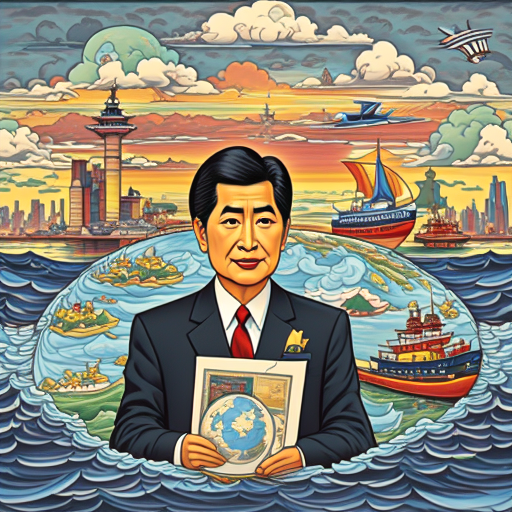
By Louis ‘Barok’ C. Biraogo
In the convoluted world of international diplomacy, few arenas are as fraught with tension as the South China Sea. Yet, the recent tirades from China accusing the Philippines of “forming blocs and flexing muscles” underscore not just a geopolitical standoff, but a profound hypocrisy that cannot be ignored.
China’s Foreign Ministry spokesperson, Mao Ning, decries the Philippines for allegedly breaching commitments and violating the Declaration on the Conduct of Parties in the South China Sea. These allegations are as dubious as they are self-serving. It is a darkly ironic twist to see Beijing, a nation that has repeatedly flouted international law and expanded its maritime footprint through aggressive and unlawful means, pointing fingers at Manila.
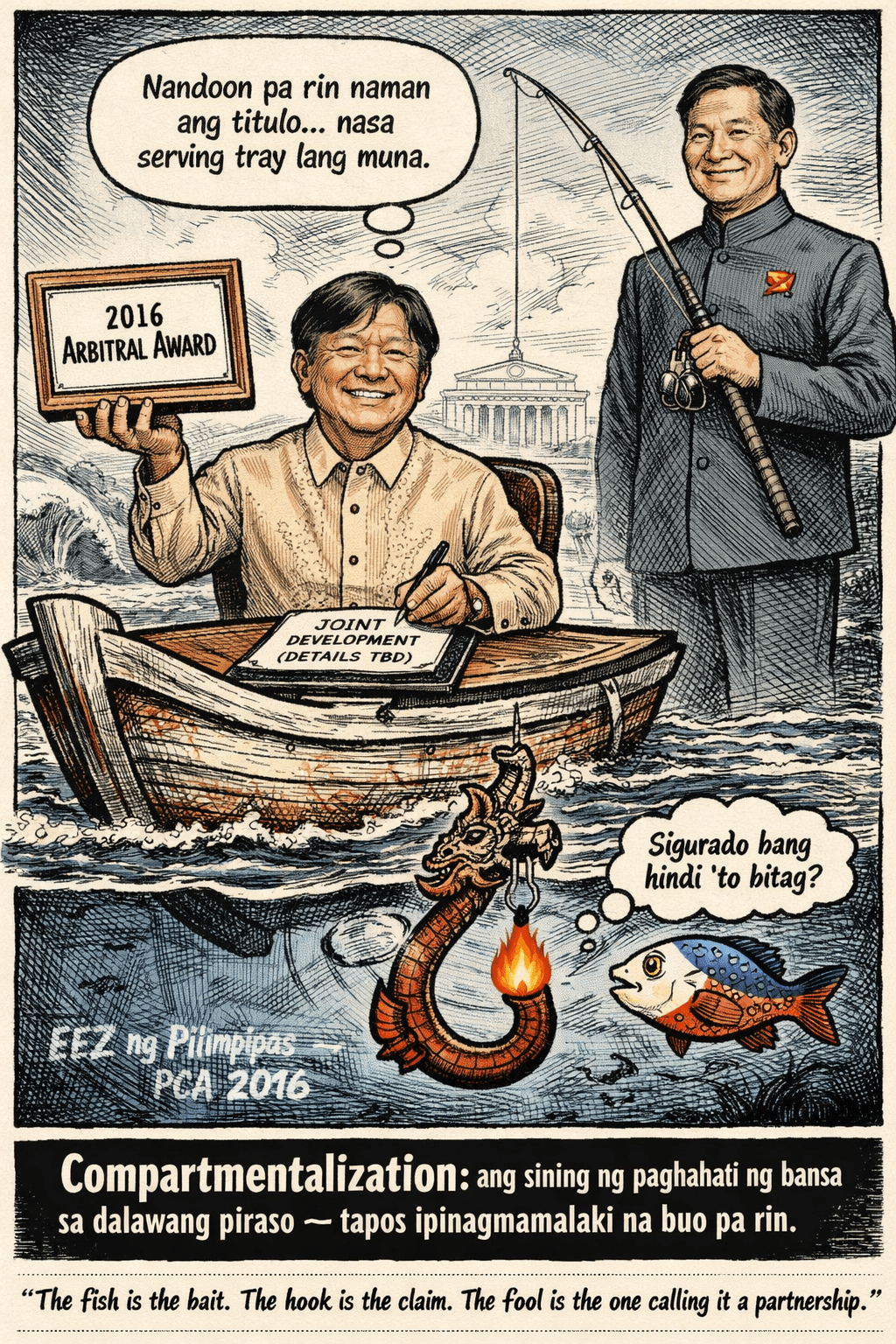
The Philippines, under the leadership of President Ferdinand Marcos Jr., has taken a firm yet principled stance. During his keynote speech at the 21st Shangri-La Dialogue in Singapore, Marcos underscored the necessity of involving external parties in addressing the South China Sea disputes. This isn’t an act of provocation; it is a pragmatic response to an escalating crisis that transcends regional boundaries.
China’s criticisms are laced with contradictions. They lament the involvement of external forces and accuse the Philippines of spreading disinformation. Yet, it is China’s own actions—building artificial islands, militarizing them, and consistently ignoring the 2016 Arbitral Tribunal ruling—that have sown seeds of mistrust and instability. Beijing’s calls for ASEAN countries to manage differences and maintain peace ring hollow when juxtaposed with its relentless pursuit of territorial expansion.
The accusation that the Philippines is acting at the behest of the United States is a red herring designed to divert attention from China’s own imperialistic maneuvers. The reality is that Manila’s outreach to international allies is a necessary counterbalance to Beijing’s unchecked assertiveness. China’s rhetoric about maintaining regional peace and stability is a facade, masking its own ambitions to dominate the South China Sea.
President Marcos’ assertion that the South China Sea issue is a global concern is a clarion call that should resonate far and wide. The waters are not just a strategic thoroughfare; they are vital to global commerce and security. The Philippines’ inclusion of other parties in the dialogue is not an act of aggression, but a measured approach to ensuring that the rule of law prevails over the might of force.
The path forward demands more than just words. It requires concrete actions and unwavering commitment to diplomacy. The Philippines has shown the courage to stand up to a regional behemoth, but it cannot do so alone. The international community must rally behind Manila, not just in rhetoric, but in tangible support.
China’s admonitions about who should be “in the driver’s seat” in the South China Sea are steeped in irony. True peace and stability will only be achieved when all nations adhere to international laws and norms, not through coercion or unilateral actions. Beijing’s insistence on defending its “territorial sovereignty and maritime interests” is a thinly veiled threat that underscores its real intentions.
In this high-stakes geopolitical chess game, the Philippines stands as a lighthouse of hope and a champion of lawful conduct. The world must heed its call for a collective approach to resolving the South China Sea disputes. Only through unity and adherence to international law can the specter of conflict be averted, and true peace be achieved in one of the world’s most crucial regions.
As we navigate these tumultuous waters, let us remember that the strength of a nation is not measured by the size of its military or the reach of its claims, but by its adherence to justice, fairness, and the rule of law. The Philippines has set a laudable example; it is now up to the global community to support this courageous stand and ensure that diplomacy and peace triumph over aggression and discord.

- Sara’s Cake-Eating Due Process: Tamase Exposes Duterte’s Legal Flip-Flop

- No More Parking at the Ombudsman: Boying Remulla’s Risky 5-Month Justice Sprint

- Duterte Pit Bulls Unleashed: SC Petition to Save Sara from Impeachment Again

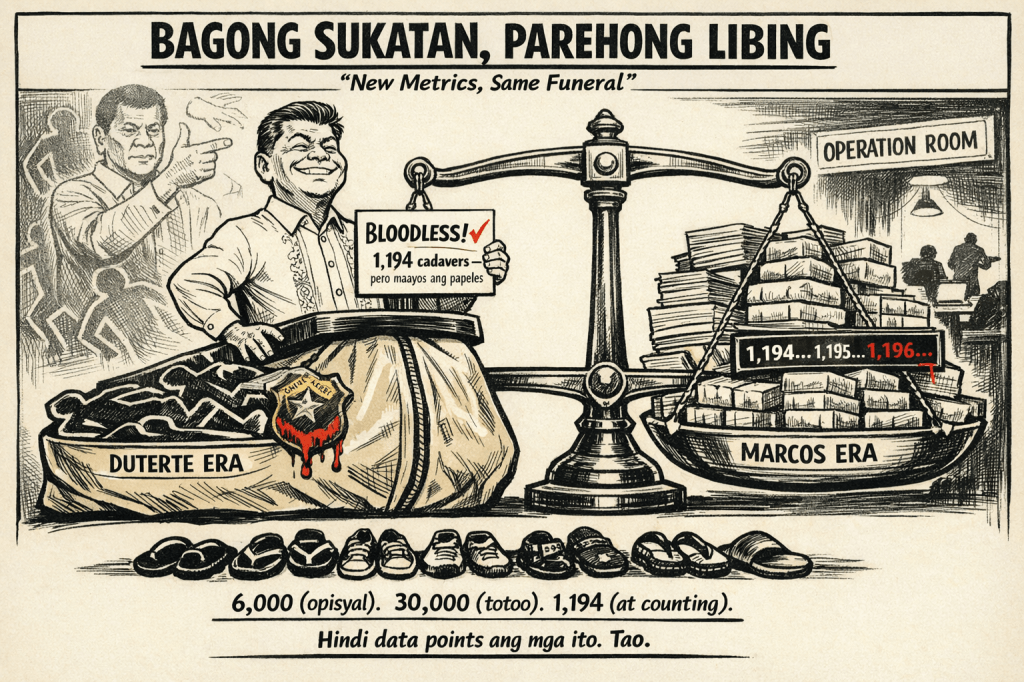
- Jonvic Remulla’s Bloodless Boast: Marcos “Wins” Drug War With Fewer Corpses, More Tons
- Remulla Slams AMLC: “Stop Protecting Banks, Start Chasing Dirty Flood Money!”






 KWEBA ni BAROK
Leave a comment