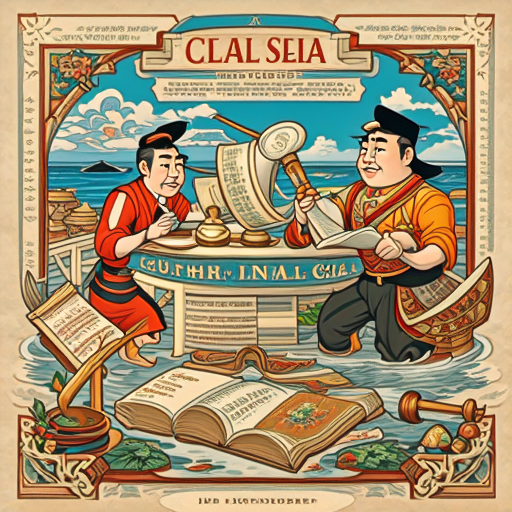
By Louis ‘Barok’ C. Biraogo
In the perennial geopolitical drama of the South China Sea, recent developments have once again brought the simmering tensions to the fore. China’s latest reiteration of its “indisputable sovereignty” over the South China Sea islands starkly contrasts with the Philippines’ steadfast stance, grounded firmly in international law. This contentious issue, highlighted during Philippine President Ferdinand Marcos’ speech at the Shangri-La Dialogue, demands a critical analysis not only of the competing claims but also of the broader implications for regional stability.
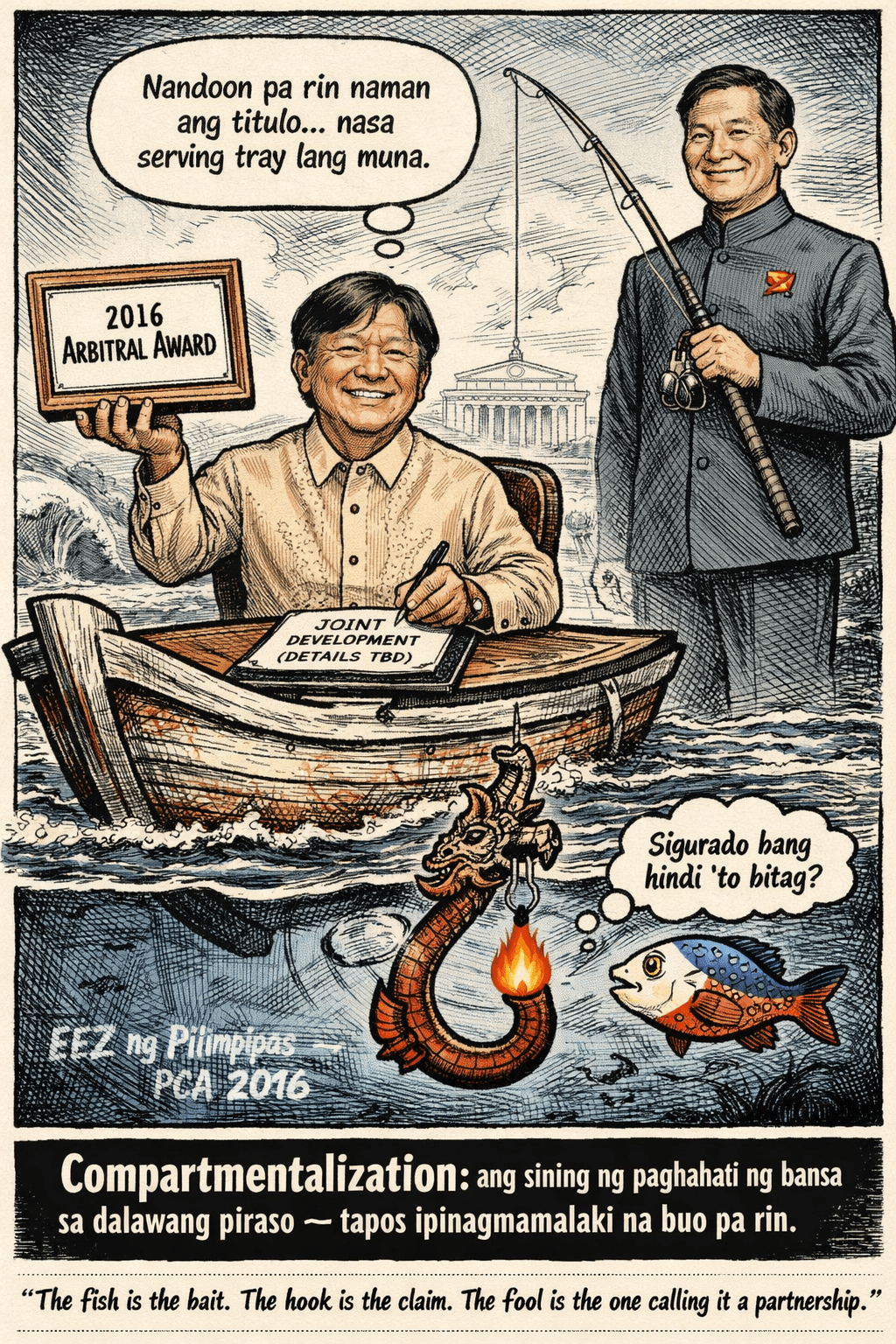
China’s narrative, rooted in historical claims and dubious interpretations of colonial-era treaties, stands in stark contrast to the legal clarity provided by UNCLOS. According to UNCLOS, an international treaty ratified by 167 countries including China and the Philippines, maritime entitlements and boundaries are clearly delineated. The 2016 ruling by the Permanent Court of Arbitration in The Hague unequivocally invalidated China’s expansive “nine-dash line” claim, affirming the Philippines’ rights within its 200-nautical-mile Exclusive Economic Zone (EEZ).
The tribunal’s decision, a landmark in international maritime law, emphasized that China’s assertions had no legal basis. It categorically stated that none of the features in the Spratly Islands, including those claimed by China, could generate an EEZ. This ruling, binding under international law, should have served as a definitive resolution to the maritime dispute. Yet, China’s defiance continues unabated, underscoring a troubling trend of selective adherence to international norms.
China’s invocation of the 1898 Treaty of Peace, the 1900 Treaty, and the 1930 Convention is a transparent attempt to muddy the waters of legal discourse. These historical treaties, long superseded by modern international law, do not hold sway over the maritime entitlements delineated by UNCLOS. The invocation of such treaties is a red herring, diverting attention from the legal realities affirmed by contemporary international jurisprudence.
Amid this geopolitical theater, the Philippines emerges as a stalwart defender of international law and regional stability. President Marcos Jr.’s speech at the Shangri-La Dialogue was not merely a reiteration of the Philippines’ territorial claims but a call for adherence to the rule of law. The Philippines’ stance, anchored in the UNCLOS framework and the arbitral ruling, exemplifies a commitment to peaceful and lawful resolution of disputes. This principled position is a beacon of hope in an increasingly fractious region.
The efforts of environmental and civic groups in the Philippines further highlight the nation’s commitment to preserving its maritime integrity and protecting its natural resources. These groups, alongside the government, play a crucial role in raising awareness and advocating for sustainable management of the South China Sea’s rich biodiversity.
In stark contrast, China’s actions reveal a pattern of coercion and unilateralism. The deployment of Chinese Coast Guard vessels, the construction of artificial islands, and the militarization of the South China Sea represent clear violations of international norms. These actions threaten not only the Philippines but also the broader stability of the Asia-Pacific region.
Diplomacy, anchored in mutual respect and adherence to international law, remains the only viable path to resolving the South China Sea dispute. The international community, particularly ASEAN and global powers like the United States, must reaffirm their commitment to UNCLOS and the arbitral ruling. Robust diplomatic engagement, coupled with a clear-eyed recognition of China’s strategic objectives, is essential.
The Philippines should continue to leverage its legal victories and international support to press for a peaceful resolution. This includes bolstering alliances with regional partners and engaging in multilateral forums to highlight the importance of the rule of law. The role of ASEAN is pivotal; the regional bloc must present a united front, advocating for the principles enshrined in UNCLOS and rejecting any attempts at coercion.
Moreover, the international community must hold China accountable for its violations. This includes diplomatic pressure, economic measures, and support for countries affected by China’s actions. The United States, in particular, must continue to play a supportive role, reinforcing its commitment to freedom of navigation and the defense of international law.
In this fraught and delicate landscape, the stakes are high. The South China Sea is not merely a regional dispute but a litmus test for the international community’s resolve in upholding the rule of law. The Philippines’ principled stand offers a path forward, one that champions peace, stability, and the collective security of nations. The time for decisive action is now, lest the darkness of unilateralism and coercion overshadow the light of international cooperation and legal order.

- Remulla Slams AMLC: “Stop Protecting Banks, Start Chasing Dirty Flood Money!”
- From Arbitration Victory to Humiliation Deal – Why This China Gas Pact Stinks
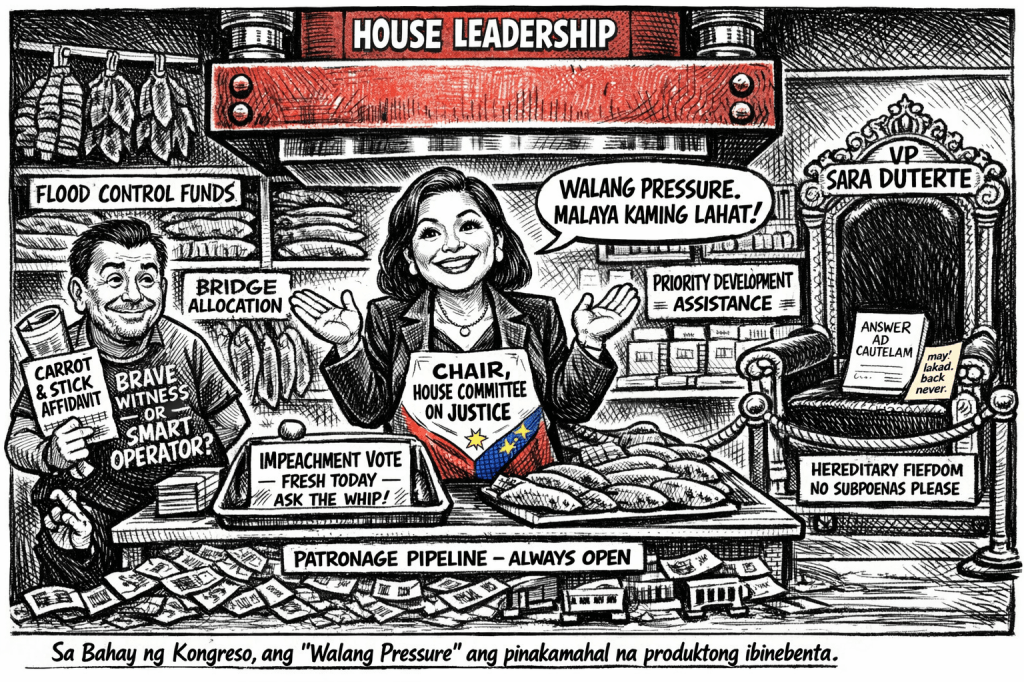
- “No Pressure” Luistro? The House Pork Bazaar Exposed
- Baggao Brothers Exposed: How One Undersecretary Built a P567M Family ATM at DOH

- Anti-Epal President Caught Red-Handed in Ayuda Selfie Scandal






 KWEBA ni BAROK
Leave a comment