By Louis ‘Barok‘ C. Biraogo
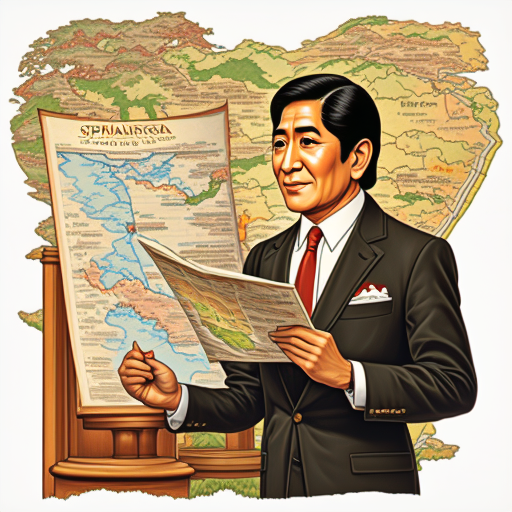
In a rare moment of political clarity and historical rectification, President Ferdinand R. Marcos Jr. has articulated a crucial truth about Philippine territorial sovereignty. During his policy speech at the Shangri-La Dialogue in Singapore, Marcos declared that the nation’s territory is not confined merely to the islands delineated by the 1898 Treaty of Paris. This statement, hailed by former Senior Associate Justice Antonio Carpio as correcting the “greatest misconception” about Philippine territory, is a pivotal declaration that carries profound legal, historical, and geopolitical implications.
Unveiling The Historical Context
The Treaty of Paris, signed in 1898 between Spain and the United States, ceded the Philippine archipelago to American control, marking a significant moment in the nation’s colonial history. However, this treaty did not encapsulate the full scope of Philippine territory. The subsequent Treaty of Washington in 1900 clarified that the Philippines’ sovereignty extended beyond the Paris Treaty lines, including islands such as Cagayan, Sulu, and Sibutu. Yet, for decades, this comprehensive territorial definition has been overshadowed, leading to misconceptions that have persisted in the national consciousness.
Marcos’ assertion, grounded in these treaties, reinforces the Philippines’ territorial claims and serves as a reminder of the nation’s rightful sovereignty. It is an affirmation of the country’s historical and legal stance, which had been muddied by oversimplified interpretations of its territorial boundaries.
The Significance in the Face of Chinese Aggression
This declaration is particularly significant in light of the ongoing territorial dispute with China in the South China Sea, referred to locally as the West Philippine Sea. China’s expansive claims, encapsulated in the so-called nine-dash line, have been a source of regional tension and international concern. The Philippines’ 2016 victory at the Permanent Court of Arbitration, which invalidated China’s claims, remains a cornerstone of the country’s legal arsenal in this dispute.
Marcos’ articulation of the full extent of Philippine territory is a strategic maneuver that strengthens the country’s position in these disputes. By invoking historical treaties recognized under international law, the Philippines reinforces its claim over maritime zones and island territories that China contests. This historical and legal grounding provides a robust counter-narrative to China’s assertions, reaffirming the Philippines’ sovereignty and rallying international support for its cause.
A Call for National Unity and Vigilance
In the face of these external challenges, President Marcos’ declaration should serve as a rallying cry for unity among Filipinos. The nation must stand together, transcending political and ideological divides, to defend its sovereignty and territorial integrity. The government’s clear and assertive stance provides a foundation upon which the Filipino people can build a unified front.
Recommendations for Moving Forward
1. Strengthening Diplomatic Efforts: The Philippines should continue to leverage its historical and legal claims in international forums. Engaging with allies and partners, particularly those with vested interests in maintaining regional stability, will be crucial in garnering support and applying diplomatic pressure on China. Establishing stronger ties within ASEAN, and fostering relationships with global powers like the United States, Japan, and the European Union, can create a formidable coalition advocating for the Philippines’ territorial integrity.
2. Enhancing Military Readiness: While diplomacy is paramount, the Philippines must also ensure that its military is prepared to defend its territories. Investments in naval and coast guard capabilities, coupled with joint exercises with allies, will enhance the nation’s defense posture. Modernizing equipment, improving surveillance and intelligence capabilities, and increasing defense spending are necessary steps to ensure readiness and deter potential aggressors.
3. Public Awareness Campaigns: Educating the public about the historical and legal basis of the Philippines’ territorial claims is essential. This knowledge will foster a sense of national pride and resilience, ensuring that the populace remains steadfast in their support for the government’s efforts. This can be achieved through school curricula, media campaigns, and public seminars, emphasizing the importance of national unity and the historical context of the territorial claims.
4. Economic Development of Disputed Areas: Developing the economic potential of the disputed territories can reinforce the Philippines’ claims. Encouraging sustainable fishing practices, promoting eco-tourism, and exploring energy resources in these areas can provide economic benefits while asserting sovereignty. Establishing research stations and infrastructure projects will not only improve living conditions for local communities but also signal a strong, permanent presence.
5. Legal Advocacy and International Arbitration: Continuing to utilize legal channels and international arbitration can further solidify the Philippines’ claims. Actively participating in international legal bodies and leveraging the 2016 Hague ruling will strengthen the legal argument against China’s expansive claims. Establishing a dedicated legal team to handle international disputes and pursue further clarifications of maritime boundaries can ensure that the Philippines’ rights are upheld.
This is the first time that a Philippine President has stated that Philippine territory is defined by the 1898 Treaty of Paris, as clarified by the 1900 Treaty of Washington, which stated that Philippine territory includes all islands of the Philippine archipelago lying outside the lines of the Treaty of Paris,” Carpio emphasized. His words highlight a profound shift in the nation’s self-perception and its geopolitical stance.
Marcos’ articulation is not just a statement of historical fact; it is a strategic declaration with far-reaching implications. By affirming the 1900 Treaty of Washington, Marcos underscores that Philippine sovereignty extends beyond the lines drawn by colonial powers over a century ago. This includes critical areas such as the islands of Cagayan, Sulu, and Sibutu, thus fortifying the country’s territorial claims in the West Philippine Sea.
The significance of this clarification cannot be overstated. For decades, the Philippines has been embroiled in territorial disputes with China, which claims vast swaths of the South China Sea under its ambiguous “nine-dash line.” Marcos’ statement reinforces the legal and historical foundations of the Philippines’ claims, providing a robust counter-narrative to China’s expansive assertions.
Legal, Economic, Political Significance
From a legal perspective, Marcos’ declaration aligns with international treaties and the Philippines’ constitutional framework. The 1935 Constitution, which established the Commonwealth, already recognized the territorial scope defined by these treaties. By reasserting this historical context, Marcos strengthens the Philippines’ position in any international legal arena, particularly under the United Nations Convention on the Law of the Sea (UNCLOS).
Economically, this move could bolster the Philippines’ rights over rich fishing grounds and potential underwater resources, such as oil and natural gas reserves. The affirmation of territorial boundaries enhances national security, ensuring that the country’s maritime zones are protected against external encroachments.
Politically, Marcos’ stance can unify the nation. In a time when political divisions often overshadow common goals, this issue presents an opportunity for Filipinos to rally around a cause that transcends partisan lines. The defense of national sovereignty is a unifying force that can strengthen domestic cohesion.
However, unity must also extend beyond national borders. It is imperative for the Philippines to galvanize support from its allies, particularly those within the Association of Southeast Asian Nations (ASEAN) and other democratic nations with vested interests in maintaining a rules-based international order. Collaborative efforts in diplomacy, joint maritime patrols, and regional security frameworks can amplify the Philippines’ position.
Yet, even as we praise this milestone, vigilance is crucial. The Philippine government must now follow through with concrete actions. Diplomatic channels must be leveraged to assert these territorial claims in international forums. Legal experts and historians should continue to provide evidence supporting the Philippines’ historical and legal rights. The military and coast guard must be adequately funded and equipped to protect the nation’s maritime zones.
Moreover, the administration must ensure that any ambiguity in territorial definitions is permanently dispelled. Educational campaigns and public awareness initiatives can inform citizens about the historical and legal basis of the Philippines’ territorial claims, fostering a well-informed populace that stands united in defense of its sovereignty.
In conclusion, President Marcos’ declaration stands as a pillar of hope and a rallying cry. It demands unity from Filipinos, a steadfast dedication to safeguarding the nation’s sovereignty, and a strategic partnership with international allies. Anything short of this would not only be a grave injustice to the Filipino people but also a profound betrayal of their unwavering trust. The way forward is evident, and the stakes are too high for inaction. This is the time for bold, decisive action.

- They’re Burning Domingo at the Stake Because He Refuses to Join the Patronage Picnic

- P1 Trillion in Savings? Or P1 Trillion in Nonsense?

- Due Process for the Senator, Ghost Projects for the People: Kapunan’s Finest Hypocrisy Hour

- Tacloban’s Two-Bit Bike Bandits: When the BI Finally Notices the Chinese Nationals It’s Been Ignoring for Six Years

- Solar Para Sa Bayan? More Like Solar Para Sa Bulsa







 KWEBA ni BAROK
Leave a comment