By Louis ‘Barok‘ C. Biraogo
The scene was tense and charged with emotion as the Philippine National Police’s Criminal Investigation and Detection Group (PNP-CIDG) moved to serve an arrest warrant on Apollo Quiboloy, the leader of the Kingdom of Jesus Christ (KOJC). In the early hours of June 10, 2024, under the cloak of dawn, the authorities entered the KOJC Dome in Davao City’s Buhangin District to execute the warrant.
Quiboloy’s supporters, a devoted and formidable crowd, had gathered en masse outside the compound, their presence a clear attempt to thwart law enforcement’s efforts. Yet, the CIDG stood firm. In a commendable display of restraint and adherence to protocol, the police managed to negotiate entry, ensuring that the operation proceeded within the bounds of the law. Four teams, each comprising six personnel, were granted access to search the premises—a testament to their dedication to upholding justice.
This operation comes against the backdrop of serious allegations leveled against Quiboloy. He faces charges under Republic Act 7610, the Special Protection of Children Against Abuse, Exploitation, and Discrimination Act, and a grave, non-bailable charge of Qualified Human Trafficking under Republic Act No. 9208, as amended. The gravity of these accusations cannot be overstated. They involve the exploitation and abuse of the most vulnerable members of society—children.
The transfer of these cases to courts in Quezon City and Pasig was a crucial step, mandated by the Supreme Court to ensure an impartial trial and to mitigate any undue influence in Quiboloy’s home turf of Davao. This move underscores the judiciary’s commitment to fairness and justice, a principle that is the bedrock of any democratic society.
In stark contrast to the CIDG’s professionalism stands Apollo Quiboloy and his coterie of defenders. Quiboloy has denied the charges against him, but the sheer weight of the evidence and the nature of the allegations demand thorough judicial scrutiny. His supporters claim that the arrest warrant is an act of intimidation, a ploy to silence their leader. However, these claims ring hollow against the serious nature of the charges.
Quiboloy’s defense strategy appears to hinge on a mixture of denial and deflection. His influence and the loyalty of his followers have created a shield that he hopes will deflect legal accountability. Yet, this case is not about silencing a religious leader—it is about addressing grievous wrongs that, if proven, amount to severe human rights violations.
The CIDG’s actions, in this case, are not just legally justified; they are morally imperative. The police must act decisively against allegations of child abuse and human trafficking. To shy away from such duties would be to abdicate their responsibility to protect the innocent and uphold the law. Their conduct during this tense operation deserves commendation, not only for their professionalism but for their unwavering commitment to justice.
Those defending Quiboloy must ask themselves a fundamental question: Are they supporting justice, or are they enabling a potential violator of human rights to evade accountability? The rule of law is not just a legal doctrine; it is a moral one. It demands that all individuals, regardless of their status or influence, are subject to the same laws and the same standards of accountability.
The world watches as the Philippines navigates this complex and high-stakes legal drama. The implications of this case extend beyond the courtroom—they touch on the nation’s commitment to human rights and justice. It is imperative that the judicial process proceeds unimpeded, that evidence is scrutinized, and that, if found guilty, Quiboloy faces the full weight of the law.
Justice must prevail, and the rule of law must be upheld. The CIDG’s courage in serving this warrant is a step in the right direction. The task now falls to the courts to ensure that justice is served, and that the victims of these alleged crimes receive the vindication they deserve. This is not just a legal battle; it is a moral one, and the stakes could not be higher.

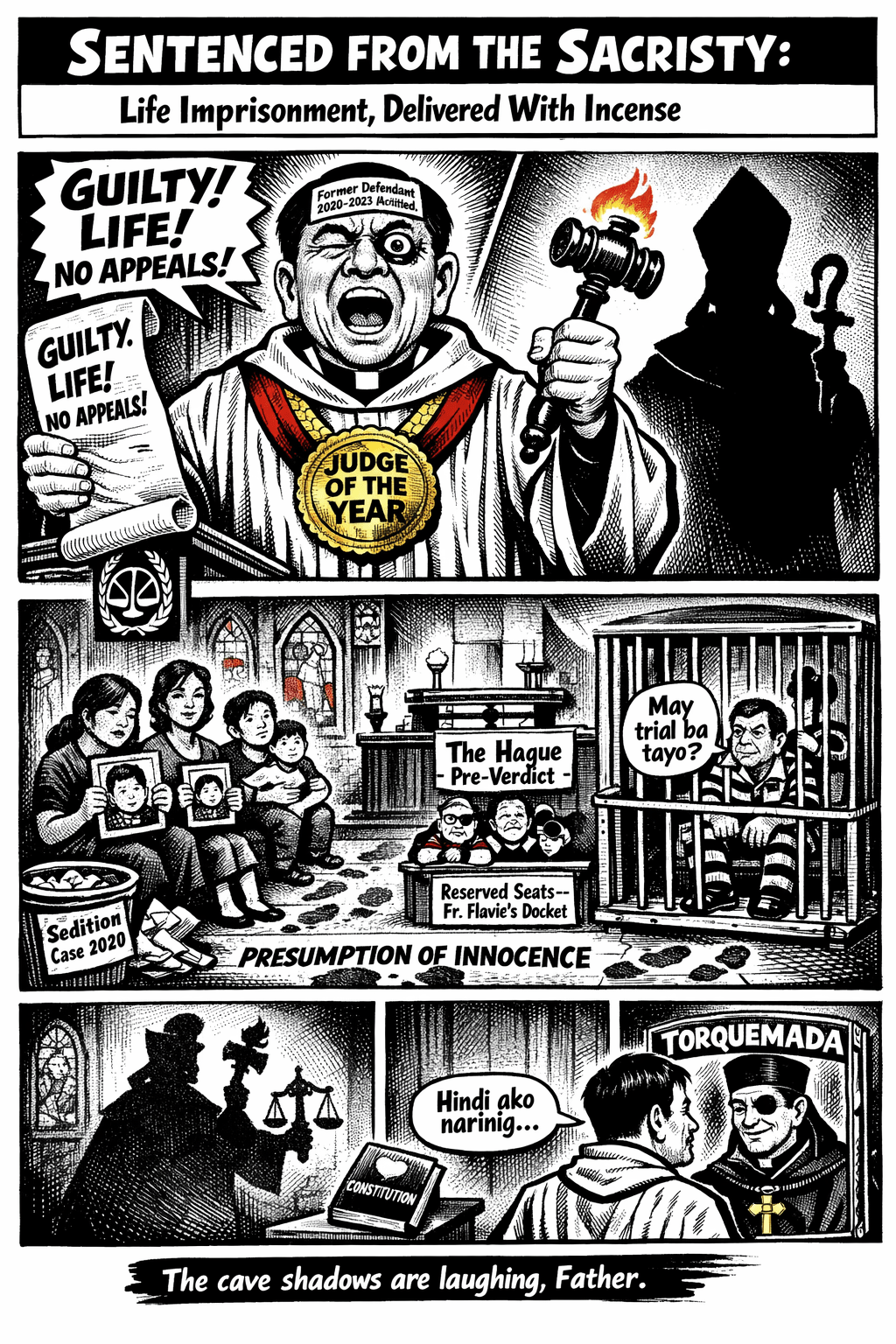
- Priest Sentences Duterte to Life – No Trial Needed
- Flood Control or Flood of Corruption? Marcos’ Infrastructure Probe Hits a Curious Pause

- Tau Gamma Phi: Where Brotherhood Means Beating You to Death and Blaming the Rogue Chapter
- Procurement Mafia’s Latest Hit Job: Why Herbosa Can’t Catch a Break

- Abra-Cadabra! 4.3 Million Poor Filipinos Just Vanished – Thanks, DHSUD Math





 KWEBA ni BAROK
Leave a comment