
By Louis ‘Barok’ C. Biraogo
In a world teetering on the brink of conflict, the calls for diplomacy and peace resonate louder than ever. This urgency is keenly felt in the escalating tensions over the West Philippine Sea, where historical ties and current disputes intersect. Recently, Senate President Francis Escudero highlighted a profound yet pragmatic approach: leveraging the Filipino-Chinese community as a bridge to foster understanding and resolve conflicts between the Philippines and China. This proposal, brimming with optimism and rooted in shared history, deserves not just our attention but our active support.
Escudero’s proposal is not a mere diplomatic platitude; it is a strategic call to harness the unique position of the Filipino-Chinese community. The Federation of Filipino Chinese Chambers of Commerce and Industry Inc. (FFCCCII) and other Filipino-Chinese groups can act as mediators, given their deep cultural ties and economic interconnections with both nations. This community embodies a living testament to the long-standing relations between the Philippines and China, stretching back over a millennium, far before colonial interventions.
The wisdom in Escudero’s words draws from Simon and Garfunkel’s evocative song “Bridge Over Troubled Water,” urging the community to be the steadying influence amid turbulent seas. His appeal for the FFCCCII to mediate underscores a fundamental truth: diplomacy and dialogue are indispensable in resolving international disputes. This approach not only seeks to calm immediate tensions but also aims to rebuild trust and foster long-term cooperation.
The necessity of such diplomatic efforts is underscored by the Philippine Coast Guard’s (PCG) proposal at the recent ASEAN Coast Guard Forum (ACF). The draft of the Southeast Asia Protocol on Engagements at Sea (SEA-PEACE) represents a collective effort to establish common norms in maritime operations, ensuring adherence to international laws and conventions like UNCLOS and IMO. Such a protocol is essential in curbing unilateral actions by any nation, thus promoting stability and mutual respect in the region.
However, diplomacy must be multi-faceted. Senator Imee Marcos’s call to review the Philippines’ Mutual Defense Treaty (MDT) with the United States highlights another critical dimension of this complex issue. The treaty, rooted in the Cold War era, requires re-examination to clarify its applicability to contemporary “gray zone” conflicts, where overt armed attacks are absent, yet sovereignty is continually challenged. A clear and updated understanding of the treaty’s scope is necessary to fortify the Philippines’ defense strategies and ensure that alliances are effectively mobilized when needed.
Meanwhile, environmental stewardship presents another pathway to peace. As proposed by the Makakalikasan Nature Party Philippines, the West Philippine Sea should be seen as a shared ecosystem, where countries collaboratively manage marine resources. This shared stewardship model can safeguard both the environment and the livelihoods of coastal communities, fostering peace through cooperative conservation efforts.
In legislative realms, Representative Rufus Rodriguez’s urging of President Marcos to sign the Maritime Zones bill is a decisive step towards asserting maritime and sovereign rights. Clear legal definitions of maritime territories, including contested areas like Scarborough Shoal, provide a robust framework for enforcing these rights and addressing territorial disputes. This measure not only strengthens legal claims but also reinforces national sovereignty, providing a solid foundation for diplomatic engagements.
Collectively, these proposals—whether through community diplomacy, regional protocols, defense treaty reviews, environmental cooperation, or legislative clarity—form a comprehensive approach to addressing the West Philippine Sea tensions. Each element underscores the necessity of diplomacy, the rule of law, and peaceful resolution of conflicts.
Escudero’s vision for the Filipino-Chinese community as a bridge is particularly compelling. It calls on a group with a unique vantage point and vested interest in peace to play a pivotal role in diplomacy. By engaging this community, the Philippines can navigate the troubled waters of international relations with China more effectively, fostering mutual understanding and de-escalating potential conflicts.
In conclusion, the road to peace and stability in the West Philippine Sea is paved with dialogue, cooperation, and legal clarity. As we navigate these challenging times, it is imperative that we support and implement these multifaceted diplomatic efforts. The stakes are high, but with concerted efforts and unwavering commitment to peace, we can ensure a future where conflicts are resolved not by might, but through understanding and mutual respect. The Filipino-Chinese community, ASEAN, and legislative measures all play crucial roles in this grand tapestry of diplomacy, guiding us towards a harmonious resolution of the West Philippine Sea tensions.

- PH Begs Iran: “Please Call Us Non-Hostile” While Hugging US Bases

- PAGCOR’s P310M Casino Heist: The Regulator That Robs Its Own Players

- Philippines as ASEAN’s Ukraine? War Factory Fantasy Exposed

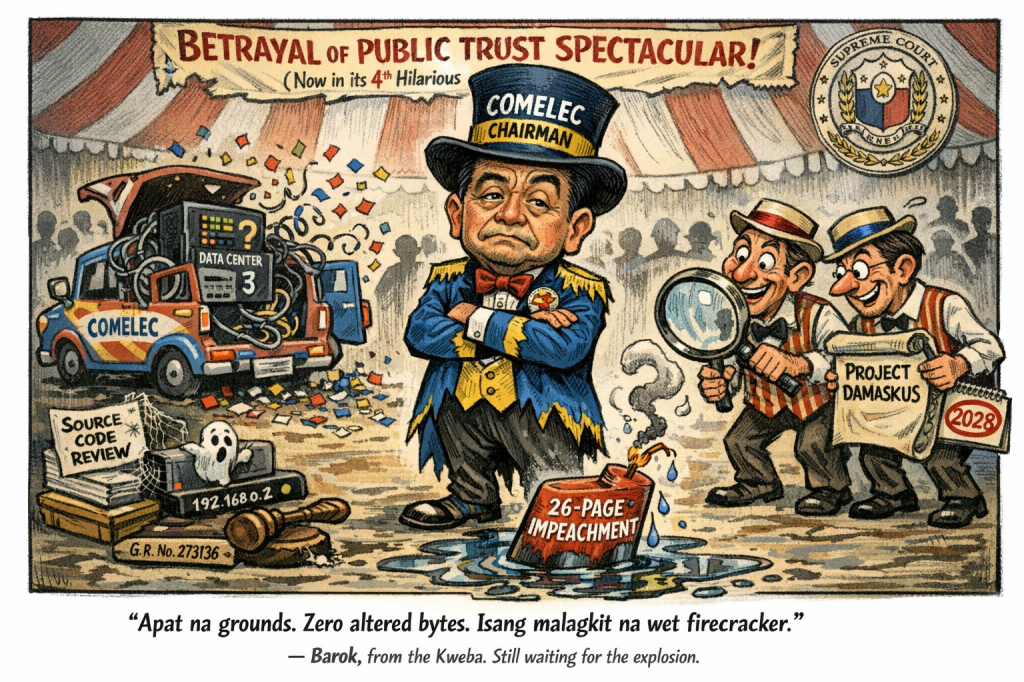
- COMELEC Clown Car Impeached: Garcia’s 26-Page Wet Firecracker

- Fishing Expedition” or House Overreach? Sara Duterte Strikes Back







 KWEBA ni BAROK
Leave a comment