By Louis ‘Barok’ C. Biraogo
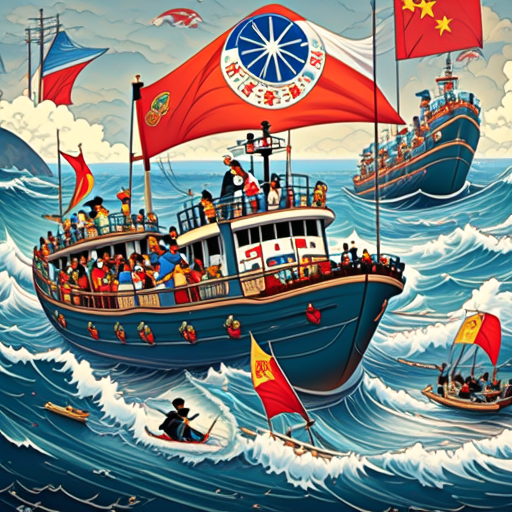
In the clouded waters of the South China Sea, a grave injustice unfolds—a stark reminder of China’s brazen disregard for international norms and human decency. The latest episode, where China’s Coast Guard obstructed a Philippine medical evacuation mission in Ayungin Shoal, is not just a geopolitical maneuver; it is an act of unbridled aggression against humanity and the rule of law.
The Philippine Coast Guard’s stern statement—that the Philippines owes no apology or permission to China for operations within its exclusive economic zone (EEZ)—resonates with defiance and integrity. Commodore Jay Tarriela’s declaration that China has no jurisdiction over the waters around Ayungin Shoal, located 105 nautical miles from Palawan, is a firm reminder of sovereignty and the sanctity of international maritime law.
The incident on May 19, when Chinese vessels blockaded and rammed Philippine boats on a humanitarian mission, is a chilling demonstration of China’s cruel calculus. This was not a skirmish over territorial disputes but an assault on the fundamental rights of Filipino soldiers. The Foreign Ministry’s preposterous claim that this blockade was a tactic to ferry construction materials to the BRP Sierra Madre, a World War II-era warship serving as a Philippine outpost, is not just unfounded; it is a cruel mockery of reason and compassion.
This act by the China Coast Guard, which Tarriela condemned as “barbaric and inhumane,” underscores a deeper menace. It is a stark illustration of how China, under the guise of asserting its so-called “historical rights,” disregards the lives and safety of those in distress. It is a vivid reminder that behind China’s expansive claims lies a ruthless agenda, indifferent to the laws of the sea and the basic tenets of humanity.
China’s strategy is a dangerous cocktail of might and manipulation. It seeks to transform international waters into its private domain, bending international laws and norms to suit its ambitions. The world watched in horror as its vessels blockaded a simple medical evacuation, a gesture of humanity, a lifeline thrown to a fellow soldier in distress. This is not just an act of aggression; it is a profound moral and ethical violation.
In stark contrast, the Philippines has shown remarkable restraint and resilience. The nation’s steadfast commitment to the rule of law and its unwavering defense of its maritime rights stand in stark relief against China’s expansionist brinkmanship. The PCG’s insistence that they operate within their sovereign waters, unencumbered by Chinese decrees, is a testament to the Philippines’ courage and resolve.
Yet, this situation calls for more than just defiance. It demands a collective call to arms—not with weapons, but with the powerful arsenal of diplomacy, international law, and global solidarity. The Philippines must lead a united front, rallying the international community to condemn China’s actions in the strongest terms possible. The United Nations, ASEAN, and global maritime nations must be galvanized to uphold the ruling of the Permanent Court of Arbitration, which unequivocally declared China’s claims in the South China Sea as without legal basis.
The world must not stand idly by as China bullies its neighbors and flouts international law. We must amplify the voices of those who stand with the Philippines, echoing the call for peace, justice, and adherence to international norms. The time has come to ensure that China’s path of coercion and aggression is met with united resistance.
The Philippines, with its indomitable spirit and unwavering adherence to the rule of law, must continue to shine as a beacon of justice in these troubled waters. It must fortify its alliances, strengthen its defenses, and remain resolute in its pursuit of peace and security. And for the international community, it is a clarion call to stand firm, to support the Philippines, and to uphold the sanctity of international law. The world must not let China’s shadow of tyranny darken the waters of the South China Sea. The time for action is now.

- Priest Sentences Duterte to Life – No Trial Needed

- Flood Control or Flood of Corruption? Marcos’ Infrastructure Probe Hits a Curious Pause

- Tau Gamma Phi: Where Brotherhood Means Beating You to Death and Blaming the Rogue Chapter

- Procurement Mafia’s Latest Hit Job: Why Herbosa Can’t Catch a Break

- Abra-Cadabra! 4.3 Million Poor Filipinos Just Vanished – Thanks, DHSUD Math






 KWEBA ni BAROK
Leave a comment