By Louis ‘Barok‘ C. Biraogo
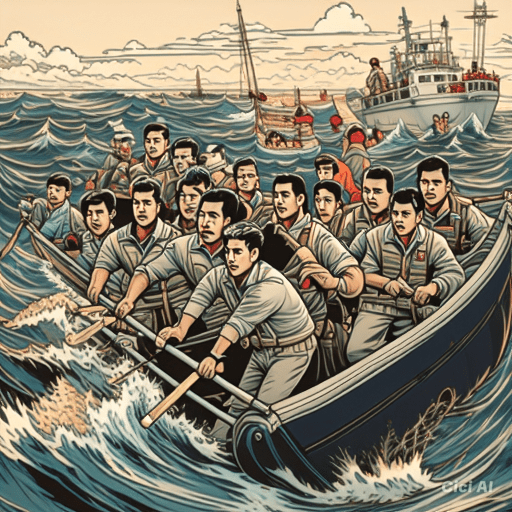
In an extraordinary display of courage and restraint, Philippine Navy personnel recently faced off against the aggressive and heavily armed China Coast Guard (CCG) in the West Philippine Sea, armed with nothing more than their bare hands. The confrontation, which took place during a resupply mission to the BRP Sierra Madre stationed at Ayungin Shoal, underscores the volatile situation in these contested waters and highlights the stark contrast between the two sides’ approaches to the dispute.
As revealed by Armed Forces of the Philippines (AFP) chief General Romeo Brawner Jr., the Filipino sailors found themselves in a perilous situation, pushing back the CCG’s rigid hull inflatable boats (RHIBs) with their hands to prevent a collision. Despite having firearms on board, the sailors made the commendable decision not to use them, showing remarkable restraint and a steadfast commitment to peace. The AFP Western Command chief, Rear Admiral Alfonso Torres, confirmed that the CCG personnel went as far as puncturing the Filipino RHIBs with bolos, a clear act of aggression.
This encounter, one of many in a long-standing series of maritime confrontations, underscores the aggressive tactics employed by China to assert its expansive claims over the South China Sea, including areas recognized internationally as part of the West Philippine Sea. These actions blatantly disregard the 2016 ruling by an international tribunal which invalidated China’s sweeping claims. The tribunal’s decision, stemming from a case filed by Manila in 2013, was a landmark affirmation of the rule of law over might, a principle that Beijing continues to flout with alarming regularity.
The bravery of the Filipino sailors, who chose not to escalate the situation despite suffering injuries and the loss of a thumb by one of their own, is a poignant testament to their commitment to peace and the rule of law. Their actions stand in stark contrast to the Chinese coast guard’s provocations, which can only be described as acts of bullying and intimidation. The CCG’s decision to ram, tow, and even board Philippine vessels, all under the guise of “control measures,” is a thinly veiled attempt to enforce a sovereignty claim that has no basis in international law.
It is high time for the international community to take a firm stand against such blatant disregard for established legal norms. The West Philippine Sea, like all international waters, should be a zone of peace and cooperation, not a theatre for aggressive posturing and unlawful claims. The actions of the Chinese coast guard are not just an affront to the Philippines, but a challenge to the international order that governs maritime conduct.
Diplomacy and adherence to international law must prevail. The Philippines has shown incredible restraint, aiming to de-escalate tensions even when provoked. This restraint, however, should not be mistaken for weakness. The international community must rally behind the Philippines, ensuring that the principles of peaceful coexistence and respect for international law are upheld.
In an era where might often seems to make right, the Filipino sailors’ defiant stand with bare hands against armed aggressors is a powerful reminder of the human spirit’s resilience and commitment to justice. It is a call to action for all nations that value peace and the rule of law to support the Philippines in its quest for a peaceful resolution in the West Philippine Sea. The rule of law must triumph over the law of the jungle, and diplomacy must pave the way to a lasting peace in these troubled waters.










 KWEBA ni BAROK
Leave a comment