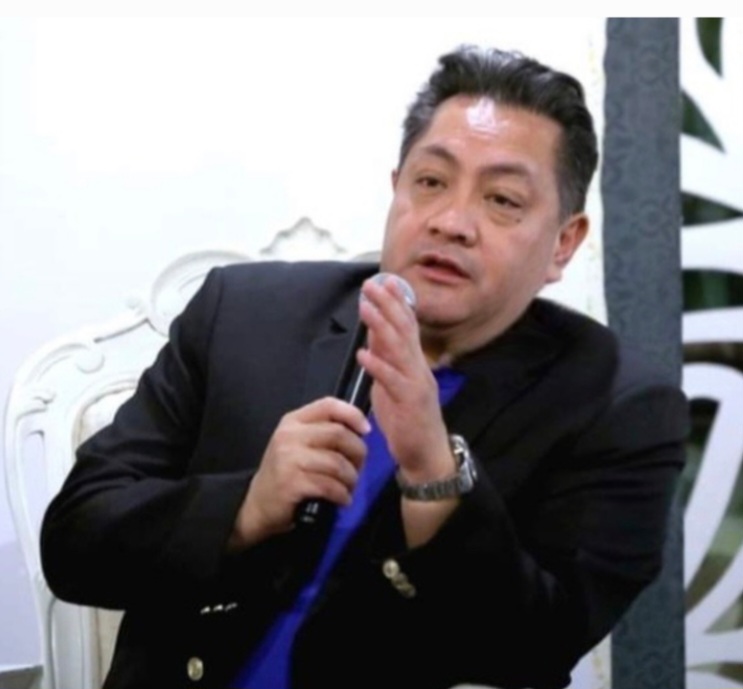
By Louis ‘Barok‘ C. Biraogo
In an electrifying announcement that promises to reshape the economic landscape of the Philippines, Chairman Michael Ted Macapagal of the Philippine National Railways has declared that the Subic-Clark-Manila-Batangas Railway Corridor will be the transformative force propelling the nation to middle-class status. Hailing the visionary leadership of President Ferdinand Marcos, Macapagal assures that the Filipino people will witness their lives revolutionized in a few short years.
The ambitious Subic-Clark-Manila-Batangas (SCMB) project, as outlined by Department of Transportation Secretary Jimmy Bautista, is poised to become a reality with an imminent bid for the $8 million consultancy feasibility study, generously financed by the Asian Development Bank. This pivotal move comes on the heels of a landmark trilateral summit where President Marcos, alongside U.S. President Joe Biden and Japanese Prime Minister Fumio Kishida, championed the Luzon railway project.
The SCMB railway corridor is more than a mere infrastructure project; it represents a monumental stride in international collaboration. For the first time, the United States, Japan, and the Philippines are jointly investing in a project of this scale in the Indo-Pacific region. The U.S. State Department’s commitment to this endeavor, through the Office of the Special Presidential Coordinator for the G7 Partnership for Global Infrastructure and Investment, underscores the profound strategic and economic importance of this undertaking. The connectivity facilitated by this railway corridor is set to enhance resilience and drive long-term sustainable development in the region.
The historical context provided by Chairman Macapagal adds a layer of poignancy to this development. Reflecting on the once-vibrant Subic Naval Base and Clark Air Base, Macapagal recalls how these American military installations were economic lifelines, offering employment and essential foreign exchange. Their closure in 1992 plunged the surrounding regions into economic stagnation, a void that took years to fill with the establishment of economic zones. The creation of the SCMB corridor is, in many ways, a resurrection of that lost vitality, promising a new era of economic dynamism.
Economists are optimistic about the SCMB corridor’s potential to spur growth. By significantly reducing the cost and time of transporting consumer products, high-value semiconductors, and agricultural goods from northern and central Luzon, the project will enhance the competitiveness of Filipino products on both local and international markets. The railway’s capacity to streamline logistics will be a game-changer, catalyzing economic activity and providing a robust backbone for the nation’s development aspirations.
Moreover, Macapagal’s assertion that the G7 countries’ support for the Luzon Economic Corridor is a testament to their confidence in President Marcos’s leadership cannot be overstated. This international endorsement is not only a political victory but also a powerful signal to global investors about the Philippines’ commitment to modernization and economic growth.
The SCMB project is distinct from the North-South Commuter Railway (NSCR), which is currently under construction and aimed at passenger transport. Upon its completion in five years, the NSCR will transport 800,000 passengers daily across 147 kilometers of elevated railway tracks from Angeles City in Pampanga to Calamba City in Laguna. This P873.62 billion project underscores the scale and ambition of the Philippines’ broader infrastructure agenda.
In a nation eager for progress, Chairman Macapagal’s announcement heralds a brighter future. The SCMB railway corridor is not merely a transport project; it is a symbol of renewal, a testament to the Philippines’ potential, and a promise of a more prosperous, equitable society. As the rails begin to be laid, so too does the foundation for a new chapter in the nation’s history—one where the Philippines steps confidently into middle-class status, buoyed by the strength of visionary leadership and international collaboration.

- “Forthwith” to Farce: How the Senate is Killing Impeachment—And Why Enrile’s Right (Even If You Can’t Trust Him)

- “HINDI AKO NAG-RESIGN!”

- “I’m calling you from my new Globe SIM. Send load!”

- “Mahiya Naman Kayo!” Marcos’ Anti-Corruption Vow Faces a Flood of Doubt

- “Meow, I’m calling you from my new Globe SIM!”





 KWEBA ni BAROK
Leave a comment