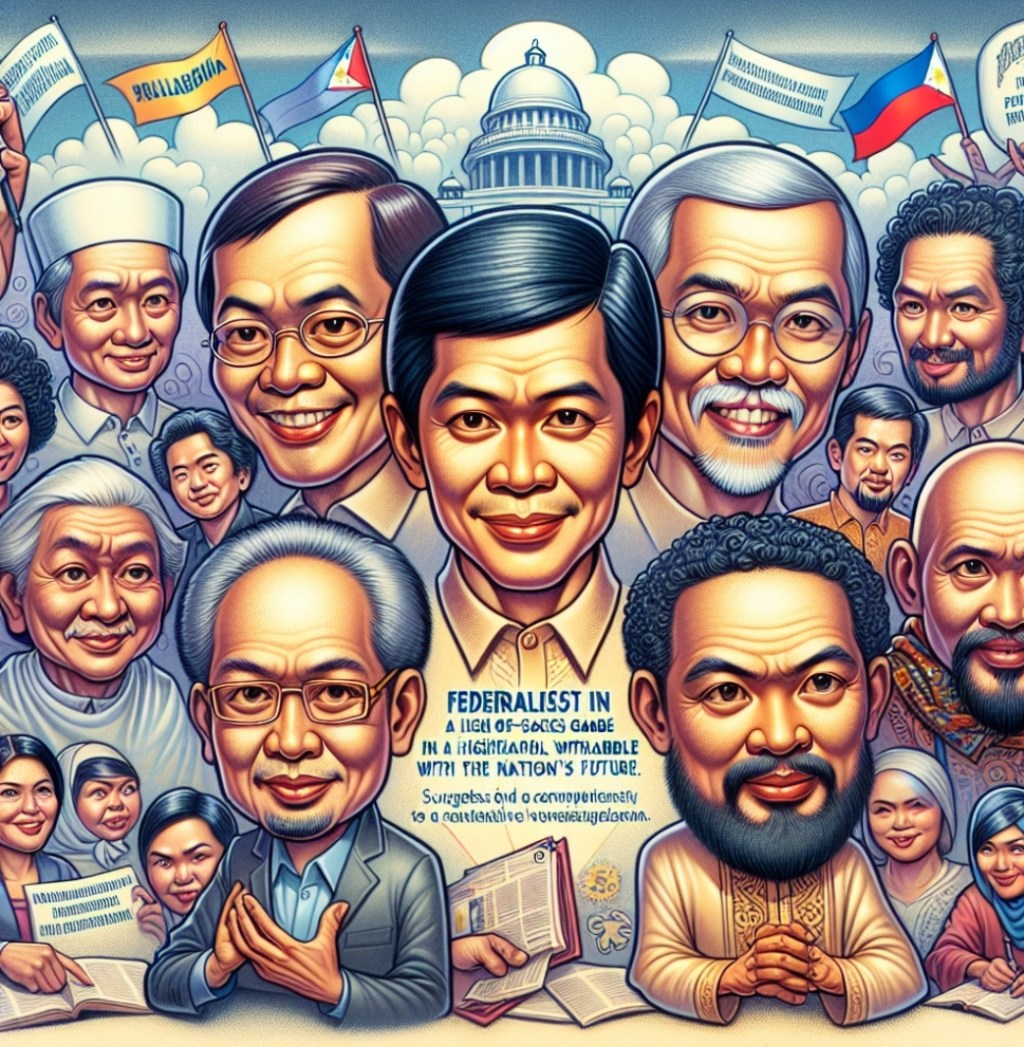
By Louis ‘Barok‘ C. Biraogo
In the shadow of the Philippines’ fraught political landscape, a formidable group of former Duterte administration officials, alongside influential figures from various sectors, has reignited the push for federalism. Their call to amend the 1987 Constitution via a constitutional convention (con-con) is not merely a political maneuver—it is a potential watershed moment for the nation’s governance. The movement, spearheaded by notable personalities like Greco Belgica, Gregorio Honasan, and several respected religious and academic leaders, aims to overhaul the centralist structure that has long defined the Philippines.
A Historical Context
The advocacy for federalism in the Philippines is not a novel endeavor. It has deep roots tracing back to the early 20th century, gaining momentum with the establishment of the Philippine Commonwealth in 1935 under the Tydings-McDuffie Act, which envisioned a transition to an independent federal republic. However, the dream was deferred, and the country remained a unitary state under the 1987 Constitution, a product of the People Power Revolution that ousted Ferdinand Marcos. This document, crafted to establish a more democratic framework, has been a cornerstone of the nation’s governance, but it is now at the heart of a vigorous debate over its relevance and rigidity.
The Case for Federalism
Advocates of federalism argue that this system could unlock unprecedented opportunities for the Philippines. Here’s a look at their key arguments:
1. Enhanced Local Governance and Autonomy: Proponents claim that federalism would decentralize power, granting local governments greater autonomy to manage their resources and respond to regional needs. This could lead to more tailored policies that reflect the unique cultural, economic, and geographical characteristics of each region.
2. Economic Development: By distributing power more equitably, federalism could stimulate regional development, potentially reducing the stark economic disparities between Manila and the provinces. The idea is that local governments, with control over their resources, could foster environments more conducive to investment and economic innovation.
3. Political Stability and Predictability: Advocates argue that the current unitary system, with its concentration of power at the national level, breeds instability. Federalism, they contend, could mitigate this by creating a political structure that is less susceptible to the whims of a central government and more aligned with local interests.
4. Increased Accountability: With localized governance, citizens might find it easier to hold their local officials accountable, enhancing transparency and reducing corruption. This could potentially restore public trust in government institutions, a critical component in a country struggling with governance issues.
The Counterarguments and Risks
However, the move towards federalism is fraught with complexities and challenges. Here are the primary concerns:
1. Risk of Fragmentation: Critics argue that federalism could exacerbate regional inequalities, leading to a fragmented nation with varying standards of living and governance. This could undermine national unity, particularly in a country with deep-seated regional and cultural divisions.
2. Implementation Challenges: The transition to a federal system would require significant restructuring of political and administrative systems. This includes redefining the roles and powers of local and national governments, which could be an arduous and contentious process. The Philippines lacks the infrastructure and experience to implement such a shift smoothly, potentially leading to chaos and inefficiency.
3. Potential for Corruption: While federalism aims to enhance accountability, there is a risk that it could also create new avenues for corruption. Local governments, now with more control over resources, could become breeding grounds for patronage and cronyism, especially in areas with weak institutional frameworks.
4. Cost Implications: The financial burden of transitioning to a federal system is another significant concern. Establishing new federal institutions, training officials, and implementing new administrative structures would require substantial investment, raising questions about the fiscal sustainability of such reforms.
Comparative Analysis: Federalism vs. Unitary System
Advantages of Federalism:
- Decentralized Power: Encourages local innovation and responsiveness.
- Economic Boost: Potentially stimulates regional economic growth.
- Political Stability: Reduces the concentration of power, potentially lowering the risk of authoritarian rule.
Disadvantages of Federalism:
- Fragmentation Risk: Could deepen regional divides.
- Implementation Complexity: Requires extensive planning and resources.
- Increased Corruption Risk: More localized control might exacerbate corruption.
Is Federalism the Answer?
As the debate rages on, it’s crucial to assess whether federalism truly offers the panacea that the Philippines needs. The current unitary system, despite its flaws, has provided a framework for national cohesion and centralized governance. Yet, the push for federalism is compelling, offering a vision of a more empowered and dynamic local governance structure.
Given the current state of political and economic affairs, federalism could indeed provide the catalyst for meaningful change. However, it is imperative to approach this transition with caution, ensuring that the benefits of decentralization do not come at the expense of national unity and stability.
Recommendations:
1. Comprehensive Feasibility Study: Conduct a thorough and inclusive study to explore the practical implications of federalism, considering economic, social, and political factors.
2. Public Consultation: Engage the public through extensive consultations and debates, ensuring that the voices of all Filipinos are heard in shaping the future of the nation’s governance.
3. Pilot Programs: Implement pilot projects in selected regions to test the viability and impact of federal governance, allowing for adjustments based on real-world outcomes.
4. Strengthen Institutions: Simultaneously bolster local institutions to handle the new responsibilities that federalism would entail, ensuring that they are capable of fostering development and maintaining integrity.
In the end, whether the Philippines chooses federalism or strengthens its unitary system, the goal remains clear: to build a more just, stable, and prosperous nation. The road ahead is fraught with challenges, but it is also filled with potential. The choices made today will shape the Philippines for generations to come.

- ₱75 Million Heist: Cops Gone Full Bandit

- ₱6.7-Trillion Temptation: The Great Pork Zombie Revival and the “Collegial” Vote-Buying Circus

- ₱1.9 Billion for 382 Units and a Rooftop Pool: Poverty Solved, Next Problem Please

- ₱1.35 Trillion for Education: Bigger Budget, Same Old Thieves’ Banquet

- ₱1 Billion Congressional Seat? Sorry, Sold Out Na Raw — Si Bello Raw Ang Hindi Bumili




 KWEBA ni BAROK
Leave a comment