
By Louis ‘Barok‘ C. Biraogo
In a dramatic turn of events, the Philippine National Police’s Criminal Investigation and Detection Group (PNP-CIDG) and the Presidential Anti-Organized Crime Commission (PAOCC) have leveled nonbailable qualified human trafficking charges against Bamban Mayor Alice Guo. This development follows the discovery of her alleged involvement in an illegal Philippine offshore gaming operator (Pogo) hub in her jurisdiction. The complaint, presented to the Department of Justice (DOJ), implicates Guo and 13 others in a complex web of alleged labor trafficking involving around 500 foreign workers.
The Nature of the Cases
Mayor Guo and her co-accused face charges under Republic Act No. 9208, the Anti-Trafficking in Persons Act, as amended by Republic Act Nos. 10364 and 11862. These laws are stringent in their provisions, defining trafficking broadly to include recruitment, transportation, transfer, or harboring of persons for the purpose of exploitation. The “qualified” aspect of the charge refers to circumstances that aggravate the crime, making it nonbailable under Philippine law. The inclusion of foreign nationals and the scale of the operation underscore the gravity of these charges.
Philippine Legal Precedents
Philippine Supreme Court precedents provide a firm foundation for understanding the gravity and legal implications of these charges. In People vs. Lalli (G.R. No. 182209, January 21, 2015), the Court underscored that human trafficking cases should be approached with a holistic view, considering all evidence that demonstrates a pattern of exploitation and coercion. The ruling in People vs. Bayona (G.R. No. 199735, February 27, 2013) further reinforced that circumstantial evidence could be sufficient for conviction if it forms an unbroken chain leading to a reasonable conclusion of guilt.
In the case of Mayor Guo, the authorities have amassed a substantial amount of circumstantial evidence. Documents linking her to Pogo operations, including applications for letters of no objection for gaming operators and involvement in lessor companies, are critical pieces. The evidence suggests a “grand conspiracy to commit labor trafficking,” involving various incorporations and significant financial interests.
Strength of the Prosecution’s Evidence
The prosecution’s evidence appears robust, comprising documentation, eyewitness accounts, and the rescue of foreign workers from substandard and coercive working conditions. Justice Undersecretary Nicholas Felix Ty and lead prosecutor Benjamin Samson have outlined a comprehensive case that connects Guo to the illegal Pogo operations and the systemic exploitation of workers.
Under Philippine law, specifically Article 8 of the Revised Penal Code, conspiracy exists when two or more persons come to an agreement concerning the commission of a felony and decide to commit it. The prosecution’s narrative aligns with the Supreme Court’s ruling in People vs. Lizada (G.R. No. 140961, November 27, 2002), where a conspiracy was inferred from the concerted actions of the accused leading to the crime.
The Likelihood of Prosecution Success
Given the thoroughness of the evidence and the legal framework surrounding human trafficking, the likelihood of a successful prosecution is significant. The charges against Guo are bolstered by the clear intent to traffic and exploit workers, supported by documentary evidence and rescue operations.
However, the success of the prosecution will depend on maintaining the integrity of the evidence and the judicial process. The defense may attempt to discredit the evidence or argue procedural lapses. Hence, the DOJ’s meticulous handling of the preliminary investigation and subsequent court proceedings will be crucial.
Recommendations
To strengthen the case further, the following steps are recommended:
1. Enhanced Victim Testimonies: Secure detailed and corroborated testimonies from the rescued workers, highlighting their experiences and linking them directly to the accused.
2. Financial Investigations: Conduct thorough financial audits to trace money trails that connect Guo and her co-accused to the illegal operations, establishing a clear motive and profit-driven exploitation.
3. Interagency Collaboration: Maintain robust collaboration between law enforcement agencies, the DOJ, and international bodies to ensure comprehensive evidence collection and witness protection.
4. Public Awareness Campaigns: Enhance public awareness about the case to prevent future occurrences of human trafficking and to build community support for the prosecution’s efforts.
The allegations against Mayor Alice Guo mark a critical juncture in the fight against human trafficking in the Philippines. The unfolding legal battle promises to be both complex and consequential, potentially setting a significant precedent for future trafficking cases. As the justice system takes its course, the eyes of the nation will be on Bamban, where the outcome could reshape the landscape of legal accountability for public officials involved in organized crime.

- “Forthwith” to Farce: How the Senate is Killing Impeachment—And Why Enrile’s Right (Even If You Can’t Trust Him)
- “HINDI AKO NAG-RESIGN!”

- “I’m calling you from my new Globe SIM. Send load!”

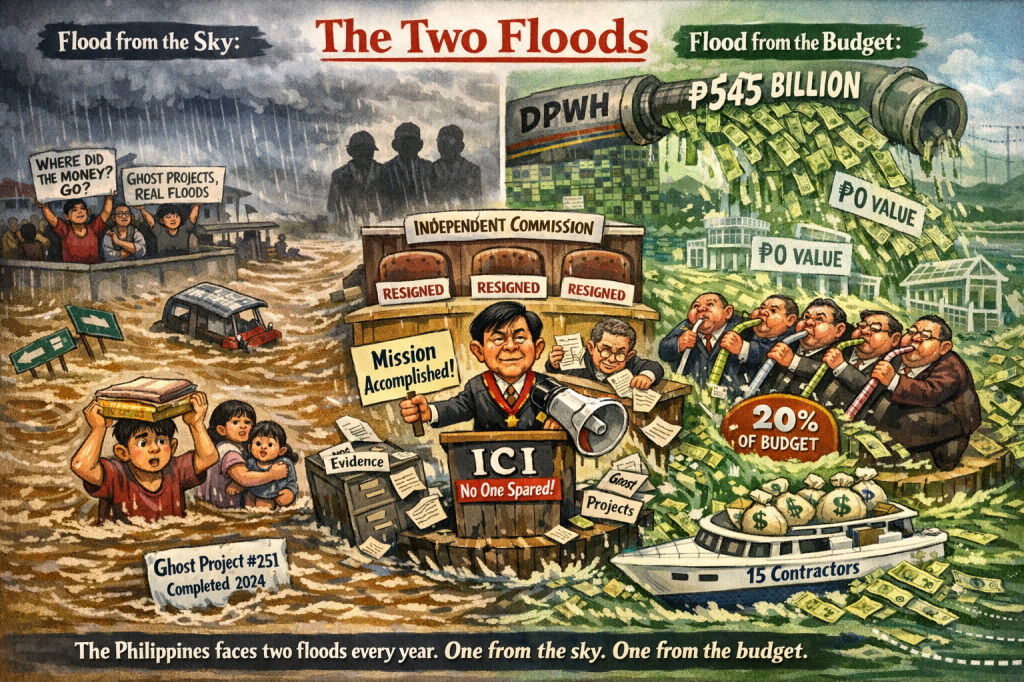
- “Mahiya Naman Kayo!” Marcos’ Anti-Corruption Vow Faces a Flood of Doubt

- “Meow, I’m calling you from my new Globe SIM!”




 KWEBA ni BAROK
Leave a comment