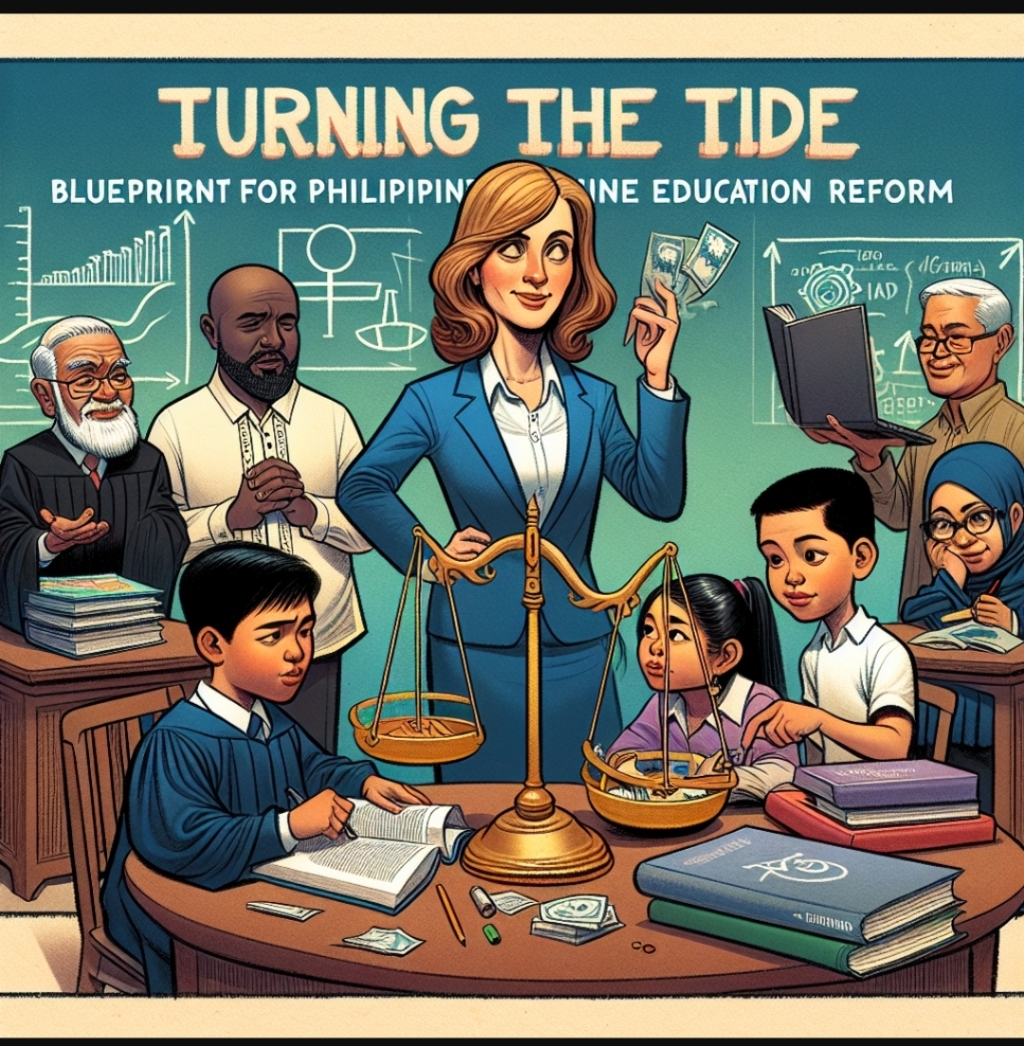
By Louis ‘Barok‘ C. Biraogo
In the latest twist in the saga of the Philippine educational system, House Basic Education Committee Chairperson and Pasig lawmaker Roman Romulo has sounded the alarm on the country’s abysmal performance in the 2022 Programme for International Student Assessment (PISA). According to Romulo, the path to improving the Philippines’ standing, particularly in creative thinking, lies in mastering basic functional literacy, including reading comprehension. This pronouncement comes on the heels of the PISA report, which placed the Philippines second to last in creative thinking, narrowly avoiding the ignominious position held by Albania.
A Historical Perspective
To truly understand the gravity of the current situation, one must delve into the historical context of the Philippine educational system. Established during the American colonial period, the Philippine education system was initially modeled after the United States, emphasizing English language instruction and a comprehensive public school system. Post-independence, the system retained much of this structure but faced significant challenges due to political instability, economic constraints, and varying policy directions.
Comparative Analysis: Past and Present
In the 20th century, the Philippines was often lauded for its high literacy rates compared to neighboring countries. However, as global educational standards evolved, the country struggled to keep pace. Today, comparing the Philippine educational system to its ASEAN neighbors and beyond reveals stark contrasts. Nations like Singapore and South Korea, which also started with limited resources, have achieved remarkable educational outcomes through consistent investment in teacher training, curriculum development, and educational technology.
The Philippines, on the other hand, has faced persistent issues such as overcrowded classrooms, underfunded schools, and poorly compensated teachers. These factors have contributed to a decline in educational quality and student performance, as evidenced by the dismal PISA scores.
The Roots of the Current Status
Several factors contribute to the current educational crisis in the Philippines:
1. Inadequate Funding: The education sector has long suffered from insufficient budget allocations, impacting everything from infrastructure to teacher salaries.
2. Curriculum Overload: The existing curriculum has been criticized for being too broad, leaving students with little mastery of fundamental skills.
3. Teacher Training: There is a significant need for continuous professional development for teachers to keep them updated with modern pedagogical methods.
4. Socioeconomic Disparities: Widespread poverty affects students’ ability to focus on their studies, with many having to juggle school with work or family responsibilities.
Romulo’s Proposal: A Catalyst for Change
Roman Romulo’s advocacy for a focus on basic functional literacy is both timely and essential. The proposed Matatag Curriculum aims to streamline subjects and competencies, allowing teachers to hone in on critical areas such as reading comprehension, mathematics, and science. This shift is expected to lay a solid foundation upon which higher-order skills, like creative thinking, can be built.
Romulo’s call for the upskilling of teachers and a tailored approach per school is particularly commendable. By empowering teachers and recognizing the unique needs of different schools, the education system can become more adaptive and effective. This decentralization is crucial in a diverse country where educational challenges vary widely from one region to another.
Recommendations
To bolster the effectiveness of these reforms, several steps are recommended:
1. Increased Investment: Allocate more funds to the education sector, prioritizing infrastructure, learning materials, and teacher salaries.
2. Teacher Development: Implement continuous and rigorous professional development programs for teachers, focusing on modern teaching strategies and subject mastery.
3. Parental and Community Involvement: Engage parents and local communities in the educational process to create a supportive environment for students.
4. Data-Driven Policies: Utilize data from assessments like PISA to inform policy decisions and track progress over time.
5. Technology Integration: Leverage educational technology to enhance learning experiences and provide access to quality education in remote areas.
The Dramatic Shift in Educational Strategy
As Vice President Sara Duterte steps down from her role as Education Secretary, the future of Philippine education hangs in the balance. Will the implementation of the Matatag Curriculum and Romulo’s visionary proposals be enough to turn the tide? The coming months will be critical as the Department of Education navigates these reforms amidst ongoing challenges.
The stakes are high. The Philippines’ journey to reclaim its educational standing is fraught with obstacles, but with strategic focus and unwavering commitment, there is a glimmer of hope that the next generation of Filipinos will be better equipped to compete on the global stage. The nation waits with bated breath, hoping for a renaissance in Philippine education that will finally bring the promise of quality learning to all.

- ₱75 Million Heist: Cops Gone Full Bandit

- ₱6.7-Trillion Temptation: The Great Pork Zombie Revival and the “Collegial” Vote-Buying Circus

- ₱1.9 Billion for 382 Units and a Rooftop Pool: Poverty Solved, Next Problem Please

- ₱1.35 Trillion for Education: Bigger Budget, Same Old Thieves’ Banquet

- ₱1 Billion Congressional Seat? Sorry, Sold Out Na Raw — Si Bello Raw Ang Hindi Bumili


 KWEBA ni BAROK
Leave a comment