By Louis ‘Barok‘ C. Biraogo
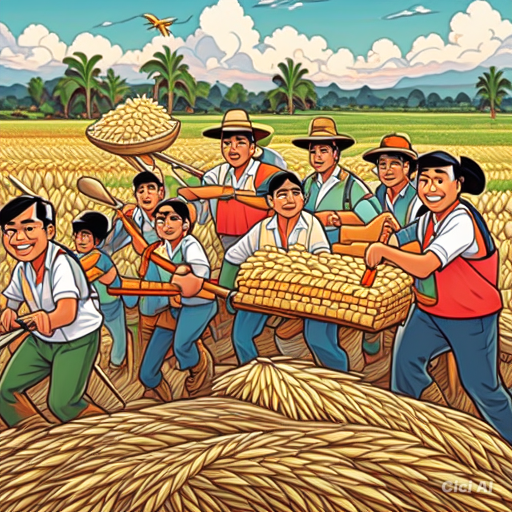
In the ongoing saga of agricultural policy in the Philippines, the latest chapter sees farmers’ groups gearing up for a high-stakes legal battle against Executive Order 62. This EO, signed by Executive Secretary Lucas Bersamin under President Marcos Jr.’s authority, slashes the tariff on imported rice from 35% to 15%, a move that has sparked outrage among local farmers. As they prepare to take their fight to the Supreme Court, the legal and economic implications are profound.
The Legal Controversy: Arguments and Counterarguments
1. Grounds for Temporary Restraining Order (TRO)
The Samahang Industriya ng Agrikultura (SINAG), represented by legal counsel Virgie Suarez, plans to file a TRO to halt the implementation of EO 62. One of their main arguments is the lack of public consultation by the Tariff Commission. This, they claim, violates the procedural due process required under Philippine law. Citing Republic Act No. 10863, also known as the Customs Modernization and Tariff Act, they argue that public hearings are essential for any tariff modification to ensure transparency and stakeholder participation.
2. The Hasty Implementation of EO 62
SINAG criticizes the swift enactment and publication of EO 62, alleging it was done without proper consideration and debate. They contend this rapid implementation undermines the principles of good governance and accountability. The group’s argument hinges on the Administrative Code of 1987, which emphasizes the necessity for adequate notice and consultation before significant policy changes.
3. Economic and Social Impact
The farmers’ groups argue that reducing the rice tariff will not solve inflation nor decrease market prices significantly but will instead devastate local agriculture. They predict widespread displacement of farmers and a substantial drop in farmgate prices, directly opposing President Marcos Jr.’s stated goal of boosting local production. The projected economic losses, estimated at around P80 billion, highlight the severe impact on the agricultural sector.
4. Graft Charges
In addition to the TRO, SINAG plans to file graft charges against NEDA Secretary Arsenio Balisacan and Tariff Commission officials. The allegation is that these officials engaged in corrupt practices by reducing the tariff without proper procedure or consultation, thus harming local farmers. Under Republic Act No. 3019, also known as the Anti-Graft and Corrupt Practices Act, this could lead to significant legal consequences if proven.
The Defense: EO 62’s Justifications
1. Government’s Stance on Inflation
The government’s primary justification for EO 62 is controlling inflation. By lowering tariffs, the administration hopes to make imported rice cheaper, thereby reducing overall market prices and easing the economic burden on consumers. NEDA and the Tariff Commission argue that this policy is a necessary measure to stabilize the economy.
2. Legal Authority of the President
EO 62 was signed by Executive Secretary Lucas Bersamin, acting on behalf of the President. Under the 1987 Constitution and the Administrative Code of 1987, the President has broad powers to adjust tariff rates to protect public welfare. The defense will likely argue that this executive prerogative was exercised within the bounds of the law, aiming to balance economic growth and consumer protection.
Assessing the Strength of Arguments
1. Legal Precedents and Procedural Requirements
The farmers’ strongest argument may lie in the procedural flaws surrounding the issuance of EO 62. Historical precedents from the Supreme Court, such as in Ang Tibay v. CIR (1940), have emphasized the importance of procedural due process in administrative actions. If SINAG can convincingly argue that the Tariff Commission bypassed mandatory consultations, they may have a strong case for a TRO.
2. Economic Justifications vs. Social Impact
While the government’s rationale of combating inflation is compelling, the projected adverse effects on the local farming community cannot be ignored. The Philippine Supreme Court has, in previous rulings, weighed economic policies against their broader social impacts, as seen in Manila Prince Hotel v. GSIS (1997), where public interest was a significant factor.
3. Graft Charges Viability
The graft charges, while serious, may be harder to prove without concrete evidence of corrupt practices. The burden of proof in corruption cases is high, and unless SINAG can provide substantive proof of malfeasance, these charges might not hold.
Conclusion and Recommendations
Given the significant procedural and social arguments presented by the farmers, their case for a TRO appears strong. The Supreme Court’s past emphasis on procedural due process and public interest suggests that a thorough judicial review of EO 62 is warranted. To fortify their position, farmers’ groups should:
1. Document Evidence of Procedural Lapses: Ensure all instances of bypassed consultations and procedural shortcuts are well-documented.
2. Highlight Social and Economic Impact: Provide detailed data and testimonies on the projected economic losses and social consequences of the reduced tariff.
3. Strengthen Public Support: Garner widespread public backing to demonstrate the broader societal concern over EO 62.
In this unfolding drama, the Supreme Court’s decision will not only determine the fate of EO 62 but also set a critical precedent for the balance between executive power and procedural fairness in the Philippines. As both sides brace for a legal showdown, the stakes for the nation’s agricultural sector and economic stability hang in the balance.

- “Forthwith” to Farce: How the Senate is Killing Impeachment—And Why Enrile’s Right (Even If You Can’t Trust Him)
- “HINDI AKO NAG-RESIGN!”

- “I’m calling you from my new Globe SIM. Send load!”

- “Mahiya Naman Kayo!” Marcos’ Anti-Corruption Vow Faces a Flood of Doubt

- “Meow, I’m calling you from my new Globe SIM!”




 KWEBA ni BAROK
Leave a comment