By Louis ‘Barok‘ C. Biraogo
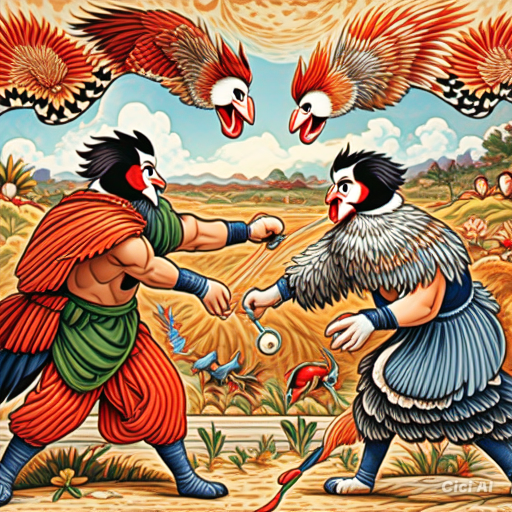
In the swirling vortex of Philippine politics, the latest chapter pits two titans against each other once more. Former President Rodrigo Duterte, with his characteristic bravado, dismisses the relentless tirades of former Senator Leila de Lima. As the shadows of past controversies loom, De Lima emerges, poised and ready to unleash a legal storm that could shake the very foundations of Duterte’s legacy.
De Lima, who has been a vocal critic of Duterte’s draconian policies, particularly his infamous war on drugs, has faced her own legal battles and imprisonment. Yet, from her tribulations, she rises like a phoenix, now positioning herself to potentially turn the tables on Duterte.
The legal landscape in the Philippines provides De Lima with a robust arsenal. Under the 1987 Philippine Constitution, Article III, Section 14(2) ensures that “the accused shall be presumed innocent until the contrary is proved.” Duterte’s incendiary remarks against De Lima could be construed as a form of extrajudicial declaration of guilt, opening the door for De Lima to pursue charges of defamation under Article 353 of the Revised Penal Code. This provision defines libel as “a public and malicious imputation of a crime, or of a vice or defect, real or imaginary,” which clearly aligns with Duterte’s public vilification of De Lima.
Moreover, Duterte’s inflammatory comments about De Lima’s alleged involvement in the drug trade, despite her acquittal on several charges, could constitute a violation of Article 21 of the Civil Code, which states, “Any person who wilfully causes loss or injury to another in a manner that is contrary to morals, good customs, or public policy shall compensate the latter for the damage.” Here, De Lima could argue that Duterte’s persistent accusations are causing undue harm to her reputation and wellbeing.
In addition, De Lima could leverage precedents set by the Philippine Supreme Court. For instance, the landmark case of Yuchengco v. The Manila Chronicle Publishing Corporation, which underscores the gravity of libelous statements made in public, could fortify De Lima’s case. This precedent reinforces that public figures are not immune to the repercussions of their statements, no matter how high their status.
On the international front, De Lima’s collaboration with the International Criminal Court (ICC) could prove to be a formidable weapon. Despite Duterte’s bluster about the ICC’s lack of jurisdiction following the Philippines’ withdrawal from the Rome Statute, the court’s ongoing investigation into alleged human rights abuses during his presidency continues. Article 127 of the Rome Statute stipulates that a state’s withdrawal does not affect any investigations or proceedings commenced prior to the date on which the withdrawal became effective. This means Duterte remains within the ICC’s crosshairs.
Yet, Duterte is no stranger to legal battles and has his own defenses at the ready. He may argue that his statements are protected under the principle of freedom of speech enshrined in Article III, Section 4 of the Philippine Constitution, which guarantees, “No law shall be passed abridging the freedom of speech, of expression, or of the press.” His defense team could frame his remarks as expressions of opinion rather than statements of fact, thus attempting to shield him from defamation charges.
Duterte could also invoke the immunity typically granted to former heads of state. However, this is a double-edged sword, as it could be contested given the gravity of the allegations against him. His vehement denial of the ICC’s jurisdiction could also be fortified by arguing that the Philippines’ withdrawal from the Rome Statute negates any legal obligations to the court, although this stance is precarious given the nuances of international law.
As this legal drama unfolds, the stakes are colossal. De Lima’s pursuit of justice against Duterte is not merely a personal vendetta but a significant moment in the Philippine struggle for accountability and the rule of law. The outcome of this confrontation could redefine the contours of power and justice in a nation where the echoes of past injustices still reverberate.
In the end, will De Lima’s legal onslaught crumble Duterte’s fortress of defiance, or will Duterte’s combative resilience prevail once more? The world watches, captivated by this high-stakes saga, as the battle lines are drawn in the quest for truth and retribution.

- “Forthwith” to Farce: How the Senate is Killing Impeachment—And Why Enrile’s Right (Even If You Can’t Trust Him)
- “HINDI AKO NAG-RESIGN!”
- “I’m calling you from my new Globe SIM. Send load!”
- “Mahiya Naman Kayo!” Marcos’ Anti-Corruption Vow Faces a Flood of Doubt
- “Meow, I’m calling you from my new Globe SIM!”
- “No Special Jail for Crooks!” Boying Remulla Slams VIP Perks for Flood Scammers
- “PLUNDER IS OVERRATED”? TRY AGAIN — IT’S A CALCULATED KILL SHOT
- “Several Lifetimes,” Said Fajardo — Translation: “I’m Not Spending Even One More Day on This Circus”


 KWEBA ni BAROK
Leave a comment