By Louis ‘Barok‘ C. Biraogo
In 1987, the Philippines found itself categorized as a lower middle-income country by the World Bank, a designation it has not managed to shake off since. Despite decades of effort, this Southeast Asian nation lags behind many of its neighbors in economic progress, stymied by a mix of structural issues, policy missteps, and external shocks. The latest World Bank rankings serve as a sobering reminder that, while the Philippines has made some economic strides, it remains tethered to a status that hampers its aspirations for greater prosperity.
To understand the Philippine economic conundrum, a historical comparison with its Asian neighbors is instructive. In the post-World War II era, several countries in East and Southeast Asia embarked on ambitious development paths. Japan and South Korea rapidly transformed their economies through industrialization and strategic investments in education and technology. The so-called “Asian Tigers”—Hong Kong, Singapore, South Korea, and Taiwan—demonstrated how targeted policies and robust governance could propel nations from poverty to prosperity in just a few decades.
Meanwhile, the Philippines, rich in natural resources and human capital, was expected to follow a similar trajectory. Yet, political instability, endemic corruption, and inconsistent economic policies stunted its growth. By the 1990s, as Malaysia, Thailand, and Indonesia were booming, the Philippines remained mired in economic challenges. The Asian Financial Crisis of 1997-1998 dealt a severe blow, from which the country took years to recover.
Fast forward to the present, and the Philippine economy tells a mixed story. Gross national income (GNI) per capita has risen modestly—from $3,950 in 2022 to $4,230 in 2023—placing the country just within the lower middle-income bracket, according to the World Bank’s latest fiscal year rankings. This modest progress belies the country’s potential and aspirations, especially when compared to its ASEAN neighbors. Indonesia, Thailand, and Malaysia have ascended to the upper middle-income group, while Singapore and Brunei boast high-income status.
Several factors explain why the Philippines has not progressed as expected. Firstly, political instability has been a recurrent issue. The country has seen a succession of leadership changes, each with differing economic agendas, leading to policy discontinuity. Corruption remains a significant barrier, undermining investor confidence and diverting resources away from critical infrastructure and social services.
Secondly, the economic structure of the Philippines has been overly reliant on remittances from Overseas Filipino Workers (OFWs) and the Business Process Outsourcing (BPO) sector. While these have provided economic stability, they have not led to substantial industrialization or diversification of the economy. Manufacturing and agriculture, sectors that could drive sustainable growth, have not been sufficiently developed.
Thirdly, the country’s infrastructure remains inadequate. Despite recent efforts to boost public investment through programs like “Build, Build, Build,” and “Build, Better, More,” the Philippines still lags behind its neighbors in terms of transportation, energy, and digital infrastructure. This hinders economic activities and increases the cost of doing business.
The COVID-19 pandemic further exacerbated these challenges. The health crisis disrupted economic activities, increased unemployment, and strained public finances. While other nations have begun to recover, the Philippines’ climb to upper middle-income status has been delayed, with projections now targeting late 2025 or early 2026.
Yet, it is not all gloom. The Philippines boasts a young, digitally savvy population and significant untapped potential. The World Bank has noted the country’s progress in doubling GDP per capita over the past two decades. But to realize its ambitions, the Philippines must confront its structural weaknesses head-on.
Firstly, enhancing governance and eradicating corruption should be top priorities. Transparency and accountability in government dealings will bolster investor confidence and ensure that resources are utilized effectively.
Secondly, there needs to be a strategic focus on diversifying the economy. Investing in manufacturing, technology, and agriculture will create jobs and reduce the country’s dependence on remittances and the BPO sector.
Thirdly, improving infrastructure is crucial. The government should continue its investment in infrastructure projects, ensuring they are executed efficiently and transparently.
Lastly, fostering a stable and predictable policy environment is essential. Consistent economic policies will encourage long-term investments and drive sustainable growth.
The Philippine leadership must also engage in inclusive dialogues with various stakeholders, including the private sector, civil society, and international partners, to craft a comprehensive economic strategy. Unity among Filipinos is paramount—only through collective effort can the country overcome its challenges and achieve its true economic potential.
In the face of daunting obstacles, the Philippines stands at a crossroads. The path to prosperity requires bold, decisive actions and a commitment to long-term, inclusive growth. The nation’s journey may be fraught with difficulties, but with unity and a clear vision, the dream of economic elevation is within reach.

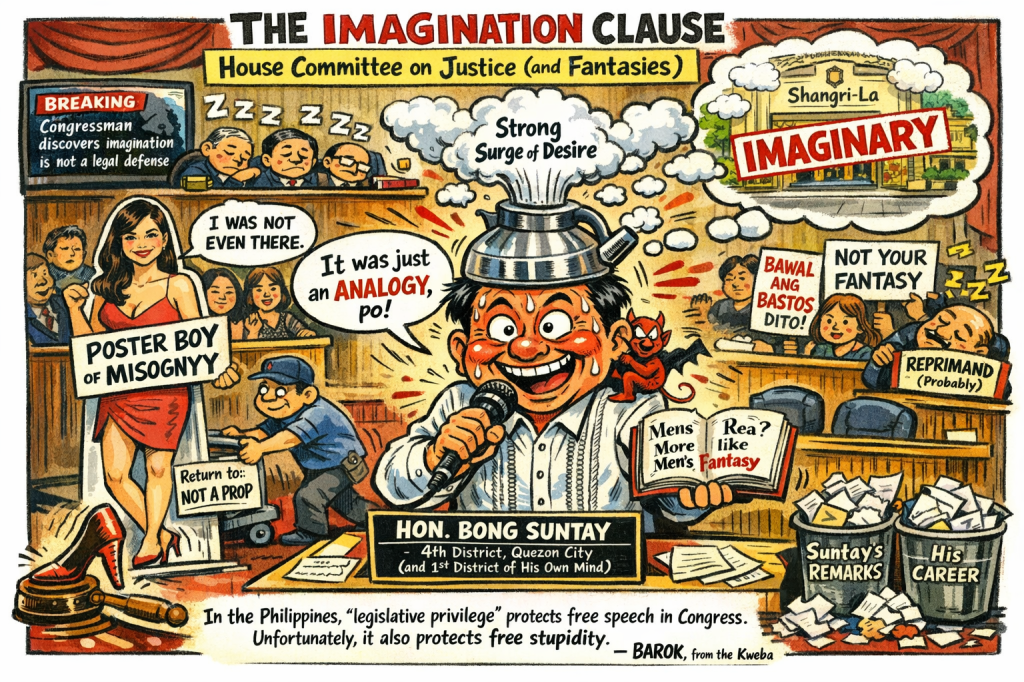
- Bong Suntay’s Wet Dream Defense: How One Congressman Turned Impeachment into Pornhub Testimony
- Sotto’s Mistress Panic: The Real Loophole Is Congress Itself

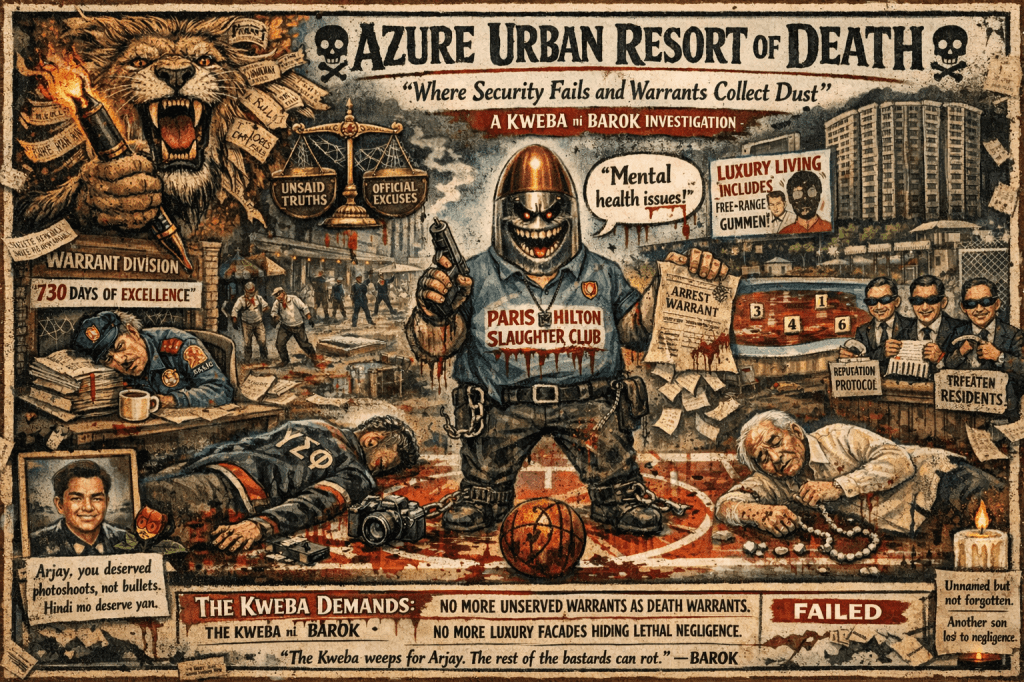
- Azure Urban Resort of Death – Where Security Fails and Warrants Collect Dust

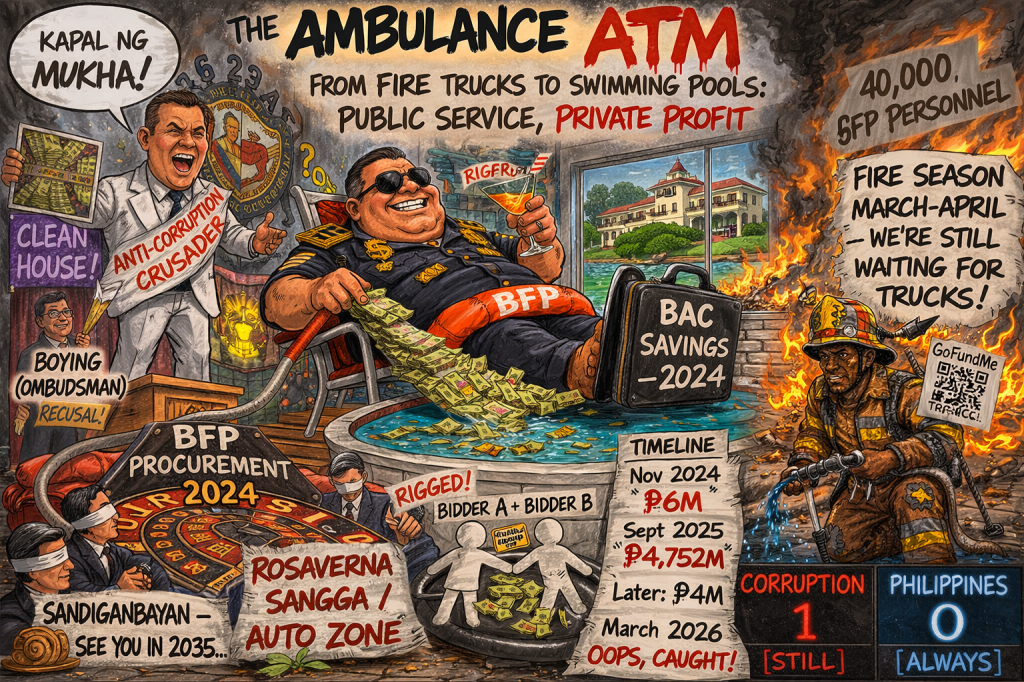
- BFP Chief Nets ₱14.7M in Ambulance Kickbacks: Remulla’s Big Clean-Up or Cavite Dynasty Smoke Screen?
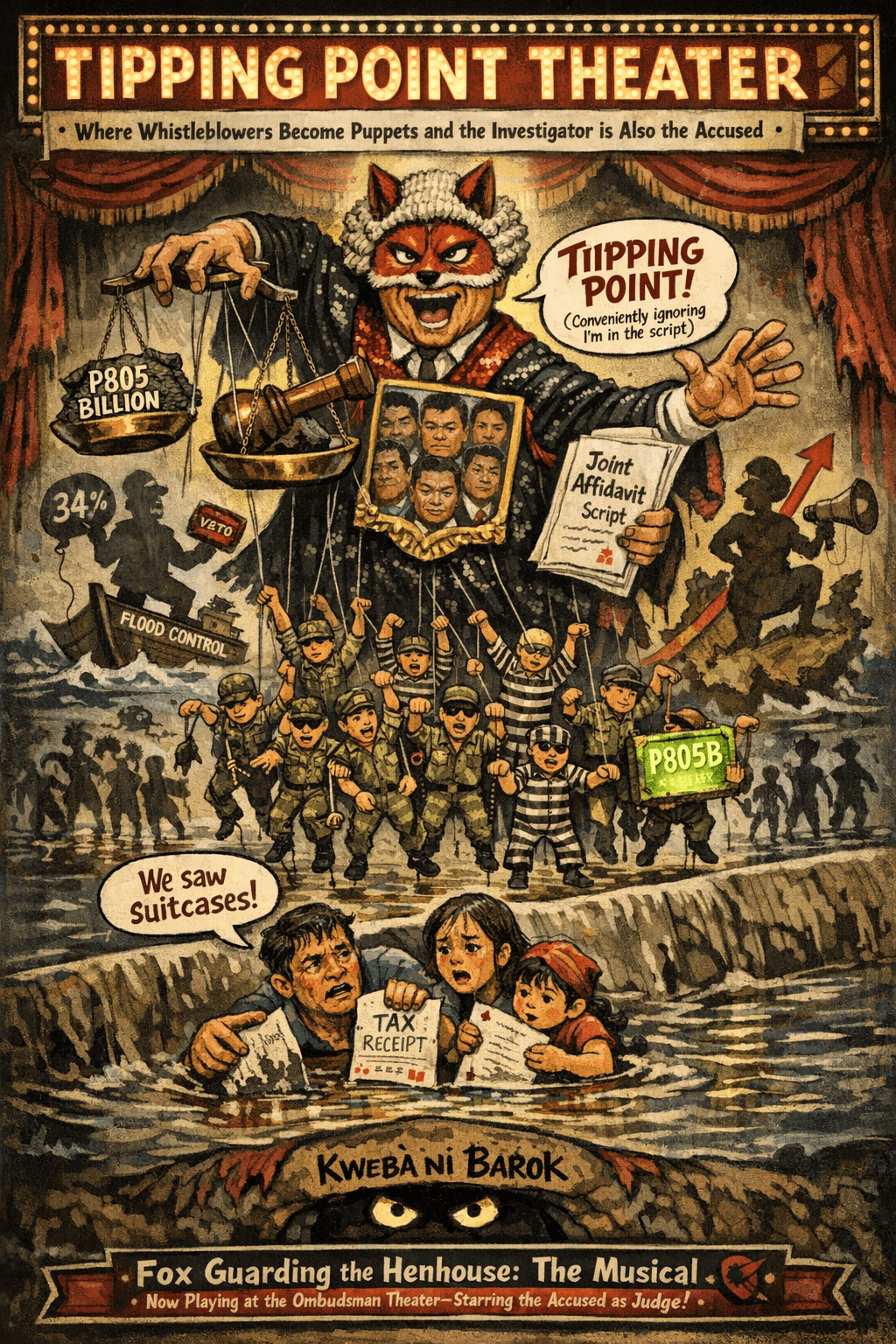
- Remulla’s “Tipping Point” Theory: When Joint Affidavits Spark Armed Uprising
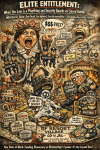
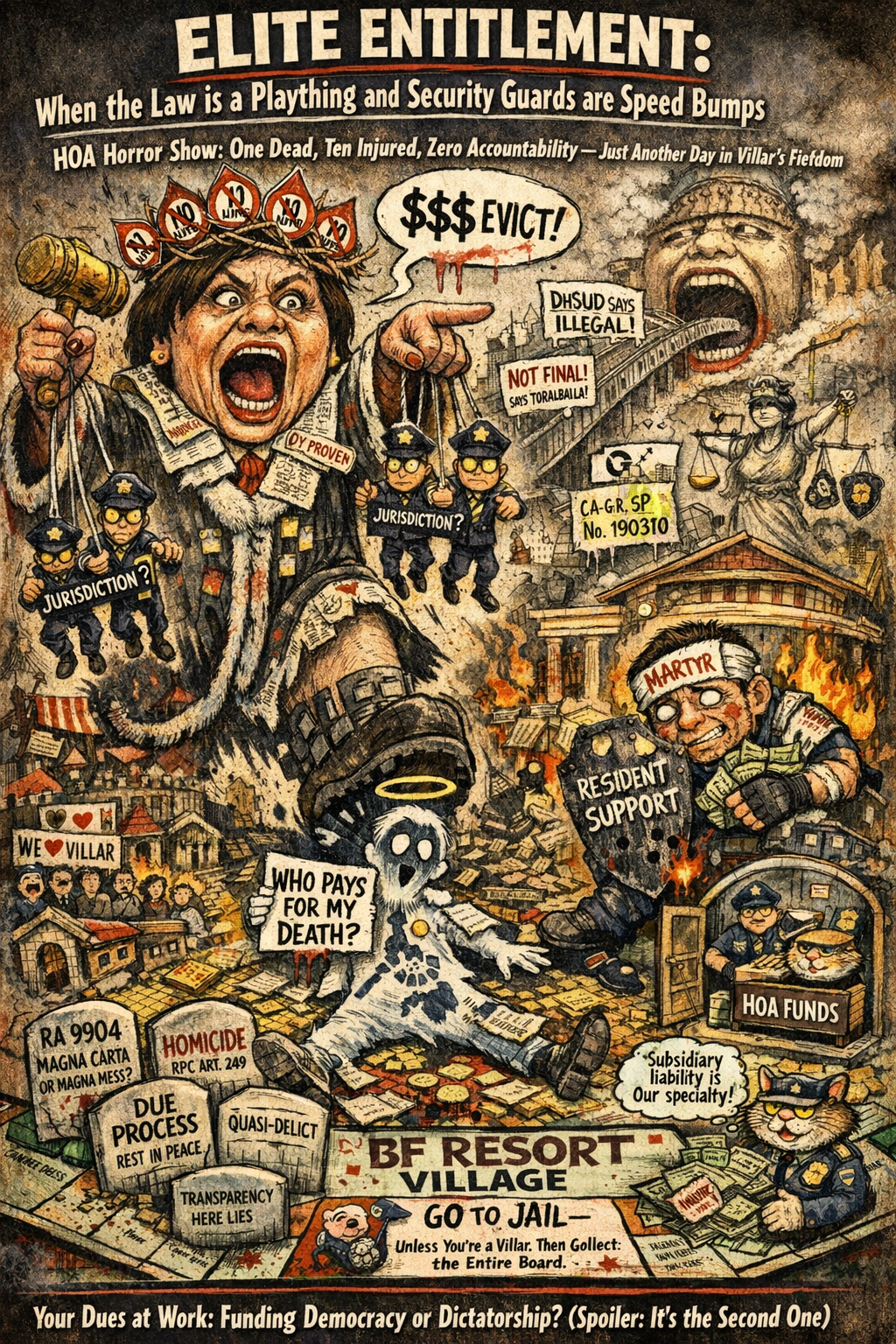
- Villar’s HOA Bloodbath: Guard Trampled in BF Resort Power Grab Farce
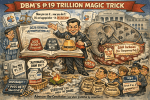
- DBM’s ₱1.19 Trillion Magic Trick: “It’s Not in the Budget… It’s Just Visiting”
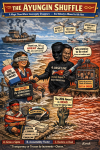
- DFA’s Secret Ayungin Deal: Sovereignty Sold, Receipt Hidden


 KWEBA ni BAROK
Leave a comment