By Louis ‘Barok‘ C. Biraogo
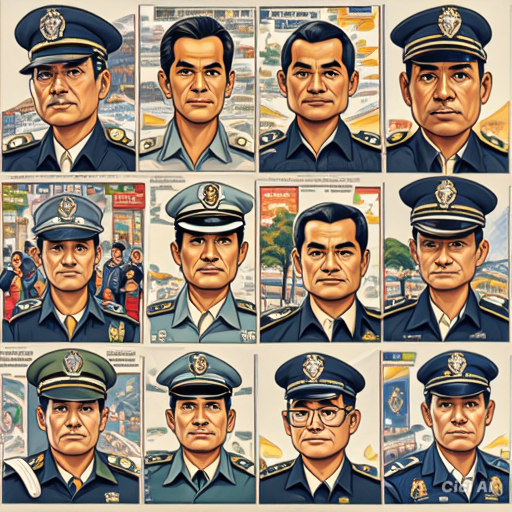
In an unprecedented move, the Philippine National Police (PNP) in the Davao Region has executed a sweeping shake-up, replacing Davao City’s police chief and all station commanders under him. This dramatic reshuffling, which saw over 30 police officials reassigned, raises eyebrows and stirs intrigue. While the official narrative cites routine responsibilities and strategic reassignments, one cannot help but speculate if this drastic measure is a veiled response to the PNP’s failure to swiftly apprehend the fugitive televangelist Apollo Quiboloy.
Brigadier General Nicolas Torre, the new PNP director for the Davao region, has made bold strokes since his appointment in June, rapidly reconfiguring the leadership landscape. Colonel Lito Patay now stands at the helm as the new Davao City police director, replacing acting chief Rolindo Soguilon. The reshuffling extends to a cadre of majors and captains who found themselves abruptly reassigned. This move, shrouded in official justifications, begs the question: Is this a strategic maneuver to reinvigorate the police force, or is there a deeper, more urgent motive at play?
The timing of this shake-up cannot be ignored. Just days before the reshuffling, the remains of beauty queen Geneva Lopez and her Israeli partner Yitshak Cohen were found, with former police officers implicated in their gruesome deaths. This horrifying revelation already taints the image of the police force, compounding the urgency for reform. Moreover, Quiboloy’s continued evasion of arrest has been a glaring embarrassment, a testament to the inefficacies within the force.
Historically, police shake-ups have been employed worldwide to combat inefficiency, corruption, and to reinvigorate law enforcement agencies. In Mexico, for instance, sweeping changes within the police force were implemented to tackle drug cartel infiltrations. Similarly, in South Africa, the entire police leadership was overhauled in an effort to address rampant corruption and restore public trust. These precedents suggest that a radical shake-up can indeed be a catalyst for significant improvements.
The primary argument for the potential success of this shake-up hinges on the infusion of fresh leadership and perspectives. New commanders, untainted by the local political and social dynamics, might bring a renewed sense of duty and vigor. This could lead to a more aggressive and effective pursuit of high-profile fugitives like Quiboloy. Furthermore, it sends a stern message that complacency and failure are intolerable, potentially motivating the entire force to perform better.
However, the success of such drastic measures is not guaranteed. The reshuffling could also disrupt established networks and relationships critical for effective policing. Newly assigned officers might lack the local knowledge and connections necessary to navigate the complex socio-political landscape of Davao. Similar attempts at reform in other countries, such as Brazil, have sometimes resulted in short-term gains followed by a reversion to old practices once the initial fervor waned.
To navigate these turbulent waters effectively, several recommendations can be made:
- Comprehensive Training and Orientation: Newly assigned officers should undergo intensive training and orientation to familiarize themselves with local issues and build rapport with the community.
- Strengthening Oversight Mechanisms: Establish robust oversight bodies to monitor the performance of the reassigned officers and ensure accountability and transparency in their actions.
- Community Engagement: Foster strong relationships between the police and the communities they serve. Public trust and cooperation are critical in gathering intelligence and effectively combating crime.
- Resource Allocation: Ensure that the reshuffled police force has the necessary resources and support to execute their duties effectively, including advanced technologies and sufficient manpower.
- Clear Communication: Maintain open lines of communication within the police force and with the public to manage expectations and prevent misinformation.
In conclusion, the shake-up within the Davao police force is a bold and risky maneuver, one that could either herald a new era of efficiency and integrity or unravel into disarray and ineffectiveness. As we stand on the precipice of this dramatic change, the pursuit of justice for Geneva Lopez, Yitshak Cohen, and the apprehension of Apollo Quiboloy hangs in the balance. The world watches with bated breath, hoping that this gamble will indeed pay off, restoring faith in a beleaguered police force and bringing long-awaited justice to those who deserve it.

- ₱75 Million Heist: Cops Gone Full Bandit

- ₱6.7-Trillion Temptation: The Great Pork Zombie Revival and the “Collegial” Vote-Buying Circus

- ₱1.9 Billion for 382 Units and a Rooftop Pool: Poverty Solved, Next Problem Please

- ₱1.35 Trillion for Education: Bigger Budget, Same Old Thieves’ Banquet

- ₱1 Billion Congressional Seat? Sorry, Sold Out Na Raw — Si Bello Raw Ang Hindi Bumili

- “We Will Take Care of It”: Bersamin’s P52-Billion Love Letter to Corruption

- “Skewed Narrative”? More Like Skewered Taxpayers!

- “Scared to Sign Vouchers” Is Now Official GDP Policy – Welcome to the Philippines’ Permanent Paralysis Economy



 KWEBA ni BAROK
Leave a comment