By Louis ‘Barok‘ C. Biraogo
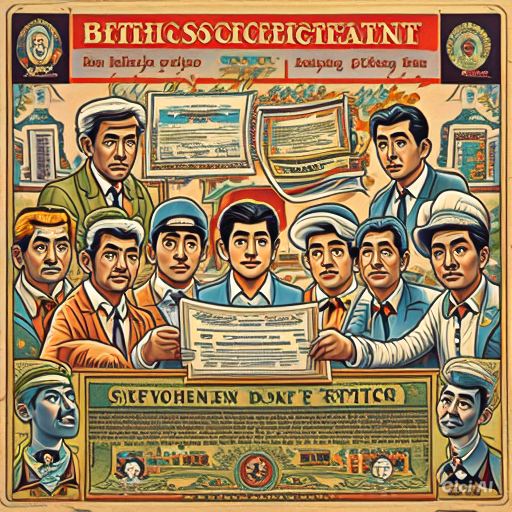
In a world where truth and integrity often hang in the balance, a shadowy racket now threatens to undermine the very fabric of Philippine society. Senator Sherwin Gatchalian’s recent exposé has pulled back the veil on a sinister operation that allows Chinese nationals to obtain fake birth certificates, passports, and driver’s licenses for the hefty sum of P300,000. This isn’t just a scam; it’s a direct assault on national sovereignty, the rule of law, and the trust of the Filipino people.
The news of nearly 200 falsified birth certificates discovered in Santa Cruz, Davao del Sur, from 2018 to 2019, is a chilling reminder of how deeply entrenched this corruption might be. It’s a racket that reeks of collusion at the highest levels, with suspicions pointing towards the Philippine Statistics Authority (PSA) and local government officials. The system is so corrupted that a fake birth certificate, once obtained, can pave the way for additional fraudulent documents with relative ease.
To fully grasp the gravity of this situation, let’s delve into the background. The controversy erupted with the case of Bamban Mayor Alice Guo, whose citizenship came under scrutiny due to an “irregular” birth certificate. This revelation hinted at a broader network of corruption, now substantiated by Gatchalian’s sources within the Chinese community. For P300,000, these Chinese nationals are not just buying papers; they are buying a new identity, complete with all the rights and privileges of Filipino citizenship.
The implications are staggering. This racket is not just about illegal documents; it’s about creating a parallel society where money can buy legitimacy, undermining the very essence of citizenship and national identity. It raises alarming questions about national security, especially when foreign nationals can so easily masquerade as Filipinos.
Why does this racket exist? The answer is multifaceted. First, there is the lure of easy money for corrupt officials. P300,000 is a substantial sum, especially in a country where poverty and economic disparity create fertile ground for corruption. Second, the inefficiency and lack of stringent controls within the PSA and local government units provide a breeding ground for such activities. With over 1,700 local government units handling civil registry functions, the sheer number of potential entry points for fraud is overwhelming.
But the reasons this racket must be stopped are even more compelling. From a national security perspective, the ease with which foreign nationals can obtain valid Philippine documents poses a significant threat. It undermines immigration controls and can facilitate other illegal activities, from smuggling to espionage. Economically, it erodes trust in the Philippine bureaucracy, potentially deterring foreign investment and harming the country’s reputation on the international stage. Socially, it creates resentment among Filipinos, who see their birthright being sold to the highest bidder, eroding trust in government institutions.
The government’s inaction and failure to clamp down on this racket are nothing short of a betrayal of public trust. The Philippine Constitution, along with various laws and Supreme Court precedents, mandates the government to uphold the integrity of its civil registry system. The Revised Penal Code, particularly Articles 171 and 172, penalizes falsification of public documents. The Anti-Graft and Corrupt Practices Act (Republic Act No. 3019) holds public officials accountable for corrupt practices. Yet, despite these clear legal provisions, the government’s response has been woefully inadequate.
The PSA and local government units must be held accountable. There should be a comprehensive investigation to root out the corrupt elements within these institutions. The National Bureau of Investigation (NBI) must be empowered and adequately funded to pursue this case to its logical conclusion, ensuring that those involved are apprehended and prosecuted to the fullest extent of the law. Moreover, there should be a systematic overhaul of the civil registry system to introduce more stringent controls, transparency, and accountability.
Senator Gatchalian’s call for a resolution to address this issue is a step in the right direction, but it must be accompanied by decisive action. The government must demonstrate its commitment to justice by swiftly bringing those behind this racket to account. The integrity of the nation’s civil registry and the trust of the Filipino people depend on it.
In this moment of crisis, we must remember that the true measure of a nation’s strength lies in its adherence to the rule of law and the integrity of its institutions. The Philippines must rise to this challenge, rooting out corruption and reaffirming its commitment to justice and national sovereignty. Anything less would be a disservice to the legacy of the nation and the future of its people.

- Andres Heralds DoJ’s Transformative Justice

- Sailing to New Horizons: PEZA Sets Ambitious PHP250-B Approval Target for 2024

- Panga’s Bold Vision: The Paradigm Shift of Iwahig Mega Economic Zone

- Panga’s Pragmatic Approach to Sino-Philippine Investments

- The Shadow Over Manila

- Shadow of the Red Notice: Remulla hunts down Teves

- Frozen Enigma: NBI Bacolod’s Tussle with Darkness

- Quiboloy’s Supreme Court Shenanigans: A Pathetic Attempt to Dodge Justice






 KWEBA ni BAROK
Leave a comment