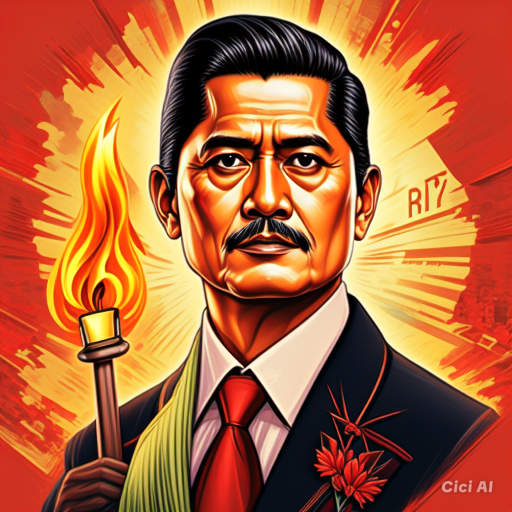
By Louis ‘Barok‘ C. Biraogo
In the shadowy corridors of power, where political dynasties have long entrenched themselves, a new glimmer of hope emerges. Senator Robin Padilla’s filing of Senate Bill No. 2730, aimed at prohibiting political dynasties, could be the turning point in a battle that has spanned decades and defined the contours of Philippine politics.
The Philippine Constitution of 1987, a guiding light of democratic ideals, unequivocally prohibits political dynasties. Yet, this mandate has remained largely theoretical, an unimplemented promise echoing in the halls of governance. The result? Political dynasties have flourished, perpetuating power within a select few families and casting long shadows over the nation’s political landscape.
Padilla’s bill is not merely a legislative proposal; it is a resounding call to dismantle these dynasties that have, for too long, monopolized political power and stifled genuine democratic competition. As he rightly cites, a Harvard Academy Research Study highlights how elites persist and reproduce their power, thereby undermining institutional reforms. This entrenchment of power compromises political competition and accountability, leaving the nation bereft of the best and the brightest in public service.
Historical context deepens the urgency of Padilla’s endeavor. The 1987 Constitution’s framers, scarred by the excesses of the Marcos dictatorship, included the anti-dynasty provision to prevent the concentration of power and ensure equal opportunity in public service. Yet, without an enabling law, this provision has been a toothless tiger, roaring in the distance but never able to strike.
Academic studies bolster Padilla’s arguments. The 2013 study by Tusalem and Pe-Aguirre reveals a troubling correlation: areas dominated by political dynasties see higher congressional funds but also suffer from poor governance, higher crime rates, and inadequate spending on crucial sectors like employment, infrastructure, and healthcare. These findings underscore the systemic rot that dynasties propagate, prioritizing their power over public welfare.
Ethical and moral standards also demand the dismantling of political dynasties. Democracy thrives on the principles of equality and meritocracy. Allowing a select few families to dominate the political arena is antithetical to these ideals. It erodes public trust and fosters a culture of patronage and corruption, where loyalty to the ruling family trumps competence and integrity.
The Philippine legal framework offers further support for Padilla’s bill. Article II, Section 26 of the 1987 Constitution explicitly states, “The State shall guarantee equal access to opportunities for public service and prohibit political dynasties as may be defined by law.” This constitutional mandate, coupled with jurisprudence that emphasizes the need for genuine electoral competition, lays a solid foundation for Padilla’s legislative push.
Looking beyond Philippine shores, other countries provide instructive precedents. Mexico, for instance, has stringent laws against political dynasties, with strict term limits and prohibitions on immediate family members succeeding each other. Such measures have helped to curb the concentration of political power and promote a more dynamic and responsive governance structure.
Padilla’s proposed Senate Bill No. 2730 outlines a clear and enforceable framework to break the stranglehold of political dynasties. By prohibiting immediate family members from succeeding or running simultaneously in the same city or province, the bill aims to foster fair competition and ensure that public office is accessible to all, not just a privileged few.
The path forward demands unity and collective resolve. Filipinos from all walks of life must rally behind this initiative, transcending partisan loyalties and familial ties. The fight against political dynasties is a fight for the soul of the nation, a battle to reclaim democracy from the clutches of entrenched elites.
In the suspenseful theater of Philippine politics, where dynasties have long reigned supreme, Padilla’s bill is a dramatic twist. It is a bold statement that the time has come to break free from the chains of political inheritance and pave the way for a brighter, more equitable future. The stakes are high, the battle fierce, but the promise of a truly democratic Philippines is worth every effort. Let us heed Padilla’s call and unite to turn this vision into reality.

- “Forthwith” to Farce: How the Senate is Killing Impeachment—And Why Enrile’s Right (Even If You Can’t Trust Him)

- “HINDI AKO NAG-RESIGN!”

- “I’m calling you from my new Globe SIM. Send load!”

- “Mahiya Naman Kayo!” Marcos’ Anti-Corruption Vow Faces a Flood of Doubt

- “Meow, I’m calling you from my new Globe SIM!”

- “No Special Jail for Crooks!” Boying Remulla Slams VIP Perks for Flood Scammers

- “PLUNDER IS OVERRATED”? TRY AGAIN — IT’S A CALCULATED KILL SHOT

- “Several Lifetimes,” Said Fajardo — Translation: “I’m Not Spending Even One More Day on This Circus”

- “Shimenet”: The Term That Broke the Internet and the Budget

- “We Did Not Yield”: Marcos’s Stand and the Soul of Filipino Sovereignty



 KWEBA ni BAROK
Leave a comment