By Louis ‘Barok‘ C. Biraogo
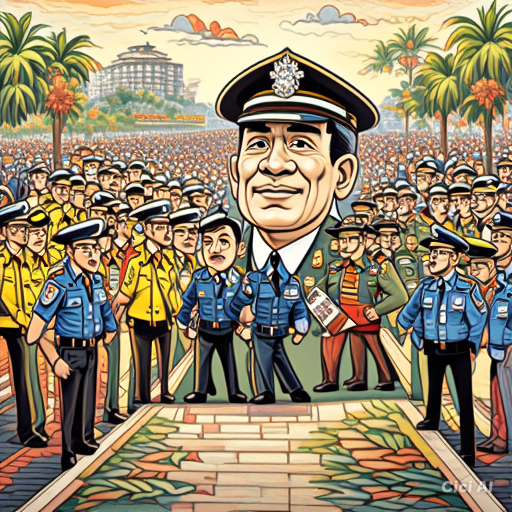
In a dramatic turn of events, Davao City Councilor Luna Acosta has raised serious concerns regarding the appointment of Col. Hansel M. Marantan as the new chief of the Davao City Police Office (DCPO). Acosta asserts that the appointment not only violates specific provisions of Philippine law but also threatens the stability and security of Davao City.
Roots of Discord: How the Issue Began
The controversy centers on the interpretation and application of Republic Act 6975, known as the Department of the Interior and Local Government Act of 1990, and its subsequent amendment, Republic Act 8551, the PNP Reform and Reorganization Act of 1998. These laws grant the city mayor the authority to choose the chief of police from a list of eligible candidates recommended by the PNP regional director. Councilor Acosta argues that the recent appointment of Col. Marantan bypasses this established legal process, creating a precedent that could undermine local governance and public trust.
Building the Case for Acosta
Legal Grounds:
- Republic Act 6975: This act, which governs the structure and function of the DILG and PNP, clearly outlines the procedure for appointing police chiefs. Section 51 of RA 6975 states, “The mayor of the city shall have the authority to choose the chief of police from a list of five eligibles recommended by the PNP regional director.”
- Republic Act 8551: Section 63 of RA 8551 emphasizes the continuity and stability in police leadership by restricting the designation of officers-in-charge to a maximum of 30 days.
- Local Government Code (Republic Act 7160): This law further empowers local chief executives in matters of local governance, including the supervision and control of local police forces.
Philippine Supreme Court Precedents:
- Pablico v. Villapando (G.R. No. 144087, February 7, 2003): The Supreme Court underscored the necessity for adherence to the proper legal process in appointments within local government units, emphasizing the importance of maintaining the integrity of the selection process.
Rebuttals to Acosta’s Assertions
Practical Considerations:
- Organizational Standards: PNP Chief Rommel Francisco Marbil highlighted that the reshuffle was conducted to meet organizational standards and performance indicators, which are crucial for maintaining an effective police force.
- Continuity of Leadership: Frequent changes in leadership might be disruptive, but they can also ensure that the most capable individuals are in positions of authority, especially during critical periods such as the war on drugs.
Legal Counterpoints:
- Discretionary Powers: While the mayor has the authority to choose from a list of five candidates, the PNP and DILG maintain discretionary powers to make urgent decisions in the interest of national security and organizational efficiency.
- Administrative Code of 1987 (Executive Order No. 292): This code grants broad powers to the executive branch, including the authority to make appointments and reassignments as necessary for the efficient functioning of the government.
Philippine Supreme Court Precedents:
- Quisumbing v. Garcia (G.R. No. 175008, March 31, 2009): The Supreme Court upheld the executive branch’s discretion in matters of appointments and reassignments, provided they are made in good faith and for legitimate administrative reasons.
Who Holds the Cards?
Councilor Acosta’s legal arguments are robust, grounded in specific statutory provisions and supported by Supreme Court precedents emphasizing the importance of adhering to the legal process. However, the counter-arguments from the PNP and DILG, which focus on the need for organizational efficiency and meeting performance standards, also carry significant weight.
Barok’s Verdict
After a thorough assessment, it appears that Councilor Acosta’s legal stance holds stronger merit due to the explicit statutory provisions governing the appointment process. The requirement for the city mayor to select from a list of eligible candidates is clear, and the PNP’s deviation from this process raises legitimate concerns about procedural integrity. However, the practical arguments from the PNP regarding organizational efficiency cannot be entirely dismissed.
Recommendations and Call for Unity
To the PNP and DILG:
- Transparency: Ensure transparency in the decision-making process to rebuild public trust and address concerns raised by local officials.
- Collaboration: Work closely with local government units to ensure that appointments and reassignments are conducted in a manner that respects both legal provisions and practical necessities.
To the Davao City Government:
- Legal Recourse: Consider seeking judicial clarification on the interpretation of relevant laws to resolve the ambiguity surrounding the appointment process.
- Public Safety: Prioritize the continuity and stability of the police force to maintain public safety and security.
Conclusion
This controversy underscores the delicate balance between local autonomy and national oversight in the governance of police forces. By fostering transparent and collaborative decision-making processes, both the PNP and local government units can work together to ensure the effective and lawful administration of public safety, ultimately benefiting all Dabawenyos. In the spirit of unity and cooperation, it is imperative that all parties strive to uphold the rule of law while addressing the practical needs of the community.

- “Forthwith” to Farce: How the Senate is Killing Impeachment—And Why Enrile’s Right (Even If You Can’t Trust Him)

- “HINDI AKO NAG-RESIGN!”

- “I’m calling you from my new Globe SIM. Send load!”

- “Mahiya Naman Kayo!” Marcos’ Anti-Corruption Vow Faces a Flood of Doubt

- “Meow, I’m calling you from my new Globe SIM!”

- “No Special Jail for Crooks!” Boying Remulla Slams VIP Perks for Flood Scammers

- “PLUNDER IS OVERRATED”? TRY AGAIN — IT’S A CALCULATED KILL SHOT

- “Several Lifetimes,” Said Fajardo — Translation: “I’m Not Spending Even One More Day on This Circus”

- “Shimenet”: The Term That Broke the Internet and the Budget

- “We Did Not Yield”: Marcos’s Stand and the Soul of Filipino Sovereignty





 KWEBA ni BAROK
Leave a comment