
By Louis ‘Barok‘ C. Biraogo
Contextualizing the Debate
The recent directive from the Department of Finance (DOF) to remit unused government subsidies from the Philippine Health Insurance Corp. (PhilHealth) to the national treasury has sparked significant debate. Public health reform advocates Dr. Tony Leachon, former Finance Undersecretary Cielo Magno, and Filomeno Sta. Ana III have raised concerns about the legality and implications of this directive, highlighting potential violations of the Universal Health Care (UHC) Act and other related laws. This commentary aims to thoroughly analyze the arguments from both sides, citing relevant Philippine laws and Supreme Court precedents.
The Allegations: Violations of the UHC Act and Other Laws
1. Violation of Republic Act No. 11223 (Universal Health Care Act of 2019)
Section 11 of the UHC Act states that any excess in PhilHealth’s reserve fund should be used to increase program benefits and decrease members’ contributions. It explicitly prohibits the transfer of any portion of the reserve fund to the national government or any of its agencies. The directive from the DOF to remit P89.9 billion to the national treasury appears to contravene this provision. The law is clear in its intention to use surplus funds for the benefit of PhilHealth members, not for general appropriations.
2. Earmarked Funds Under RA 11467 and RA 10963
Both Republic Act No. 11467 and Republic Act No. 10963 earmark revenues from excise taxes on alcohol, tobacco, e-cigarettes, and sweetened beverages for PhilHealth’s implementation of UHC programs. Diverting these funds to unprogrammed appropriations undermines the legislative intent to support health care programs through specific tax revenues. This diversion could be seen as a misappropriation of funds, violating the principle of earmarked taxation.
3. Precedents on Misappropriation of Funds
The Philippine Supreme Court has previously ruled on cases of fund misappropriation. In League of Cities of the Philippines v. COMELEC (G.R. No. 176951), the Court emphasized the importance of adhering to the specific purposes for which funds are allocated by law. Applying this precedent, the diversion of PhilHealth’s funds to unprogrammed appropriations could be considered a misuse of earmarked resources.
Justifications for the DOF Circular
1. National Government’s Utilization of Unused Funds
The DOF argues that the national government is better positioned to utilize unused subsidies effectively for programs benefiting the Filipino people and advancing UHC goals. They claim that the substantial fund balances at PhilHealth can be redirected for immediate and broader public benefits.
2. Compliance with the 2024 Budget Law
The circular is presented as a compliance measure with the 2024 budget law, which directs the DOF to issue guidelines for collecting unprogrammed appropriations from GOCC fund balances. The DOF and PhilHealth have coordinated with the Office of the Government Corporate Counsel, Governance Commission for GOCCs, and the Commission on Audit, suggesting procedural propriety.
3. No Impact on Member Contributions or Benefits
PhilHealth asserts that the funds transferred are from government subsidies, not from member contributions. They maintain that this will not affect PhilHealth’s financial stability or its ability to provide benefits to its members. This assurance is intended to mitigate concerns about the potential negative impact on healthcare services.
Unbiased Assessment and Recommendation
Assessment
The primary issue lies in the interpretation and application of the UHC Act’s provisions concerning excess funds. While the DOF’s directive aims to repurpose unused funds for broader governmental use, it faces significant legal challenges based on the explicit prohibitions within the UHC Act. The intent of the law is clear in prioritizing the enhancement of health care benefits over redirecting funds to general appropriations.
Recommendation
Given the legal constraints and the potential impact on public trust in health care funding, it is crucial to uphold the provisions of the UHC Act. The DOF should revise Circular No. 003-2024 to align with the law, ensuring that excess funds from PhilHealth are used exclusively to enhance health benefits and reduce member contributions. If necessary, a legal challenge should be pursued to clarify and enforce the correct interpretation of the law.
Furthermore, legislators should investigate the circumstances leading to this directive and consider amending the budget law to prevent similar issues in the future. It is imperative to prioritize the welfare of Filipinos by ensuring that health care funds are used appropriately and transparently, adhering to the spirit and letter of the law.
In conclusion, the controversy over the PhilHealth fund transfer underscores the need for stringent adherence to legal provisions governing public funds. Upholding the welfare of Filipinos requires a clear commitment to transparency, accountability, and the proper utilization of health care resources.

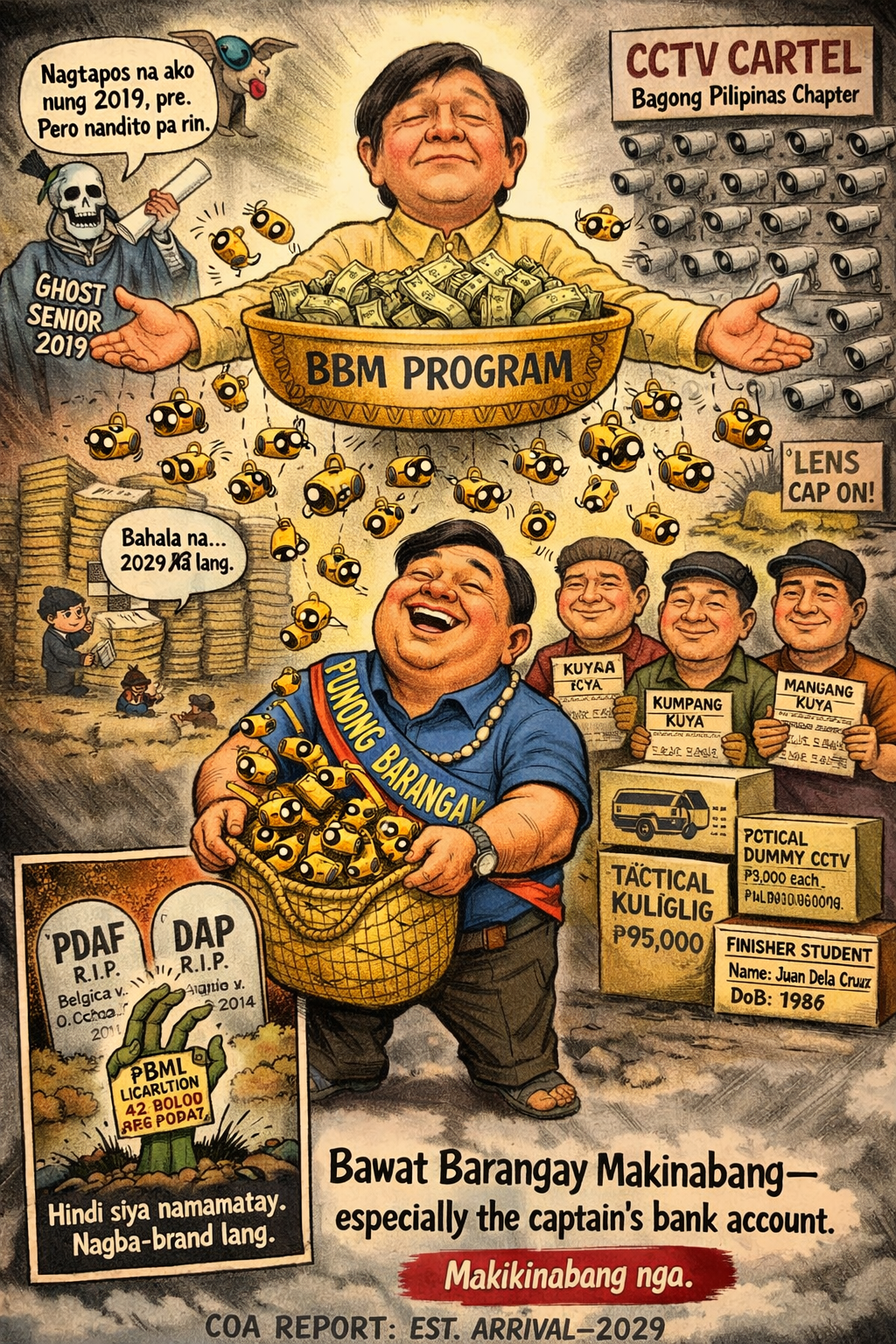
- ₱8B BBM Pork: CCTV for Every Captain’s Kumpare?
- ₱75 Million Heist: Cops Gone Full Bandit

- ₱6.7-Trillion Temptation: The Great Pork Zombie Revival and the “Collegial” Vote-Buying Circus

- ₱1.9 Billion for 382 Units and a Rooftop Pool: Poverty Solved, Next Problem Please

- ₱1.35 Trillion for Education: Bigger Budget, Same Old Thieves’ Banquet

- ₱1 Billion Congressional Seat? Sorry, Sold Out Na Raw — Si Bello Raw Ang Hindi Bumili

- “We Will Take Care of It”: Bersamin’s P52-Billion Love Letter to Corruption

- “Skewed Narrative”? More Like Skewered Taxpayers!

- “Scared to Sign Vouchers” Is Now Official GDP Policy – Welcome to the Philippines’ Permanent Paralysis Economy
- “Robbed by Restitution?” Curlee Discaya’s Tears Over Returning What He Never Earned




 KWEBA ni BAROK
Leave a comment