
By Louis ‘Barok‘ C. Biraogo
The sun beats down on the azure waters of the South China Sea, a region as breathtaking as it is treacherous. It’s here, amid the shimmering waves and disputed territories, that a new lifeline has emerged—a direct hotline between the presidential offices and foreign ministries of China and the Philippines. This is no ordinary communication tool. It’s a beacon of hope and a potential harbinger of chaos, fraught with the specter of historical enmity and the fragile promise of peace.
To truly grasp the gravity of this development, we must rewind the clock to understand the roots of this tumultuous relationship. The South China Sea has long been a flashpoint in Southeast Asia, with overlapping claims from the Philippines, China, Vietnam, Malaysia, Brunei, and Taiwan. Rich in oil and minerals and vital for global shipping, these waters are both a treasure trove and a battleground.
The animosity between China and the Philippines reached a crescendo in 2016, when the Permanent Court of Arbitration in The Hague ruled in favor of the Philippines, rejecting China’s expansive claims over the South China Sea. Beijing, however, dismissed the ruling, and the waters remained choppy, both literally and figuratively. The tensions boiled over into violent confrontations, such as the recent clash at the Ayungin Shoal where Philippine Navy personnel were injured, and vessels were damaged and seized by Chinese forces.
In the shadow of these skirmishes, the signing of the “Arrangement on Improving Philippines-China Maritime Communication Mechanisms” is both a diplomatic triumph and a precarious gamble. The agreement elevates communication to the highest echelons of power, promising a direct line between presidents and foreign ministers. In theory, this should allow for swift de-escalation in times of crisis, preventing misunderstandings from spiraling into full-blown conflict.
But as history has taught us, the road to peace is often paved with pitfalls. The hotline’s efficacy hinges on the genuine commitment of both sides to engage in open and honest dialogue. The Philippine experience with the previous hotline, where calls went unanswered during a maritime emergency, casts a long shadow over the new arrangement. Will this new line of communication be any different, or will it too become a symbol of unfulfilled promises?
From a strategic perspective, the hotline’s advantages are clear. It provides a direct channel for conflict resolution at the highest level, potentially averting military confrontations that could have catastrophic consequences not just for the region, but for global stability. It signals a willingness to engage in diplomacy and underscores the importance of dialogue in resolving complex territorial disputes.
However, the disadvantages cannot be ignored. The hotline may become a tool for manipulation, with each side using it to project a facade of cooperation while continuing aggressive actions on the ground. There’s also the risk that the hotline, rather than fostering mutual trust, could exacerbate tensions if one side perceives the other as insincere or unresponsive.
Historical examples abound of hotlines between rival nations that have had mixed results. The famous “red telephone” between the United States and the Soviet Union, established during the Cold War, helped prevent nuclear catastrophe during the Cuban Missile Crisis. Yet, it was also a constant reminder of the profound mistrust and ideological chasm between the two superpowers.
In the context of the South China Sea, the stakes are equally high. The recent incidents, including the violent confrontations at the Second Thomas Shoal, highlight the volatile nature of this dispute. The presence of rich natural resources and strategic shipping lanes adds layers of complexity to an already fraught situation.
As we stand at this crossroads, the call for diplomacy, amity, and the rule of law has never been more urgent. Both China and the Philippines must rise above historical grievances and current provocations to embrace a future where dialogue and cooperation prevail. The international community, particularly the United States with its treaty obligations, must support this fragile peace process while holding all parties accountable to international law.
The new hotline is a step in the right direction, but it is not a panacea. It is a tool—powerful yet delicate—that requires careful handling and a genuine commitment to peace. The world will be watching as the leaders of China and the Philippines navigate this complex and perilous journey, hoping that this line of communication will serve as a lifeline to peace rather than a harbinger of further discord.

- “Forthwith” to Farce: How the Senate is Killing Impeachment—And Why Enrile’s Right (Even If You Can’t Trust Him)

- “HINDI AKO NAG-RESIGN!”

- “I’m calling you from my new Globe SIM. Send load!”

- “Mahiya Naman Kayo!” Marcos’ Anti-Corruption Vow Faces a Flood of Doubt

- “Meow, I’m calling you from my new Globe SIM!”

- “No Special Jail for Crooks!” Boying Remulla Slams VIP Perks for Flood Scammers

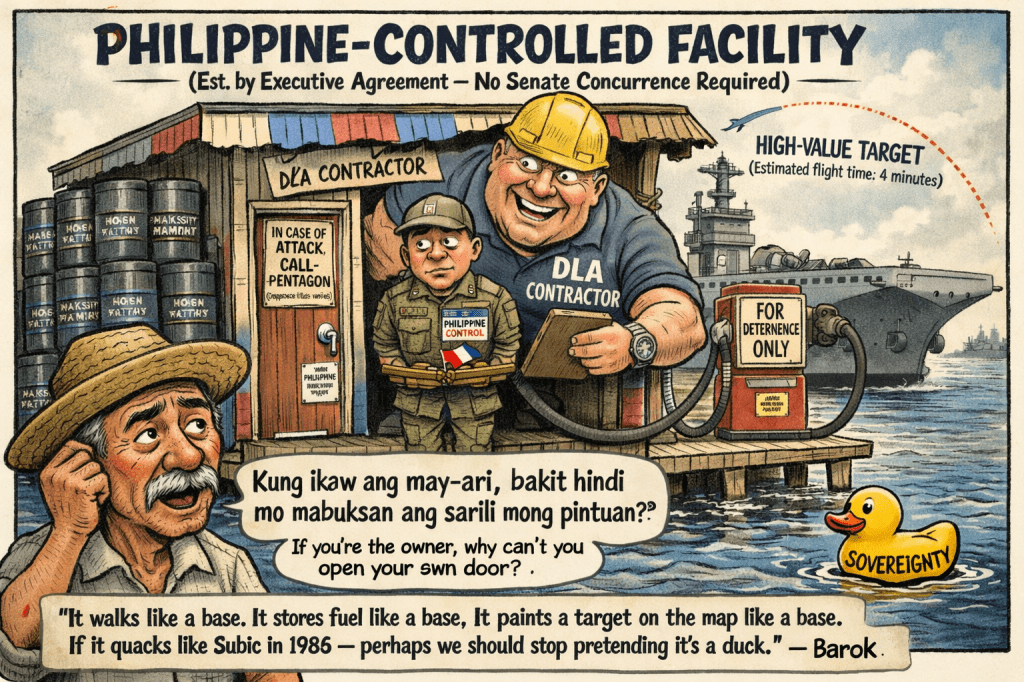
- “Philippine-Controlled” or Yankee Gas Station? The Davao Fuel Depot Farce Exposed

- “PLUNDER IS OVERRATED”? TRY AGAIN — IT’S A CALCULATED KILL SHOT

- “Several Lifetimes,” Said Fajardo — Translation: “I’m Not Spending Even One More Day on This Circus”

- “Shimenet”: The Term That Broke the Internet and the Budget






 KWEBA ni BAROK
Leave a comment