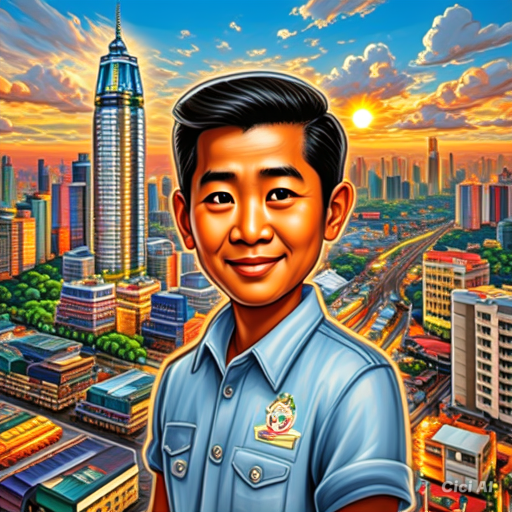
By Louis ‘Barok‘ C. Biraogo
Amid the volatile currents of the global economy, the Philippines is poised to shine as one of Asia’s brightest economic stars. The International Monetary Fund (IMF) projects the Philippines will achieve the second-fastest growth rate in Asia this year and in 2025, trailing only India. This forecast, with a projected GDP growth of 6% for 2024 and 6.2% for 2025, is a testament to the resilience and dynamism of the Philippine economy—a story of remarkable transformation and potential.
Historical Context: The Economic Journey
To understand the significance of this forecast, we must dig into the historical backdrop of the Philippine economy. In the decades following World War II, the Philippines was seen as one of the most promising economies in Asia, often compared favorably with countries like South Korea. However, political instability, corruption, and economic mismanagement under the Marcos regime stalled this potential, leaving the country lagging behind its Asian neighbors during the 1980s and 1990s.
While countries like South Korea, Singapore, and later China and Vietnam surged ahead with rapid industrialization and economic reforms, the Philippines struggled with a sluggish economy, plagued by underinvestment and a lack of infrastructure. However, the turn of the millennium marked the beginning of a gradual economic renaissance. Successive governments implemented key reforms, fostering a more stable political environment and promoting economic liberalization.
Current Economic Landscape
Today, the Philippine economy stands on a firmer foundation. The IMF’s latest World Economic Outlook report underscores this transformation, placing the country’s growth prospects ahead of regional powerhouses like China, Indonesia, and Malaysia. The forecast for 2024 sees the Philippines growing at a robust 6%, a rate that is faster than many of its regional peers, including China (5%), Indonesia (5%), and Malaysia (4.4%).
Several factors contribute to this optimistic outlook:
- Strong Domestic Consumption: The Philippine economy is heavily driven by domestic consumption, supported by a young and growing population. This demographic dividend provides a steady stream of labor and consumer demand.
- Overseas Remittances: Remittances from Filipinos working abroad continue to be a significant economic pillar, providing substantial foreign exchange inflows and bolstering household incomes.
- Business Process Outsourcing (BPO): The BPO sector remains a crucial growth driver, attracting foreign investment and generating employment. The sector’s resilience, even during global economic downturns, has been a stabilizing force.
- Infrastructure Development: Government initiatives to improve infrastructure, through programs like “Build, Build, More,” are gradually addressing long-standing deficits, enhancing connectivity and productivity.
- Economic Reforms: Ongoing reforms to improve the business environment, reduce red tape, and attract foreign investment are yielding positive results, fostering a more competitive and dynamic economy.
A Bright Forecast
Given these factors, the IMF’s projection of sustained growth into 2025 is well-founded. The country’s economic trajectory suggests it is well-positioned to capitalize on both internal strengths and external opportunities. However, this promising future is not without its challenges. The IMF warns of potential risks, including elevated inflation, global interest rate fluctuations, and geopolitical tensions.
Recommendations for Sustained Growth
To ensure this economic momentum is maintained and further accelerated, several strategies should be considered:
- Strengthening Institutions: Continued efforts to combat corruption and enhance governance are essential. Strong, transparent institutions will attract more investment and ensure that economic benefits are broadly shared.
- Diversifying the Economy: While the BPO sector and remittances are vital, the Philippines must diversify its economic base. Investing in manufacturing, technology, and sustainable industries will provide more balanced growth.
- Investing in Human Capital: Education and skills development must be prioritized to prepare the workforce for the demands of a modern economy. Programs that align education with industry needs will be crucial.
- Sustainable Development: As the economy grows, attention must be paid to environmental sustainability. Investing in renewable energy and sustainable practices will ensure long-term prosperity without degrading natural resources.
- Enhancing Infrastructure: Continued focus on infrastructure development, particularly in underserved areas, will create new economic opportunities and reduce regional disparities.
Conclusion
The Philippines stands on the brink of an economic renaissance, driven by a combination of demographic strengths, strategic reforms, and robust domestic consumption. The IMF’s optimistic forecast highlights the country’s potential to outpace many of its regional counterparts. However, realizing this potential requires steadfast commitment to reform, investment in human and physical capital, and a focus on sustainable development.
In the grand narrative of Asia’s economic rise, the Philippines has the opportunity to craft a story of resilience, innovation, and inclusive growth. The coming years will be critical in determining whether this story becomes a harbinger of prosperity for the nation and an inspiration for the region. As we watch this drama unfold, one thing is clear: the Philippines is a country on the move, with a future as bright as its promise.

- “Forthwith” to Farce: How the Senate is Killing Impeachment—And Why Enrile’s Right (Even If You Can’t Trust Him)
- “HINDI AKO NAG-RESIGN!”

- “I’m calling you from my new Globe SIM. Send load!”

- “Mahiya Naman Kayo!” Marcos’ Anti-Corruption Vow Faces a Flood of Doubt

- “Meow, I’m calling you from my new Globe SIM!”

- “No Special Jail for Crooks!” Boying Remulla Slams VIP Perks for Flood Scammers
- “PLUNDER IS OVERRATED”? TRY AGAIN — IT’S A CALCULATED KILL SHOT

- “Several Lifetimes,” Said Fajardo — Translation: “I’m Not Spending Even One More Day on This Circus”

- “Shimenet”: The Term That Broke the Internet and the Budget

- “We Did Not Yield”: Marcos’s Stand and the Soul of Filipino Sovereignty


 KWEBA ni BAROK
Leave a comment