By Louis ‘Barok‘ C. Biraogo
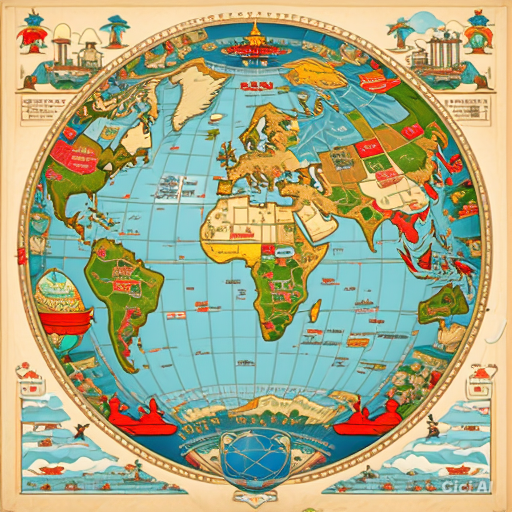
In the swirling currents of geopolitical intrigue, few regions are as contested as the Spratly Islands and Formosa (modern-day Taiwan). An astute diplomat offers a provocative take on this issue, presenting a masterful narrative that intertwines war, politics, and superpower machinations. To unravel the truth, we must sift through history’s sands, examining the key players and pivotal events that shaped these territories.
Island Chains, Icy Claims: The Spratlys and Formosa
The Spratly Islands, a cluster of atolls and reefs in the South China Sea, have long been a focal point of territorial disputes. Before World War II, the Spratlys were nominally controlled by various regional powers, with Japan asserting dominance in the early 20th century. The strategic importance of these islands—rich in resources and situated in crucial maritime routes—only became more pronounced with time.
Formosa, known today as Taiwan, has an equally tumultuous history. For centuries, it was a melting pot of indigenous cultures, Chinese settlers, and colonial influences, including Dutch and Spanish. By the late 19th century, it was under Qing Dynasty control until ceded to Japan in 1895 following the First Sino-Japanese War. Japan’s rule over Formosa lasted until the end of World War II in 1945.
The Post-War Geopolitical Chessboard
With Japan’s defeat in 1945, the victors—chiefly the United States and its allies—reconfigured the geopolitical landscape. The Allied powers sought to establish a new world order, leading to the formation of the United Nations (UN). China, then represented by the Kuomintang (KMT) under Chiang Kai-shek, was recognized as a major Allied power and a permanent member of the UN Security Council.
The diplomat’s opinion suggests that the US, in its effort to balance power in Asia, handed over control of Formosa and the Spratlys to China. This view, however, simplifies the intricate diplomatic maneuvering of the time. The Cairo Declaration of 1943 and the Potsdam Declaration of 1945 stipulated that territories taken by Japan, including Formosa, would be returned to China. Yet, the fate of the Spratlys remained more ambiguous. Japan renounced its claims to the Spratlys in the Treaty of San Francisco in 1951 but did not specify which country should take over, leaving a vacuum that multiple nations sought to fill.
The Chinese Civil War and the Birth of the One China Policy
The diplomat accurately notes the civil war in China between the KMT and the Chinese Communist Party (CCP) led by Mao Zedong. By 1949, the communists had triumphed, and Chiang Kai-shek retreated to Formosa, establishing the Republic of China (ROC) there. For over two decades, the ROC represented China in the UN, a testament to the complex loyalties and geopolitical strategies of the Cold War era.
However, in 1971, the UN General Assembly passed Resolution 2758, recognizing the People’s Republic of China (PRC) as the legitimate government of China and expelling the ROC. This shift was part of a broader realignment, influenced by US President Richard Nixon and his National Security Advisor, Henry Kissinger. Their groundbreaking rapprochement with the PRC reshaped global diplomacy, solidifying the “One China” policy that acknowledges Beijing’s claim over Taiwan, albeit ambiguously from the US perspective.
Weighing the Evidence: Deconstructing The Diplomat’s Analysis
The diplomat’s opinion is grounded in several historical truths: the control of Formosa by Japan, the Allied victory and subsequent territorial decisions, and the civil war between the KMT and CCP. It correctly identifies the pivotal role of the US and the UN in shaping the current status of Taiwan and China’s representation in international bodies.
However, the opinion’s assertion that the US directly handed over the Spratlys to China is misleading. The Spratlys have seen claims from multiple nations, including Vietnam, the Philippines, Malaysia, Brunei, and China. The US’s primary interest lay in ensuring stability and countering Soviet influence rather than unilaterally bestowing territorial control.
Recommendations Moving Forward
To navigate the treacherous waters of South China Sea politics and the Taiwan Strait, a nuanced approach is essential. First, transparency and adherence to international law, particularly the United Nations Convention on the Law of the Sea (UNCLOS), should be prioritized to resolve disputes in the Spratlys. Multilateral dialogues involving all claimants can foster a more stable regional order.
Second, the international community must uphold Taiwan’s de facto autonomy while respecting the complex historical and political contexts that define the “One China” policy. Encouraging cross-strait dialogue and cooperation, rather than confrontation, is crucial for maintaining peace.
Finally, recognizing the pivotal role of history in shaping present-day geopolitics can guide more informed and balanced policy decisions. The past is a mirror reflecting the complexities of today’s world, and understanding its nuances is key to navigating the future.
As the world watches, the story of the Spratlys and Formosa continues to unfold, a testament to the enduring interplay of power, history, and human ambition.

- ₱75 Million Heist: Cops Gone Full Bandit

- ₱6.7-Trillion Temptation: The Great Pork Zombie Revival and the “Collegial” Vote-Buying Circus

- ₱1.9 Billion for 382 Units and a Rooftop Pool: Poverty Solved, Next Problem Please

- ₱1.35 Trillion for Education: Bigger Budget, Same Old Thieves’ Banquet
- ₱1 Billion Congressional Seat? Sorry, Sold Out Na Raw — Si Bello Raw Ang Hindi Bumili

- “We Will Take Care of It”: Bersamin’s P52-Billion Love Letter to Corruption

- “Skewed Narrative”? More Like Skewered Taxpayers!

- “Scared to Sign Vouchers” Is Now Official GDP Policy – Welcome to the Philippines’ Permanent Paralysis Economy
- “Robbed by Restitution?” Curlee Discaya’s Tears Over Returning What He Never Earned

- “No Pressure” Luistro? The House Pork Bazaar Exposed




 KWEBA ni BAROK
Leave a comment