
By Louis ‘Barok‘ C. Biraogo
In the simmering cauldron of the South China Sea, the latest episode in the territorial dispute between the Philippines and China has unveiled yet another layer of complexity and intrigue. The provisional agreement on resupply missions to the BRP Sierra Madre, stranded on Ayungin Shoal, has triggered a whirlwind of claims and counterclaims, revealing the deep-seated mistrust and divergent interpretations that plague the relationship between these two nations.
Historical Background: A Saga of Disputes and Diplomatic Ballet
The South China Sea has long been a theater of conflicting territorial claims, particularly between the Philippines and China. This maritime domain, rich in resources and strategic importance, has seen numerous encounters characterized by understanding and misunderstanding, communication and miscommunication, agreement and disagreement.
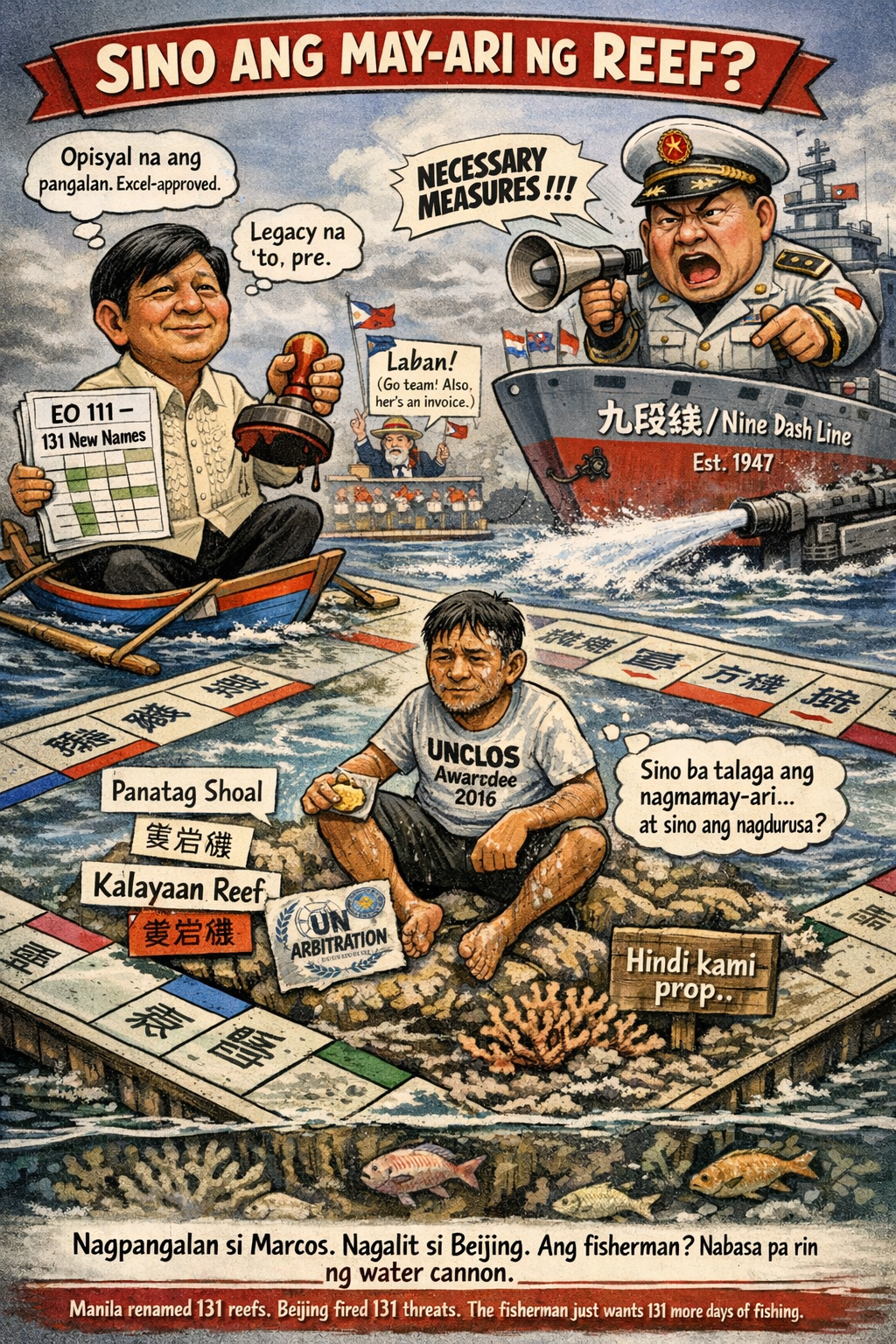
The flashpoints in this saga are numerous. In 1995, China’s construction on Mischief Reef, ostensibly a “fisherman’s shelter,” morphed into a full-fledged military outpost, sparking outrage in Manila. The 2012 Scarborough Shoal standoff, mediated by the United States, saw the Philippines withdraw as agreed, only for China to remain and assert control. These historical precedents underpin the deep distrust that colors current interactions.
The Current Status: A Provisional Agreement on Shaky Ground
The recent provisional agreement, touted as a breakthrough to de-escalate tensions, has instead ignited fresh controversy. The Philippines and China reached an understanding for resupply missions to the BRP Sierra Madre, but the interpretations of this agreement diverge sharply.
China claims the Philippines agreed to notify Beijing in advance and allow on-site verification of resupply missions, framing these conditions as essential for de-escalation. The Philippines, however, vehemently denies agreeing to such terms, asserting that the arrangement should not prejudice its sovereign rights over Ayungin Shoal, which lies within its Exclusive Economic Zone (EEZ).
Divergent Understandings: A Chasm of Miscommunication
The root of the misunderstanding lies in the historical baggage and entrenched positions of both nations. For China, the provisional agreement is an extension of its broader strategy to assert control over contested areas. By insisting on prior notification and on-site verification, China seeks to reinforce its claim over Ayungin Shoal, which it calls Ren’ai Jiao.
From the Philippine perspective, the agreement was a pragmatic step to ensure the welfare of its personnel on the BRP Sierra Madre without conceding any territorial claims. The insistence on non-prejudicial terms underscores Manila’s resolve to assert its maritime rights as enshrined under the United Nations Convention on the Law of the Sea (UNCLOS).
Historical Precedents and the Trust Deficit
The distrust is mutual and deeply rooted. China’s broken promises at Mischief Reef and Scarborough Shoal are stark reminders for the Philippines. Conversely, China’s grievances include the Philippines’ shift from the status quo agreements under former President Rodrigo Duterte to new, ostensibly unauthorized arrangements under President Ferdinand Marcos Jr.
A Call for Transparency and the Rule of Law
The provisional agreement’s opacity exacerbates the situation. The text remains unpublished, fueling speculation and uncertainty. This lack of transparency is unacceptable for an arrangement that directly impacts national security and regional stability.
Ethically and practically, the Philippine government must publish the full text of the provisional agreement. Supreme Court precedents and provisions under Philippine laws demand transparency in matters of public interest, especially those affecting national sovereignty and the safety of military personnel. The publication would provide clarity, dispel rumors, and build a foundation for informed public discourse.
Recommendations: Diplomacy and Legal Frameworks
To navigate this treacherous path, both nations must recommit to diplomacy and the rule of law. Here are key recommendations:
- Publish the Provisional Agreement: Transparency is paramount. Both governments should release the full text to ensure all parties, including the public, understand the terms clearly.
- Strengthen Bilateral Communication: Regular, transparent dialogue at the highest levels can help bridge the trust deficit. Establishing a permanent communication channel for real-time consultations would mitigate misunderstandings.
- Adhere to International Law: Both nations must respect UNCLOS and abide by international rulings, such as the 2016 Permanent Court of Arbitration decision favoring the Philippines. Legal frameworks should guide interactions, not unilateral assertions of power.
- Engage in Confidence-Building Measures: Joint activities, such as cooperative marine environmental protection initiatives, could serve as trust-building exercises, fostering cooperation over confrontation.
- Involve Third-Party Mediators: Neutral international actors can help facilitate negotiations and ensure that agreements are fair, transparent, and adhered to by both sides.
A Plea for Peaceful Resolution
In the volatile waters of the South China Sea, where national pride and strategic interests collide, the path to peace is fraught with challenges. Yet, the stakes are too high for failure. The Philippines and China must transcend historical grievances and work towards a future where diplomacy, transparency, and the rule of law reign supreme. Only then can the specter of conflict give way to a horizon of peaceful coexistence.

- “Forthwith” to Farce: How the Senate is Killing Impeachment—And Why Enrile’s Right (Even If You Can’t Trust Him)

- “HINDI AKO NAG-RESIGN!”

- “I’m calling you from my new Globe SIM. Send load!”

- “Mahiya Naman Kayo!” Marcos’ Anti-Corruption Vow Faces a Flood of Doubt

- “Meow, I’m calling you from my new Globe SIM!”

- “No Special Jail for Crooks!” Boying Remulla Slams VIP Perks for Flood Scammers

- “PLUNDER IS OVERRATED”? TRY AGAIN — IT’S A CALCULATED KILL SHOT

- “Several Lifetimes,” Said Fajardo — Translation: “I’m Not Spending Even One More Day on This Circus”

- “Shimenet”: The Term That Broke the Internet and the Budget

- “We Did Not Yield”: Marcos’s Stand and the Soul of Filipino Sovereignty





 KWEBA ni BAROK
Leave a comment