By Louis ‘Barok‘ C. Biraogo
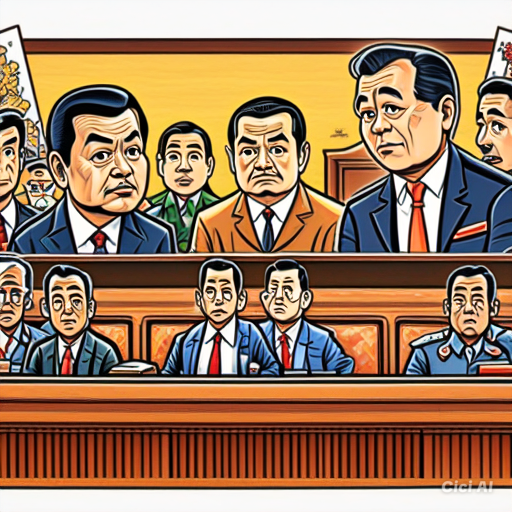
IN THE latest turn of the ongoing saga between Senator Antonio Trillanes IV and former President Rodrigo Duterte, a fresh plunder complaint has been lodged against Duterte, Senator Bong Go, and several former Department of National Defense officials. This 50-page complaint, submitted to the Department of Justice, alleges manipulation and interference in the P16 billion frigate acquisition project, a key component of the armed forces’ modernization program.
The Genesis of Conflict
The frigate acquisition project falls under Horizon 1 of the Armed Forces of the Philippines (AFP) modernization program, which ran from 2013 to 2017 with a budget of P75 billion. The controversy centers on the selection of the combat management system (CMS) for the frigates, where the government had to choose between the Hanwha system from Korea’s Hyundai Heavy Industries and the Tacticos Thales system from France.
The controversy began when allegations surfaced that Special Assistant to the President Christopher “Bong” Go intervened in the selection process, favoring Hanwha Systems over the Philippine Navy’s preferred choice of Tacticos Thales. These allegations led to a Senate inquiry in January 2018, where Go denied any involvement. However, Trillanes presented evidence, including a “white paper” with a marginal note from Defense Secretary Delfin Lorenzana indicating it came from Go.
Trillanes’ complaint alleges that Duterte, Go, and others actively interfered to favor the Hanwha system, which was allegedly cheaper, less effective, and non-compliant with the Philippine Navy’s requirements. This decision, according to Trillanes, caused undue injury to the government and the armed forces, amounting to over P50 million in damages.
The Accusation: Key Points and Supporting Evidence
- Violation of Ethical Standards: Public officials are expected to act in the best interest of the nation, adhering to principles of integrity, transparency, and accountability. Manipulating procurement processes for personal or political gain breaches these ethical standards.
- Breach of the Anti-Graft and Corrupt Practices Act (Republic Act No. 3019): The Act prohibits public officials from causing undue injury to the government or giving any private party unwarranted benefits, advantage, or preference in the discharge of their official functions.
- Plunder Law (Republic Act No. 7080): This law penalizes public officials who accumulate ill-gotten wealth amounting to at least P50 million through a series of overt criminal acts, including misuse of public funds and corruption.
- Philippine Supreme Court Precedents:
- Ferrer vs. Bautista (G.R. No. 162340, April 27, 2007): The Court ruled that public officials must adhere to ethical standards and avoid any conduct that would erode public trust.
- Borja vs. Sandiganbayan (G.R. No. 149675, January 20, 2006): The Court emphasized that undue preference in government contracts constitutes a violation of the Anti-Graft Law.
Expected Rebuttals from the Defendants
- Political Motivation: Duterte and Go have characterized Trillanes’ accusations as politically motivated, aiming to damage their reputations rather than seeking justice.
- Lack of Direct Evidence: The accused may argue that there is no concrete evidence directly linking them to any unlawful acts, asserting that all decisions were made following legal procedures and in the best interest of the country.
- Senate Inquiry Findings: Although the Senate inquiry in 2018 did not result in formal charges, the accused can argue that the lack of charges demonstrates the insufficiency of evidence against them.
- Compliance with Legal Procedures: The accused might contend that the selection of the Hanwha system complied with procurement laws and regulations, aiming to achieve the best possible outcome within budget constraints.
Navigating the Legal Maze: Legal Pathways and Roadblocks
- Preliminary Investigation: The Department of Justice will conduct a preliminary investigation to determine if there is prima facie evidence with reasonable certainty of conviction to charge the accused in court. This involves gathering evidence, affidavits, and counter-affidavits from both parties.
- Hurdles: The prosecution must present substantial evidence to establish prima facie evidence with reasonable certainty of conviction, which can be challenged by the defense through procedural and evidentiary objections.
- Filing of Charges: If prima facie evidence with reasonable certainty of conviction is found, formal charges will be filed in the Sandiganbayan (the Philippines’ anti-graft court).
- Hurdles: Ensuring the charges are sufficiently detailed and backed by solid evidence to withstand motions to dismiss by the defense.
- Trial: The case will proceed to trial, where both sides will present their arguments, evidence, and witnesses.
- Hurdles: The prosecution must prove beyond reasonable doubt that the accused committed plunder and graft, overcoming the defense’s counter-evidence and legal arguments.
Determining the Case’s Viability
The strength of Trillanes’ case hinges on the availability of clear, convincing evidence demonstrating undue interference and favoritism in the procurement process. The burden of proving these allegations beyond a reasonable doubt is substantial, especially given the high-profile nature of the accused and the potential political ramifications.
Recommendations
For Trillanes:
- Gather Robust Evidence: Ensure that all documentary evidence, witness testimonies, and expert analyses are meticulously compiled to build a compelling case.
- Anticipate Defense Strategies: Prepare to counter arguments of political motivation and procedural compliance with clear factual and legal rebuttals.
For Duterte, Go, and other accused:
- Focus on Procedural Compliance: Emphasize adherence to legal procurement processes and the lack of direct evidence of wrongdoing.
- Challenge Credibility: Question the credibility and motives of the accuser, presenting previous dismissals of similar charges as part of the defense narrative.
Conclusion
As this case unfolds, it serves as a crucial test of the Philippine judicial system’s ability to handle high-profile corruption allegations. Both sides must navigate complex legal and procedural landscapes, with the ultimate goal of achieving justice and upholding the rule of law.

- Andres Heralds DoJ’s Transformative Justice

- Sailing to New Horizons: PEZA Sets Ambitious PHP250-B Approval Target for 2024

- Panga’s Bold Vision: The Paradigm Shift of Iwahig Mega Economic Zone

- Panga’s Pragmatic Approach to Sino-Philippine Investments

- The Shadow Over Manila
- Shadow of the Red Notice: Remulla hunts down Teves

- Frozen Enigma: NBI Bacolod’s Tussle with Darkness

- Quiboloy’s Supreme Court Shenanigans: A Pathetic Attempt to Dodge Justice

- RP’s cunundrum: A pawn in the SCS geopolitical chessboard

- Macapagal Leads: Navigating Relocation Challenges


 KWEBA ni BAROK
Leave a comment