
By Louis ‘Barok‘ C Biraogo
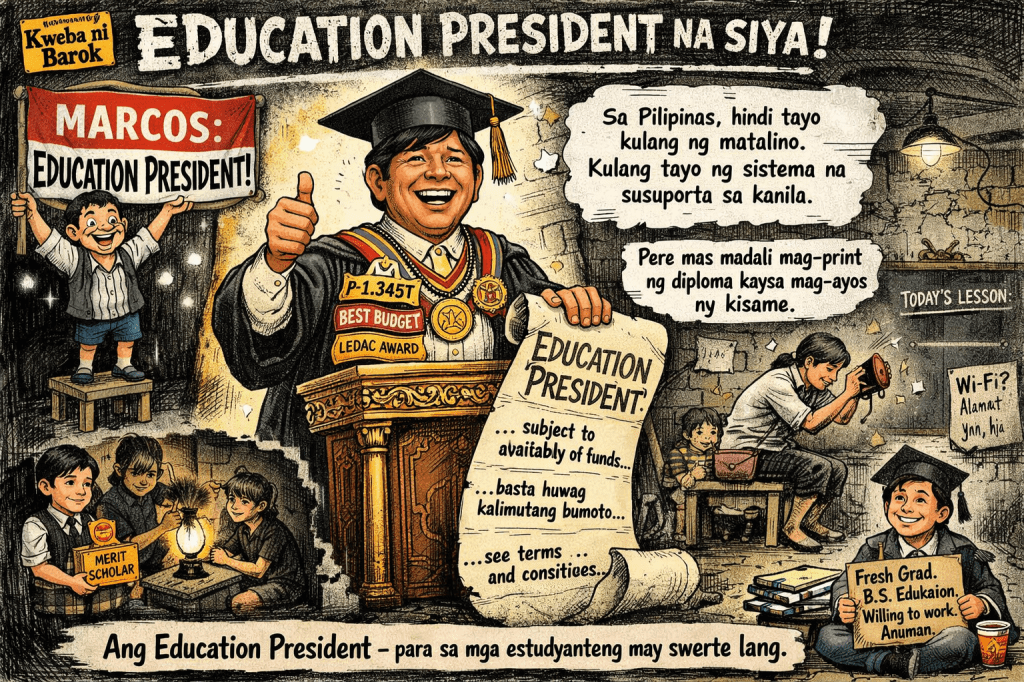
THE narrative of education in the Philippines has long been entwined with the nation’s economic aspirations and social fabric. For decades, teachers have been hailed as the backbone of the country’s future, entrusted with the task of shaping young minds. Yet, today, the Philippines faces a looming crisis—an exodus of its educators, driven by despair and disillusionment, and this threatens to unravel the very fabric of the nation.
The Historical Context: Education, Economy, and the Teaching Profession
The history of education in the Philippines is one of both triumph and tragedy. Since the establishment of the public school system during the American colonial period, education has been seen as a key driver of economic and social mobility. Teachers were revered as pillars of the community, their roles extending beyond the classroom to include moral and civic leadership. However, the profession has suffered from decades of neglect, with wages stagnating and working conditions deteriorating. The resulting teacher shortage has now reached alarming levels, exacerbated by the lure of better opportunities abroad.
This exodus of teachers is more than just a professional migration; it is a hemorrhaging of the nation’s intellectual capital, one that threatens to cripple the quality of education and, by extension, the country’s economic future. The government’s response—establishing a Cabinet Cluster on Education—is a step in the right direction, but it may be too little, too late.
To salvage any remaining hope, we must delve profoundly into the core of the matter employing two strategic methodologies: the 5 Whys technique and Means-End Analysis.
The 5 Whys: Digging Deep into the Crisis
To understand the root of this crisis, we must ask ourselves: Why are Filipino teachers leaving in droves? The “5 Whys” method offers a powerful tool to uncover the underlying causes of this phenomenon.
- Why are teachers leaving the country?
- Teachers are seeking higher salaries and better working conditions abroad.
- Why are salaries and working conditions abroad more appealing?
- The wages in the Philippines are insufficient to provide a decent standard of living, and teachers often face overcrowded classrooms, inadequate resources, and lack of career progression.
- Why is there a lack of adequate compensation and support in the Philippines?
- The education sector has suffered from chronic underfunding for decades, consistently taking a backseat to government priorities such as infrastructure development and defense spending.
- Why has the government consistently underfunded education?
- There is a historical lack of political will to invest in education, compounded by competing demands on the national budget and systemic corruption.
- Why is there a lack of political will to prioritize education?
- Education is often seen as a long-term investment with delayed returns, making it less attractive to politicians seeking immediate results. Furthermore, the cultural undervaluation of teachers’ roles has led to their marginalization in policy decisions.
This exercise leads us to the root cause: a systemic undervaluation of education and its role in national development, coupled with a failure to adequately support and compensate those tasked with delivering it.
Means-End Analysis: Reimagining the Future of Philippine Education
Having identified the root cause, it is imperative to shift our focus to a solution-oriented approach. The Means-End Analysis can help chart a path forward by envisioning the desired outcome and identifying the obstacles that must be overcome to achieve it.
Envision the Goal:
The ultimate goal is to retain and empower a well-compensated, motivated, and respected teaching workforce, which is essential for providing quality education and fostering national development.
Identify Obstacles:
- Low Salaries: The current compensation for teachers is insufficient to meet their needs, making overseas opportunities more attractive.
- Poor Working Conditions: Overcrowded classrooms, lack of resources, and administrative burdens contribute to job dissatisfaction.
- Limited Career Progression: Teachers often face a stagnant career path, with few opportunities for advancement or professional development.
- Lack of Political Will: There is insufficient prioritization of education in national policy and budget allocation.
Overcome Obstacles:
- Increase Teacher Salaries: The government must commit to substantial salary increases, aligning them with the cost of living and making teaching a financially viable profession.
- Improve Working Conditions: Investment in infrastructure, resources, and teacher training is crucial to create a more supportive work environment.
- Enhance Career Progression: Establishing clear pathways for career advancement, including opportunities for leadership roles and continuous professional development, will help retain talent.
- Strengthen Political Will: Advocacy and public pressure must be applied to ensure that education is prioritized in policy decisions, with dedicated funding and transparency in its use.
Recommendations: Bridging the Gap
The exodus of Filipino teachers is a national crisis that demands an urgent and comprehensive response. While the creation of the Education Cluster is a positive step, it must be accompanied by concrete actions to address the root causes identified through the 5 Whys analysis. Here are key recommendations:
- Immediate Salary Increases: Implement an emergency salary adjustment for teachers to stem the tide of resignations and departures. This should be coupled with regular, inflation-adjusted salary reviews.
- Education Budget Reforms: Reallocate national budget priorities to ensure that education receives adequate funding. This includes not only salaries but also infrastructure, resources, and professional development.
- Public-Private Partnerships: Engage the private sector in supporting education through partnerships that provide resources, technology, and training for teachers.
- Long-Term Education Policy: Develop a comprehensive education policy with a long-term vision, focusing on sustainability, quality, and equity. This should be enshrined in legislation to protect it from political changes.
- Cultural Revaluation of Teachers: Launch a national campaign to elevate the status of teachers, highlighting their crucial role in nation-building and ensuring that their contributions are recognized and rewarded.
The stakes could not be higher. The exodus of Filipino teachers is not just a loss of talent—it is a loss of hope for the future. The government must act decisively to reverse this trend, or risk consigning an entire generation to a bleak future of under-education and unrealized potential. The time for half-measures is over; the Philippines must invest in its teachers as if the nation’s future depends on it—because it does.

- Andres Heralds DoJ’s Transformative Justice

- Sailing to New Horizons: PEZA Sets Ambitious PHP250-B Approval Target for 2024

- Panga’s Bold Vision: The Paradigm Shift of Iwahig Mega Economic Zone

- Panga’s Pragmatic Approach to Sino-Philippine Investments

- The Shadow Over Manila

- Shadow of the Red Notice: Remulla hunts down Teves

- Frozen Enigma: NBI Bacolod’s Tussle with Darkness

- Quiboloy’s Supreme Court Shenanigans: A Pathetic Attempt to Dodge Justice

- RP’s cunundrum: A pawn in the SCS geopolitical chessboard

- Macapagal Leads: Navigating Relocation Challenges




 KWEBA ni BAROK
Leave a comment