By Louis ‘Barok‘ C. Biraogo
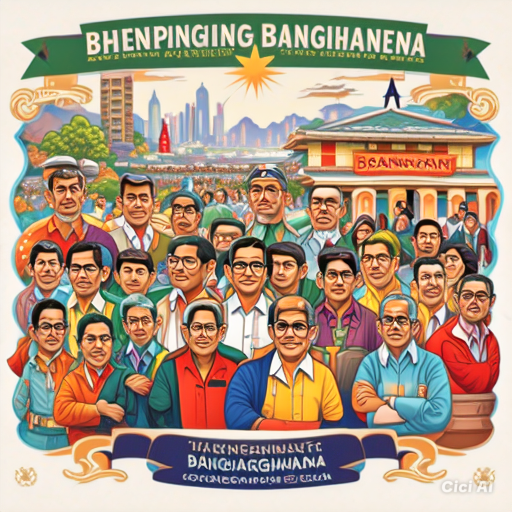
IN THE halls of the Philippine Congress, a proposal is stirring—a proposal that could reshape the fabric of grassroots democracy. House Speaker Ferdinand Martin Romualdez and other prominent lawmakers have introduced a bill that seeks to extend the term of barangay and Sangguniang Kabataan (SK) officials to six years. This seemingly straightforward legislative change is steeped in history, rooted in the ever-evolving narrative of local governance in the Philippines, and raises profound questions about the balance between continuity and accountability in the country’s smallest yet most essential political units.
The Historical Context: The Evolution of Barangay and SK Governance
The barangay, the smallest administrative division in the Philippines, has a storied past. It began as the “barangay” during the pre-colonial era, a term derived from the word “balangay,” a type of boat used by Austronesian people. Fast forward to modern times, the barangay system was formalized under the Spanish colonization, eventually becoming a fundamental part of the Philippine government structure. By 1982, the Barangay Election Act established a six-year term for barangay officials, a term length that allowed for sustained community leadership but also ran the risk of entrenching local power.
In 1991, the Local Government Code brought sweeping changes, reducing the term to three years to foster greater accountability and provide more frequent opportunities for community members to elect new leaders. However, the three-year term has often been marred by interruptions—elections postponed, terms extended, and the occasional legal battles that have left many questioning the consistency of the system. The Sangguniang Kabataan, or youth councils, established in 1975, mirrored these terms, providing young Filipinos with a voice in local governance but similarly experiencing the tumult of election delays.
Romualdez’s Bill: A Bid for Continuity
Against this backdrop, Romualdez’s House Bill No. 10747 emerges as a solution to the perceived instability of the current system. The bill seeks to revert the barangay and SK terms back to six years—a move Romualdez argues is necessary to ensure that local officials have enough time to implement long-term projects and insulate themselves from the disruptive politics of frequent elections.
The proposed legislation is not without its logic. Romualdez’s rationale rests on the notion that continuity in leadership is crucial for effective governance at the grassroots level. By extending the term, barangay officials would have ample time to plan and execute initiatives without the looming specter of reelection campaigns, which often divert attention and resources away from governance.
SWOT Analysis of Romualdez’s Proposal
Strengths:
- Continuity and Stability: A six-year term would allow barangay and SK officials to focus on long-term development plans without the frequent interruptions of elections.
- Reduced Politicking: Fewer elections mean less time spent on campaign activities, which can sometimes lead to short-term populism at the expense of sound policy-making.
- Cost Efficiency: Holding elections less frequently would reduce the financial burden on the government.
Weaknesses:
- Risk of Entrenchment: Longer terms could entrench power in the hands of a few, reducing opportunities for new leadership to emerge and potentially leading to complacency or corruption.
- Reduced Accountability: Voters would have fewer chances to hold officials accountable through elections, which could diminish the incentive for officials to perform well.
Opportunities:
- Long-Term Planning: Officials could pursue ambitious projects with longer timelines, potentially leading to more significant and sustained community improvements.
- Political Maturity: A longer term could allow young SK officials to develop as leaders, gaining experience that could benefit future political careers.
Threats:
- Resistance from Political Opponents: The proposal might face opposition from those who see it as a power grab, particularly in an environment where the extension of terms has been a contentious issue.
- Legal Challenges: Given the Supreme Court’s recent rulings on election postponements, there is a possibility that this new proposal could face legal hurdles.
An Objective Assessment
While Romualdez’s proposed legislation has its merits, particularly in addressing the issues of continuity and stability, it is not without significant risks. The potential for entrenchment of power, coupled with reduced accountability, cannot be overlooked. Moreover, the proposed legislation could be seen as a solution that addresses the symptoms of political instability rather than the root causes—namely, the culture of political patronage and the lack of genuine political competition in many localities.
Recommendations
- Term Limits and Anti-Dynasty Provisions: If the term is to be extended to six years, it is crucial that robust term limits and anti-dynasty provisions be strictly enforced to prevent the consolidation of power in the hands of a few.
- Strengthening Voter Engagement: To counter the potential for reduced accountability, efforts should be made to strengthen voter engagement and education, ensuring that officials remain responsive to the needs of their constituents.
- Regular Performance Audits: The government should institute regular performance audits of Barangay and SK officials, with results made public, to maintain transparency and accountability over the longer term.
- Consideration of a Middle Ground: A five-year term, as previously proposed by other lawmakers, could serve as a compromise, offering both continuity and more frequent opportunities for voters to hold their leaders accountable.
The proposed legislation to extend barangay and SK terms to six years is a significant move that could reshape local governance in the Philippines. While it offers clear benefits in terms of continuity, it also poses risks that must be carefully managed. As the debate unfolds, it is crucial that lawmakers, community leaders, and citizens weigh these factors with the gravity they deserve. In the end, the goal should be to strengthen, not weaken, the foundations of Philippine democracy.

- Andres Heralds DoJ’s Transformative Justice

- Sailing to New Horizons: PEZA Sets Ambitious PHP250-B Approval Target for 2024

- Panga’s Bold Vision: The Paradigm Shift of Iwahig Mega Economic Zone

- Panga’s Pragmatic Approach to Sino-Philippine Investments

- The Shadow Over Manila

- Shadow of the Red Notice: Remulla hunts down Teves

- Frozen Enigma: NBI Bacolod’s Tussle with Darkness

- Quiboloy’s Supreme Court Shenanigans: A Pathetic Attempt to Dodge Justice

- RP’s cunundrum: A pawn in the SCS geopolitical chessboard

- Macapagal Leads: Navigating Relocation Challenges



 KWEBA ni BAROK
Leave a comment