By Louis ‘Barok‘ C. Biraogo
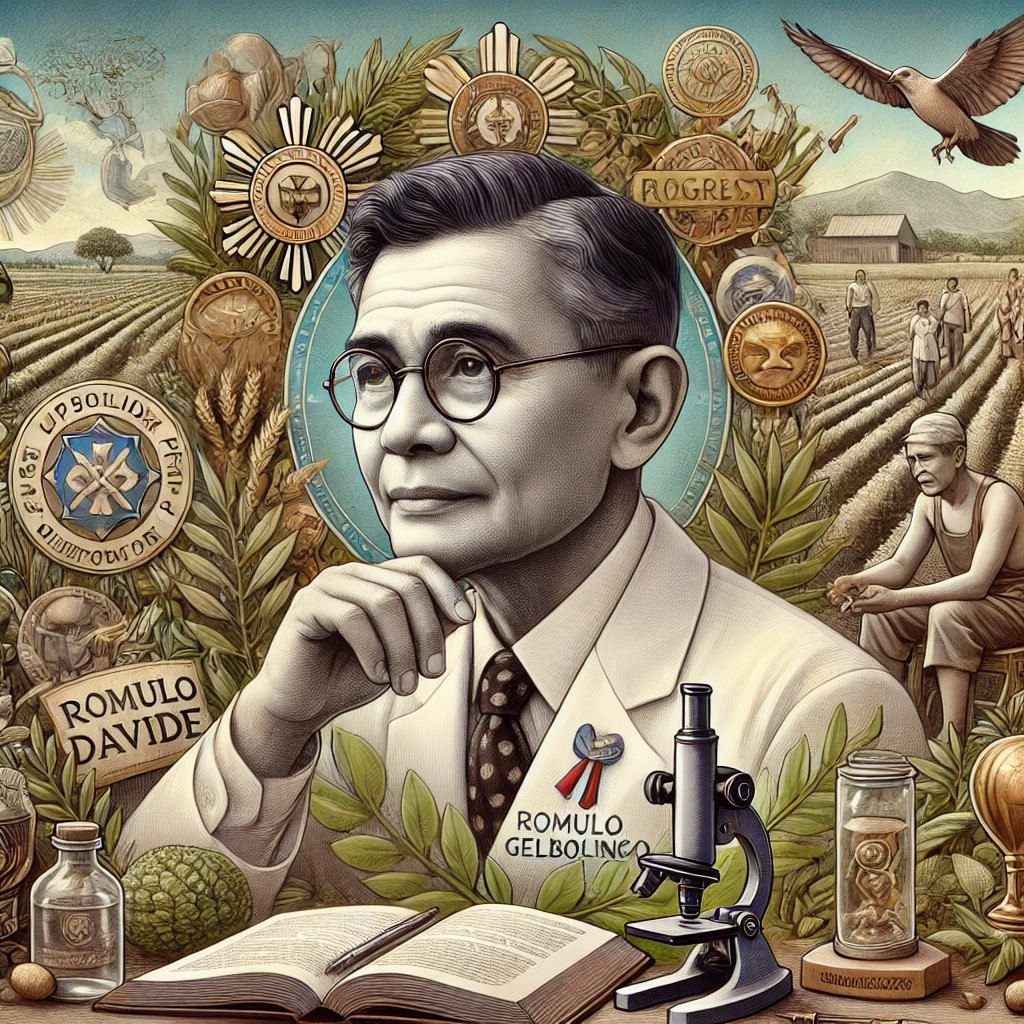
IN A world where the pressures of modernization often leave the most vulnerable behind, Dr. Romulo Gelbolingo Davide has stood as a guiding light, transforming lives and landscapes with his relentless pursuit of knowledge and his deep commitment to service. As the Philippines’ 44th National Scientist, his journey from a small town in Cebu to the heights of scientific achievement and recognition serves as a powerful reminder of what one individual can achieve when driven by purpose and passion.
Born in the rustic surroundings of Argao, Cebu, Davide’s early exposure to the struggles of Filipino farmers ignited a flame that would burn brightly throughout his life. It was a life marked not by personal ambition, but by a profound desire to uplift those who toil the land. His education, earned through sheer determination and sacrifice, was not merely for personal gain, but a tool he would wield to bring about real change in the agricultural sector—a sector that feeds the nation, yet often remains neglected.
Davide’s groundbreaking work in plant pathology and nematology redefined the way we approach agricultural pests. His development of Biocon, a biological control agent derived from the soil fungus Paecilomyces lilacinus, offered farmers a sustainable and safe alternative to the harmful chemical nematicides that had long dominated the industry. But more than a scientific achievement, it was a lifeline for countless farmers, giving them the means to protect their crops and, by extension, their livelihoods.
Yet, Davide’s legacy extends far beyond his scientific discoveries. His leadership of the Farmer Scientist Training Program (FSTP) represents a paradigm shift in how we view the role of farmers. He didn’t just see them as laborers; he saw them as partners in science, as innovators capable of transforming their own lives through knowledge and collaboration. Under his guidance, the FSTP empowered over 70,000 farmers, increasing their productivity and incomes, and fostering a culture of self-reliance and scientific curiosity that continues to bear fruit today.
For these remarkable contributions, Davide has been justly recognized, not least with the Ramon Magsaysay Award—Asia’s equivalent of the Nobel Prize. His recognition as a National Scientist further cements his place in the annals of Philippine history, honoring a lifetime dedicated to the betterment of his countrymen.
But as we celebrate his achievements, it is also fitting to acknowledge another facet of Dr. Davide’s life—his membership in the Upsilon Sigma Phi fraternity. Founded in 1918, Upsilon Sigma Phi has been home to some of the most illustrious figures in Philippine history, a brotherhood committed to the ideals of leadership, service, and excellence. Dr. Davide’s affiliation with this fraternity adds yet another layer to his already distinguished profile, underscoring a lifelong commitment to these values. His journey from a young scholar navigating the challenges of his environment to a venerated scientist leading nationwide agricultural transformations is a testament not only to his individual brilliance but also to the enduring power of community and shared purpose.
As we congratulate Dr. Romulo Davide on his well-deserved title as the 44th National Scientist, we also look to his example for inspiration. In a time when the challenges facing our world can often seem insurmountable, Davide reminds us that science, service, and solidarity are the keys to building a better future. His work is not just a legacy—it is a call to action for all of us to use our talents and resources to lift others, to innovate with integrity, and to serve with humility.
Congratulations, Dr. Romulo Davide. Your life’s work continues to inspire, uplift, and transform. The nation is indebted to you, and we stand ready to carry forward the torch you have lit, ensuring that your legacy lives on in the fields and farms of the Philippines, and in the hearts of those you have touched.

- “Forthwith” to Farce: How the Senate is Killing Impeachment—And Why Enrile’s Right (Even If You Can’t Trust Him)

- “HINDI AKO NAG-RESIGN!”

- “I’m calling you from my new Globe SIM. Send load!”

- “Mahiya Naman Kayo!” Marcos’ Anti-Corruption Vow Faces a Flood of Doubt

- “Meow, I’m calling you from my new Globe SIM!”

- “No Special Jail for Crooks!” Boying Remulla Slams VIP Perks for Flood Scammers

- “PLUNDER IS OVERRATED”? TRY AGAIN — IT’S A CALCULATED KILL SHOT

- “Several Lifetimes,” Said Fajardo — Translation: “I’m Not Spending Even One More Day on This Circus”

- “Shimenet”: The Term That Broke the Internet and the Budget

- “We Did Not Yield”: Marcos’s Stand and the Soul of Filipino Sovereignty








 KWEBA ni BAROK
Leave a comment