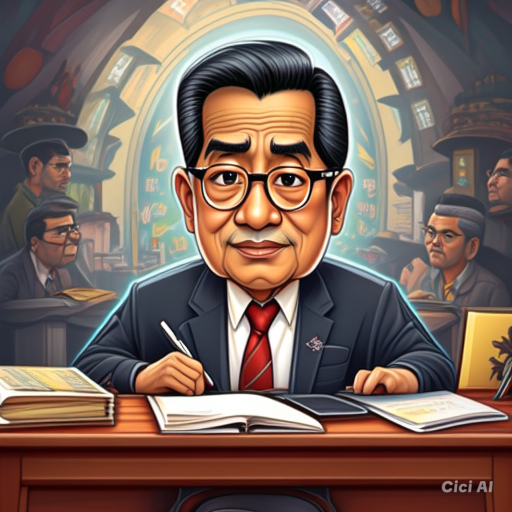
By Louis ‘Barok‘ C. Biraogo
THE Commission on Elections (Comelec) is standing on the edge of a precipice. As its chairman, George Erwin Garcia, expands the investigation into alleged election irregularities connected to the 2016 automated elections, the Philippines holds its breath. With new layers of corruption, bribery, and tax fraud being unearthed, this probe could be one of the most consequential in the nation’s history.
The Web of Controversy
At the center of this unfolding drama lies the tangled legacy of Andres Bautista, the former Comelec chair now under fire. Accused of rigged bidding, price manipulation, and tax fraud in connection with contracts awarded to Smartmatic—Comelec’s automation service provider during the 2016 elections—Bautista’s reputation is in tatters. These charges, surfaced by the U.S. Department of Justice, paint a disturbing picture of a system manipulated by powerful forces with no regard for democratic integrity.
Smartmatic, once the trusted provider of vote-counting machines and election transmission services, is now disqualified from future bidding, casting long shadows over its role in past elections. The company’s operations, once seen as the pinnacle of election modernization, are now under scrutiny for potentially facilitating one of the most sophisticated acts of electoral fraud in recent memory.
Acknowledging Garcia’s Probe
Garcia’s decision to expand the investigation to include the findings from the U.S. indictment is a commendable step toward uncovering the truth. His efforts resonate with the Filipino public’s demand for transparency and accountability. The logic is clear: if Bautista and his co-conspirators manipulated the bidding process, overcharged the government, and evaded taxes, then the very foundation of the 2016 elections was built on deceit.
Garcia’s probe represents more than just a bureaucratic exercise; it is a battle for the soul of Philippine democracy. By shedding light on the shady dealings behind the scenes, he is challenging the deeply entrenched systems of corruption that have long plagued the nation’s elections. This move is ethically sound, rooted in a commitment to upholding the principles of fair play and justice.
Legally, Garcia’s investigation is well-grounded. Philippine law prohibits acts of corruption, fraud, and collusion in government contracts, with the Anti-Graft and Corrupt Practices Act (Republic Act No. 3019) serving as a key legal framework. Moreover, the Philippine Supreme Court has consistently ruled against any form of electoral manipulation, emphasizing the importance of maintaining the integrity of the electoral process.
From a practical standpoint, exposing the truth behind the 2016 elections is crucial. The credibility of future elections hinges on the public’s trust in the system. If the Comelec can demonstrate that it is serious about rooting out corruption, it can restore faith in the electoral process and ensure that future elections are conducted with the highest standards of integrity.
The Veil Shrouding Garcia’s Investigation
Yet, for all its merits, Garcia’s probe is not without its critics. There are whispers in the corridors of power that this investigation may have ulterior motives. Some suggest that Garcia’s actions could be politically motivated, an attempt to discredit opponents or curry favor with powerful allies. The timing, so close to crucial political milestones, raises questions about whether this is truly a quest for justice or merely a political gambit.
The ethical implications of such a probe, if politically driven, are troubling. Weaponizing the investigative powers of Comelec for political gain would undermine the very principles of fairness and justice that Garcia claims to uphold. It would also set a dangerous precedent, where election watchdogs are used as tools for political retribution rather than guardians of democracy.
Furthermore, there is a practical risk that the investigation could become a distraction, diverting attention away from more pressing issues. The Comelec, already burdened with the task of preparing for future elections, might find its resources stretched thin by this expansive probe. The public, meanwhile, may grow weary of endless investigations that yield little in the way of concrete results.
Legally, Garcia must tread carefully. The same laws and precedents that empower him to investigate also demand that he do so with fairness and impartiality. The Supreme Court has repeatedly emphasized the need for due process and the protection of individual rights, even in cases of alleged corruption. Any misstep could lead to accusations of bias or abuse of power, potentially derailing the entire investigation.
The Path Forward
So, where does this leave us? The stakes are undeniably high, and the outcome of this investigation will have far-reaching implications for Philippine democracy. On one hand, Garcia’s probe has the potential to cleanse the electoral system of its deepest flaws, restoring public trust and ensuring that future elections are free from corruption. On the other, the investigation risks becoming mired in politics, undermining its credibility and doing more harm than good.
For Garcia, the path forward is clear: he must conduct this investigation with the utmost transparency and impartiality. He should focus not only on individual culpability but also on the systemic issues that allowed such corruption to flourish. The probe must result in tangible reforms that strengthen the electoral process and prevent future abuses.
For his critics, the message is equally clear: hold Garcia accountable, but do so in a way that supports the greater goal of electoral integrity. Criticism should be constructive, aimed at ensuring that the investigation remains on course rather than derailing it for political reasons.
In the end, the success of this probe will be measured not by the number of heads that roll, but by the strength of the institutions it leaves behind. The Philippines stands at a crossroads, and the choices made in the coming weeks will determine the direction of its democracy for years to come.

- “Forthwith” to Farce: How the Senate is Killing Impeachment—And Why Enrile’s Right (Even If You Can’t Trust Him)

- “HINDI AKO NAG-RESIGN!”

- “I’m calling you from my new Globe SIM. Send load!”

- “Mahiya Naman Kayo!” Marcos’ Anti-Corruption Vow Faces a Flood of Doubt

- “Meow, I’m calling you from my new Globe SIM!”

- “No Special Jail for Crooks!” Boying Remulla Slams VIP Perks for Flood Scammers

- “PLUNDER IS OVERRATED”? TRY AGAIN — IT’S A CALCULATED KILL SHOT

- “Several Lifetimes,” Said Fajardo — Translation: “I’m Not Spending Even One More Day on This Circus”

- “Shimenet”: The Term That Broke the Internet and the Budget

- “We Did Not Yield”: Marcos’s Stand and the Soul of Filipino Sovereignty






 KWEBA ni BAROK
Leave a comment