By Louis ‘Barok‘ C Biraogo
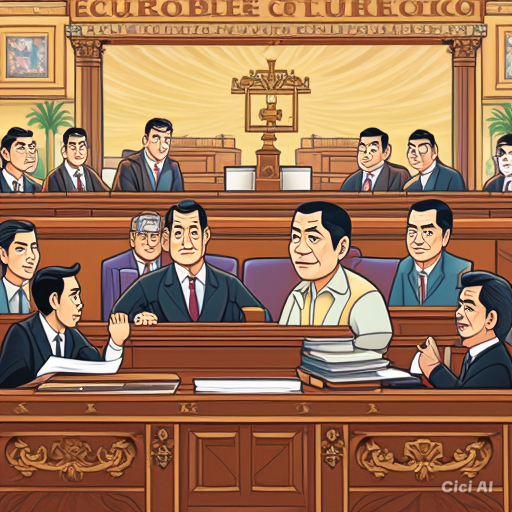
THE recent controversy surrounding the Court of Appeals’ (CA) decision to freeze the assets of Apollo Quiboloy, the leader of the Kingdom of Jesus Christ (KOJC), has become a flashpoint in Philippine legal and political circles. Former President Rodrigo Duterte, a close ally of Quiboloy, has publicly criticized the CA’s order, arguing that it is erroneous and unjustified. To understand the nuances of this dispute, it’s essential to dig into the political entanglements, the legal basis of the CA’s decision, and the broader implications for religious and financial accountability in the Philippines.
The Political Entanglements: Duterte, Marcos, and Quiboloy
The relationship between Duterte and Quiboloy is long-standing and complex. Quiboloy, who claims to be the “Appointed Son of God,” has been a significant supporter of Duterte, even going as far as declaring that Duterte’s presidency was divinely ordained. This relationship has resulted in a mutually beneficial alliance, with Quiboloy’s vast religious and media empire offering support to Duterte’s political endeavors.
President Ferdinand Marcos Jr., Duterte’s successor, has maintained a more cautious stance regarding Quiboloy. While Marcos has not directly criticized Quiboloy, his administration’s willingness to allow the legal processes against the KOJC leader to proceed indicates a departure from Duterte’s more protective approach. This shift may be seen as an attempt to distance the Marcos administration from the controversies surrounding Quiboloy, especially in light of international scrutiny.
Dissecting Duterte’s Claims: Exposing the Fallacies
Duterte’s primary argument against the CA’s freeze order is that the funds in question originate from a church organization and do not involve public money. He also contends that there are no allegations of misuse or complaints from KOJC members. However, this argument fails to acknowledge the broader legal context and the provisions of Philippine law that govern the freezing of assets suspected to be linked to unlawful activities.
Anti-Money Laundering Act (AMLA)
Under the Anti-Money Laundering Act (Republic Act No. 9160, as amended), the Anti-Money Laundering Council (AMLC) has the authority to petition the courts to freeze assets that are suspected to be involved in money laundering or related unlawful activities. The CA’s freeze order was issued based on the AMLC’s findings that Quiboloy was involved in a series of financial transactions over several years that appeared to be directly sourced from unlawful activities, including human trafficking, sexual abuse, and various forms of fraud.
The AMLA explicitly states that the AMLC can request a freeze order from the CA if there is probable cause to believe that assets are related to any of the unlawful activities enumerated in the law. The freeze order is a preventive measure intended to ensure that these assets are preserved while the investigation is ongoing. This provision was upheld in the Supreme Court case Republic v. Sandiganbayan (2012), where the Court emphasized that the purpose of freezing assets is to prevent their dissipation and to ensure that they are available for forfeiture if proven to be connected to unlawful activities.
Court of Appeals Decision
The CA’s decision to freeze Quiboloy’s assets is based on the AMLC’s detailed investigation, which uncovered 330 financial transactions that raised suspicions of being tied to illicit activities. This evidence forms a substantial basis for the freeze order, countering Duterte’s assertion that the CA’s decision is legally unfounded. Furthermore, the CA is within its jurisdiction to issue such an order under the AMLA, provided that the evidence presented by the AMLC meets the threshold of probable cause.
Contradictory Claims: Duterte’s Position and KOJC’s Defense
From Duterte’s perspective, the freeze order is an overreach, particularly given that the funds are from a religious organization. He argues that no KOJC members have come forward with complaints, suggesting that the funds were not misappropriated. However, this argument overlooks the fact that the allegations involve serious criminal offenses, including human trafficking and sexual abuse, which go beyond mere financial mismanagement.
The KOJC, under Quiboloy’s leadership, may also argue that the freeze order violates their religious freedom under the Philippine Constitution. However, it is important to note that religious freedom does not extend to shielding unlawful activities from legal scrutiny. The Philippine Supreme Court has consistently held that while religious organizations are protected under the Constitution, this protection does not exempt them from compliance with the law (e.g., Estrada v. Escritor, 2003).
The Court of Appeals Freeze Order
The CA’s 20-day freeze order is a crucial step in ensuring that Quiboloy’s assets are preserved while investigations continue. The order is not a judgment of guilt but a procedural safeguard to prevent the dissipation of assets that may be linked to criminal activities. The CA’s decision reflects a careful consideration of the AMLC’s findings and is grounded in the need to uphold the integrity of the legal process.
Evaluating Duterte’s Statements: A Critical Examination
While Duterte’s defense of Quiboloy is expected given their close relationship, his legal arguments lack substantial grounding in the current legal framework. The CA’s decision, based on the AMLC’s investigation and supported by existing laws, holds more weight in the legal arena. Duterte’s assertions, while politically motivated, do not convincingly challenge the legal basis of the freeze order.
Recommendations
For Quiboloy and the KOJC:
- Legal Compliance: The KOJC should cooperate fully with the ongoing investigations and comply with the CA’s order. Attempting to obstruct or evade legal processes could lead to further legal complications.
- Transparency: The KOJC should consider increasing transparency in its financial dealings to counter the allegations against it. This could involve independent audits or other measures to demonstrate good faith.
For the Duterte and Marcos Administrations:
- Political Neutrality: Duterte should recognize the importance of allowing the legal process to proceed without interference. Publicly challenging the CA’s decision could be perceived as an attempt to undermine the judiciary.
- Upholding the Rule of Law: The Marcos administration should continue to support the rule of law by ensuring that investigations are conducted fairly and without bias, regardless of the political affiliations of those involved.
In conclusion, while Duterte’s defense of Quiboloy is understandable given their ties, it is crucial to respect the legal process. The CA’s freeze order is based on substantial evidence and is a necessary step in ensuring that justice is served. Both the KOJC and the Duterte and Marcos administrations must prioritize the rule of law and allow the legal system to operate without undue influence.

- ₱75 Million Heist: Cops Gone Full Bandit

- ₱6.7-Trillion Temptation: The Great Pork Zombie Revival and the “Collegial” Vote-Buying Circus

- ₱1.9 Billion for 382 Units and a Rooftop Pool: Poverty Solved, Next Problem Please

- ₱1.35 Trillion for Education: Bigger Budget, Same Old Thieves’ Banquet

- ₱1 Billion Congressional Seat? Sorry, Sold Out Na Raw — Si Bello Raw Ang Hindi Bumili

- “We Will Take Care of It”: Bersamin’s P52-Billion Love Letter to Corruption

- “Skewed Narrative”? More Like Skewered Taxpayers!

- “Scared to Sign Vouchers” Is Now Official GDP Policy – Welcome to the Philippines’ Permanent Paralysis Economy
- “Robbed by Restitution?” Curlee Discaya’s Tears Over Returning What He Never Earned

- “No Pressure” Luistro? The House Pork Bazaar Exposed

 KWEBA ni BAROK
Leave a comment