By Louis ‘Barok‘ C. Biraogo
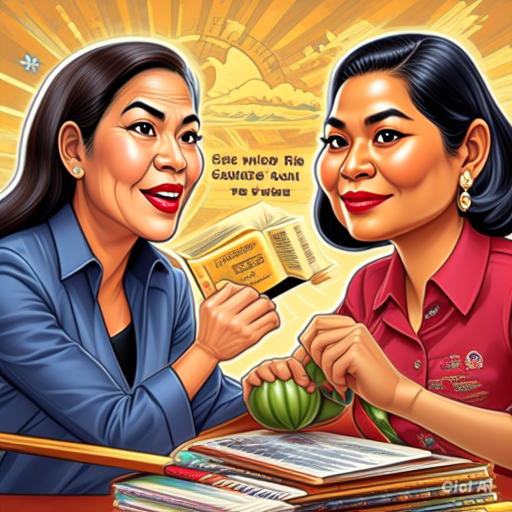
IN THE annals of Philippine politics, few figures have generated as much controversy and polarized opinion as Vice President Sara Duterte and Senator Risa Hontiveros. Their recent clash over a seemingly innocuous children’s book during the budget hearing of the Office of the Vice President (OVP) is more than just a spat over a P10 million allocation—it’s a reflection of the broader ideological and political battlelines that have shaped the nation’s political landscape for years.
Political Webs of the Past: Uncovering Entanglements
Sara Duterte, daughter of former President Rodrigo Duterte, is no stranger to power or its entrapments. Her rise to the vice presidency was seen by many as a continuation of the Duterte dynasty’s grip on Philippine politics, a legacy defined by her father’s brutal war on drugs and his populist rhetoric. Senator Risa Hontiveros, on the other hand, represents the progressive opposition, consistently challenging the Duterte administration on issues ranging from human rights abuses to governance. Their paths have crossed numerous times, each encounter adding fuel to an already simmering political rivalry.
The latest flashpoint? A budget hearing where Hontiveros scrutinized the OVP’s allocation for a children’s book titled Isang Kaibigan (“A Friend”), authored by Duterte herself. What should have been a straightforward inquiry into the cost and purpose of the book devolved into a heated exchange that revealed the deeper animosities at play.
Supporting Hontiveros’ Claims: Advocating for Accountability
Senator Hontiveros’ concerns are not without merit. At the heart of her inquiry lies a fundamental question of accountability: Should public funds be used to produce and distribute a book authored by a sitting vice president, especially one with clear political ambitions? The argument against such expenditures is compelling. History is replete with examples of leaders using state resources to bolster their personal or political image, often at the expense of transparency and good governance.
In the Philippines, where political dynasties wield enormous power, the need for vigilance against the misuse of public funds is paramount. Hontiveros’ push to redirect the OVP’s budget to line agencies with similar mandates is rooted in logical reasoning and sound fiscal policy. By questioning the necessity of the OVP’s programs—many of which overlap with existing government services—she is advocating for a more efficient and transparent allocation of resources.
Legally, Hontiveros stands on solid ground. The Philippine Constitution mandates the prudent use of public funds, and the principles of accountability and transparency are enshrined in the law. Ethically, her stance aligns with the broader democratic ideal that public office is a public trust—a trust that should not be exploited for personal gain.
Endorsing Duterte’s Position: Upholding Mandates with Authority
Vice President Duterte, however, presents a different perspective. Her defense of the Pagbabago Campaign and the children’s book can be seen as an assertion of her office’s autonomy and her right to fulfill the public’s requests. Duterte argues that her programs, including the distribution of the book, are direct responses to the needs and demands of her constituents. From this vantage point, her actions are not about political self-interest but about serving the public—particularly the youth, whom she aims to inspire through the message of friendship in her book.
Historically, leaders have used their positions to promote educational and social initiatives, often using their personal experiences or narratives to connect with the public. Duterte’s decision to author a children’s book and integrate it into a nationwide campaign could be viewed as part of this tradition—a way to leave a positive impact on the younger generation.
Politically, Duterte’s actions might be seen as strategic, but they are not necessarily unethical. In a system where political capital is crucial for advancing any agenda, leveraging one’s position to implement well-intentioned programs is not uncommon. The legal framework does grant the vice president certain discretionary powers, and Duterte could argue that she is simply using those powers to fulfill her mandate.
Whose Perspective is Correct?
In this battle of narratives, both sides present compelling arguments, but the scales tip slightly in favor of Hontiveros when viewed through the lens of public accountability and transparency. Her insistence on scrutinizing the OVP’s budget is a critical exercise of her legislative duties, ensuring that public funds are used appropriately. The burden of proof rests on Duterte to demonstrate that her programs, particularly the children’s book, serve a public good and not a personal or political agenda.
Duterte’s reluctance to provide detailed answers about the book’s content, cost, and distribution raises red flags. Transparency should be the cornerstone of any public office, and by deflecting Hontiveros’ questions, Duterte inadvertently fuels suspicion about the true purpose of the Pagbabago Campaign.
Recommendations: Bridging the Divide
To Vice President Duterte: Transparency is key. If the Pagbabago Campaign and the children’s book are truly in the public interest, then provide a full account of the project’s costs, objectives, and intended outcomes. Engage in a more open dialogue with legislators and the public to dispel any notions of impropriety.
To Senator Hontiveros: Continue exercising your oversight responsibilities, but be mindful of the broader political context. While scrutiny is necessary, it is equally important to avoid the appearance of partisanship. Focus on the substantive issues and avoid personal attacks that could detract from your legitimate concerns.
In the end, the public deserves leaders who are not only effective but also transparent and accountable. The ongoing tussle between Duterte and Hontiveros is more than just political theater—it’s a test of these values at the highest levels of government.

- ₱75 Million Heist: Cops Gone Full Bandit

- ₱6.7-Trillion Temptation: The Great Pork Zombie Revival and the “Collegial” Vote-Buying Circus

- ₱1.9 Billion for 382 Units and a Rooftop Pool: Poverty Solved, Next Problem Please

- ₱1.35 Trillion for Education: Bigger Budget, Same Old Thieves’ Banquet
- ₱1 Billion Congressional Seat? Sorry, Sold Out Na Raw — Si Bello Raw Ang Hindi Bumili

- “We Will Take Care of It”: Bersamin’s P52-Billion Love Letter to Corruption

- “Skewed Narrative”? More Like Skewered Taxpayers!

- “Scared to Sign Vouchers” Is Now Official GDP Policy – Welcome to the Philippines’ Permanent Paralysis Economy
- “Robbed by Restitution?” Curlee Discaya’s Tears Over Returning What He Never Earned

- “My Brother the President Is a Junkie”: A Marcos Family Reunion Special



 KWEBA ni BAROK
Leave a comment