By Louis ‘Barok‘ C. Biraogo
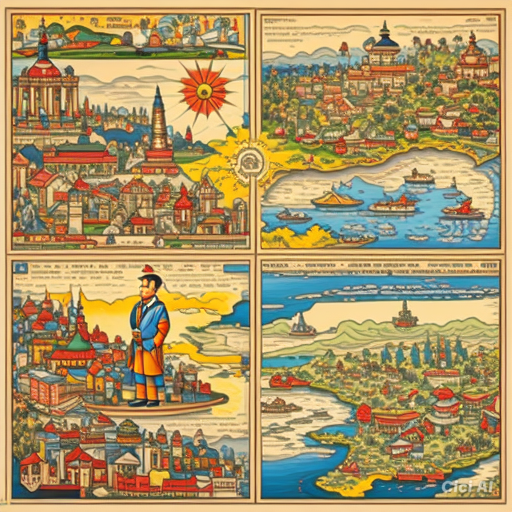
THE recent surge of narratives positioning the Philippines as “Asia’s Ukraine” is a tale spun by self-styled experts and dubious think tanks, one that teeters precariously between alarming exaggeration and deliberate misinformation. As the report by Internews highlights, these narratives have gained traction following President Ferdinand Marcos Jr.’s decision to strengthen ties with the United States, a pivot away from the pro-China stance of his predecessor. But beneath the surface of these geopolitical machinations lies a deeper, more insidious attempt to manipulate public perception and reshape the discourse on the Philippines’ strategic role in the Asia-Pacific region.
The Geopolitical Underpinnings: A New Cold War?
At the heart of this controversy is the Philippines’ geopolitical shift, marked by the expansion of the Enhanced Defense Cooperation Agreement (EDCA) with the United States. The deal, solidified after US Defense Secretary Lloyd Austin III’s visit to Manila in February 2023, granted US forces access to four additional military bases in the country. This development has undoubtedly rattled the geopolitical landscape, particularly in the context of US-China tensions over the South China Sea.
However, equating the Philippines to Ukraine is not only a gross oversimplification but also a distortion of the nuanced realities of Southeast Asia’s political dynamics. The Philippines, while strategically important, operates within a different set of historical, cultural, and political contexts than Ukraine. Unlike Ukraine, whose geopolitical predicament is deeply rooted in the historical animosities between Russia and the West, the Philippines’ position is shaped by a complex interplay of colonial history, regional alliances, and a long-standing security relationship with the United States.
Unraveling the Narrative: Fact vs. Fiction
The so-called experts and think tanks driving this narrative have utilized a variety of tactics, as outlined in the “5D model” identified by Internews: distorting facts, dismissing opposing views, distracting from core issues, dismaying through fear-mongering, and dividing communities. For instance, the YouTube channel “Global Talk News Radio” featured discussions linking the Philippines’ defense posture to the conflict in Ukraine, stoking fears of a similar confrontation with China. These assertions, however, are riddled with logical fallacies and misrepresentations.
One of the central flaws in the “Philippines as Ukraine” narrative is the assumption that the Philippines, like Ukraine, is on the brink of being drawn into a major power conflict. This is a distortion of the Philippines’ current foreign policy stance. While President Marcos Jr. has undoubtedly moved closer to the United States, his administration has not adopted a belligerent posture towards China. In fact, Manila continues to engage Beijing through diplomatic channels, seeking to balance its territorial interests in the South China Sea with the economic realities of its relationship with China.
The Role of Misinformation: Who Benefits?
But who stands to gain from perpetuating this narrative? The Internews report suggests that these influence operations are not just about shaping public opinion but also about deepening the polarization within the Philippines itself. By casting the Philippines as a pawn in a larger geopolitical game, these narratives aim to delegitimize the country’s strategic choices and erode trust in its leadership.
Moreover, these narratives serve to legitimize China’s maritime claims by fostering skepticism about US intentions in the region. By painting the US as an aggressor, the narrative subtly shifts the focus away from China’s increasingly assertive actions in the South China Sea, which have been a source of tension between Manila and Beijing. This is not merely an academic debate; it has real-world implications for the Philippines’ sovereignty and security.
Evaluating the Claims: A Balanced Perspective
To fully understand the implications of the “Ukraine of Asia” narrative, it is essential to consider both sides of the argument.
Support for the Narrative:
- The Philippines’ strategic location and its evolving security relationship with the US could indeed draw parallels with Ukraine’s position in Europe. Like Ukraine, the Philippines is a key non-NATO ally that occupies a critical geographic position, making it a potential flashpoint in great power competition.
- The expansion of EDCA, with its focus on joint military exercises and infrastructure development, could be seen as a step towards deeper military integration, potentially increasing the risk of confrontation with China.
Counterarguments:
- The Philippines’ foreign policy, unlike Ukraine’s, is not defined by a single adversary. Manila’s approach has been one of balancing interests, seeking to maintain economic ties with China while securing its maritime borders through its alliance with the US.
- The narrative overlooks the distinct geopolitical contexts of Southeast Asia and Eastern Europe. The South China Sea dispute, while serious, has not escalated to the level of open conflict, and the Philippines has consistently pursued diplomatic avenues to manage tensions.
- The think tanks promoting this narrative often lack credibility and are known for their pro-China biases. Their analysis should be scrutinized critically, especially when it aligns too closely with Beijing’s strategic interests.
Recommendations for Both Sides
For the Philippine Government:
- Continue to pursue a balanced foreign policy that prioritizes national interests and regional stability. While strengthening ties with the US is important, it should not come at the expense of constructive engagement with China.
- Invest in public diplomacy and strategic communications to counteract misinformation and influence operations. Transparency and clear communication are essential to maintaining public trust.
For the Public and Media Outlets:
- Foster media literacy and critical thinking among the public. Encourage citizens to question sources, verify information, and consider multiple perspectives before forming opinions.
- Media organizations should be vigilant in identifying and exposing influence operations, ensuring that their platforms are not used to amplify distorted narratives.
Conclusion: Navigating the New Geopolitical Reality
The “Philippines as Ukraine” narrative is a cautionary tale about the power of influence operations in shaping public discourse. While the Philippines’ relationship with the US has evolved, it does not signal an inevitable slide into conflict with China. The true challenge lies in navigating this complex geopolitical landscape with a clear-eyed understanding of the stakes involved. By fostering informed public debate and resisting the allure of simplistic narratives, the Philippines can assert its sovereignty and chart its own course in the Asia-Pacific region.

- ₱75 Million Heist: Cops Gone Full Bandit

- ₱6.7-Trillion Temptation: The Great Pork Zombie Revival and the “Collegial” Vote-Buying Circus

- ₱1.9 Billion for 382 Units and a Rooftop Pool: Poverty Solved, Next Problem Please

- ₱1.35 Trillion for Education: Bigger Budget, Same Old Thieves’ Banquet
- ₱1 Billion Congressional Seat? Sorry, Sold Out Na Raw — Si Bello Raw Ang Hindi Bumili

- “We Will Take Care of It”: Bersamin’s P52-Billion Love Letter to Corruption

- “Skewed Narrative”? More Like Skewered Taxpayers!

- “Scared to Sign Vouchers” Is Now Official GDP Policy – Welcome to the Philippines’ Permanent Paralysis Economy
- “Robbed by Restitution?” Curlee Discaya’s Tears Over Returning What He Never Earned

- “No Pressure” Luistro? The House Pork Bazaar Exposed



 KWEBA ni BAROK
Leave a comment