By Louis ‘Barok‘ C. Biraogo – – August 23, 2024
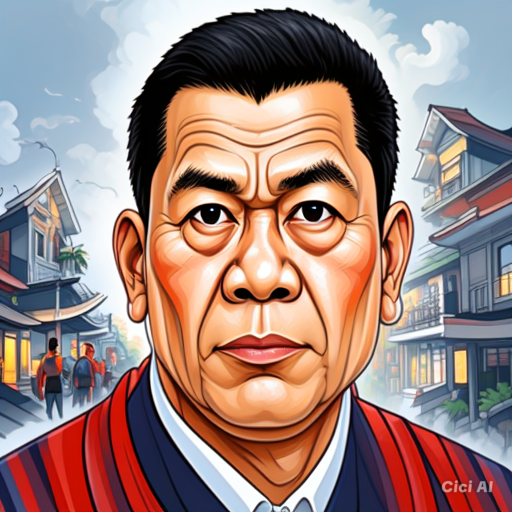
ENTER the tangled web of Philippine politics, where the enigmatic figure of former President Rodrigo Duterte casts a divisive shadow. His controversial crusade, the “war on drugs,” has sparked fervent loyalty and fierce opposition. Now, a bombshell revelation emerges: inmates Leopoldo Tan Jr. and Fernando Magdadaro claim Duterte orchestrated the killings of three Chinese drug lords within the confines of the Davao penitentiary. Brace yourself as we delve deep into the heart of this explosive allegation.
A History Stained by Violence
Duterte’s drug war, launched in 2016, aimed to eliminate illegal drugs through brutal methods. While it earned widespread domestic approval, it has been marred by thousands of extrajudicial killings and human rights abuses. International critics have condemned the erosion of due process. The new allegations by Tan and Magdadaro suggest Duterte’s influence might have penetrated the heart of the prison system itself.
The Allegations: A Tangle of Claims and Denials
In August 2016, amid Duterte’s drug war, Tan and Magdadaro murdered Chinese nationals Chu Kin Tung (Tony Lim), Li Lan Yan (Jackson Li), and Wong Meng Pin (Wang Ming Ping) within the Davao penitentiary. They claim Superintendent Gerardo Padilla ordered the hits on Duterte’s behalf. Tan alleges he overheard Duterte congratulating Padilla on the operation, identifying the voice as Duterte’s.
Duterte’s legal team vehemently denies these accusations. Salvador Panelo, Duterte’s former legal counsel, dismissed them as a “demolition job,” while former spokesman Harry Roque argued the confessions have “no probative value,” given their lack of direct evidence.
Evaluating the Allegations
Evidence-Based Analysis
- Empirical Evidence: The core of Tan and Magdadaro’s claims lies in their affidavits. However, the absence of corroborative evidence—such as audio recordings, independent eyewitnesses, or official documentation—weakens their case.
- Anecdotal Evidence: Personal testimonies are subjective. As convicted drug dealers seeking leniency, Tan and Magdadaro’s motivations cast doubt on their credibility.
Logical Reasoning
- Deductive Reasoning: It’s highly improbable that a sitting president would directly order inmates to commit murders within a penal colony. There is no precedent for such involvement by Duterte.
- Inductive Reasoning: These specific allegations, unsupported by broader evidence, do not justify concluding Duterte’s direct involvement.
Ethical and Moral Considerations
- Values and Principles: Accusations of this magnitude require a careful, evidence-based approach. Unfounded claims can unjustly damage reputations and undermine trust in institutions.
Contextual Perspective
- Historical Background: Duterte’s administration is known for decisive action against perceived threats, but there’s no record suggesting he ordered inmate-perpetrated murders.
- Cultural Context: The Philippines’ political landscape is fraught with rivalries. These allegations might be a reflection of deeper political conflicts.
Practical Implications
- Immediate Steps: A thorough, impartial investigation is essential to ensure justice, whether in exonerating Duterte or holding those accountable who may have overstepped their authority.
Conclusion: A Call for Vigilance
The weight of evidence leans toward skepticism of Tan and Magdadaro’s claims. The lack of corroborative proof, combined with their potential biases, undermines their credibility. While these severe allegations demand investigation, they remain unsubstantiated at this stage. As the Philippines navigates its complex political landscape, the pursuit of truth—anchored in evidence, reason, and integrity—is crucial to maintaining justice and accountability.

- “Forthwith” to Farce: How the Senate is Killing Impeachment—And Why Enrile’s Right (Even If You Can’t Trust Him)
- “HINDI AKO NAG-RESIGN!”

- “I’m calling you from my new Globe SIM. Send load!”

- “Mahiya Naman Kayo!” Marcos’ Anti-Corruption Vow Faces a Flood of Doubt

- “Meow, I’m calling you from my new Globe SIM!”

- “No Special Jail for Crooks!” Boying Remulla Slams VIP Perks for Flood Scammers

- “PLUNDER IS OVERRATED”? TRY AGAIN — IT’S A CALCULATED KILL SHOT

- “Several Lifetimes,” Said Fajardo — Translation: “I’m Not Spending Even One More Day on This Circus”

- “Shimenet”: The Term That Broke the Internet and the Budget

- “We Did Not Yield”: Marcos’s Stand and the Soul of Filipino Sovereignty





 KWEBA ni BAROK
Leave a comment