By Louis ‘Barok’ C Biraogo – August 23, 2024
Background and Context
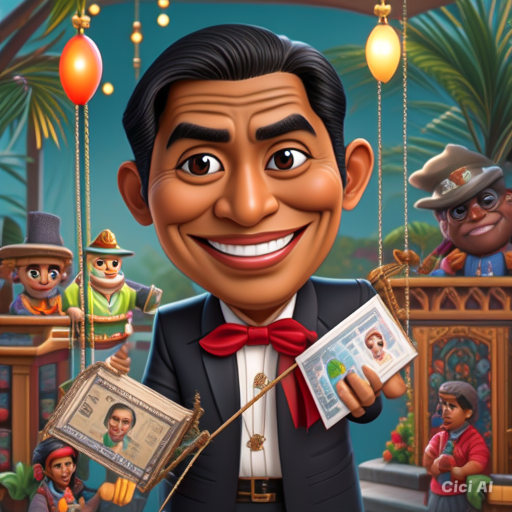
IN A seismic shift of power, the Office of the Ombudsman’s suspension of Mandaue City Mayor Jonas Cortes unveils a labyrinth of patronage and graft entrenched within the Philippine government’s appointment procedures. The focal point of this upheaval is Cortes’ controversial appointment of Camilo Basaca Jr. as the Officer-in-Charge of the City Social Welfare Services (CSWS), exposing a distressing pattern of incompetence staining the fabric of public service.
Patronage, wherein political connections rather than merit dictate appointments, has long been a scourge in Philippine governance. This system not only hampers the delivery of public services but also erodes public trust. The controversy surrounding Mayor Cortes is a classic example, where the appointment appears to have been made based on loyalty and proximity rather than qualifications.
The Case Against Cortes
The crux of the Ombudsman’s ruling against Mayor Cortes lies in the clear violation of Section 483 of Republic Act No. 7160, also known as the Local Government Code. This law explicitly sets forth the qualifications for a Social Welfare Development Officer (SWDO). The position requires the appointee to be a duly licensed social worker or hold a relevant degree in sociology or a related field, along with at least five years of experience in social work.
Camilo Basaca Jr., however, did not meet these qualifications. His degree in Office Administration is unrelated to the field of social work, and the evidence provided regarding his experience in social work was deemed insufficient by the Ombudsman. Notably, the certifications presented to demonstrate Basaca’s experience were issued by an organization founded by Mayor Cortes himself, raising serious concerns about their credibility.
The Ombudsman’s decision further highlights a violation of Section 13(c) of Rule IV of the 2017 Omnibus Rules on Appointments and Other Human Resource Actions (ORAOHRA). This provision mandates that only employees holding permanent appointments to career positions can be designated as OICs. Basaca, at the time of his appointment, was still an executive assistant with a co-terminous appointment, making his designation as OIC-CSWS legally untenable.
In citing these provisions, the Ombudsman established that Mayor Cortes’ actions constituted grave misconduct and conduct prejudicial to the best interest of the service, as defined under Philippine laws and Supreme Court precedents. The case of Civil Service Commission v. Sojor (G.R. No. 221836, January 23, 2019) reaffirms that appointments made in contravention of existing laws and qualifications are void from the start, and the appointing authority is liable for such violations.
Cortes’s Rebuttals
In defense of his actions, Mayor Cortes argued that his decision to appoint Basaca was driven by a commitment to improve the services provided by the CSWS. He emphasized that Basaca had a track record of service, albeit not in the capacity or with the qualifications explicitly required by law. Cortes also maintained that the absence of other qualified candidates necessitated Basaca’s appointment.
From a legal standpoint, Cortes could potentially argue that his decision was an exercise of his discretionary powers as mayor. The Supreme Court has, in certain instances, upheld the discretion of appointing authorities, especially in cases where the appointee has shown exemplary service or potential (see De los Santos v. Mallari G.R. No. 168165, June 8, 2007). However, this defense weakens considerably in the face of clear legal requirements and the absence of necessary qualifications.
The Ombudsman’s Ruling
The Ombudsman’s decision to suspend Mayor Cortes for one year without pay was grounded in a thorough examination of the facts and relevant laws. The ruling underscores that adherence to legal qualifications and procedures is not optional but mandatory, especially in public service appointments. The legal framework supporting this ruling is robust, with the Ombudsman drawing on the Local Government Code and the 2017 ORAOHRA, as well as precedents from the Supreme Court that emphasize the sanctity of legal qualifications in public appointments.
Barok’s Perspectives and Strategic Suggestions
The suspension of Mayor Cortes is a necessary action to uphold the integrity of public service and the rule of law. The decision sends a strong message that political patronage and the appointment of unqualified individuals to key positions will not be tolerated.
Legal Framework and Verdict:
- Grave Misconduct: As defined under Ombudsman Act of 1989 (Republic Act No. 6770), grave misconduct involves the deliberate violation of the law by a public official. Mayor Cortes’s appointment of Basaca, in direct violation of RA 7160 and ORAOHRA, clearly falls under this category.
- Conduct Prejudicial to the Best Interest of the Service: This charge, substantiated by the flawed appointment, underscores the broader impact of such decisions on public trust and governance.
Recommendations:
- For Mayor Cortes: It is imperative that Mayor Cortes reassess his approach to appointments and ensure that future decisions strictly adhere to legal qualifications. While his intentions to improve services may be genuine, the means must align with the rule of law.
- For Local Government Units (LGUs): There should be a comprehensive review of appointment processes within LGUs to eliminate patronage and ensure that only qualified individuals are appointed to critical positions. The Department of the Interior and Local Government (DILG) should consider issuing stricter guidelines and oversight mechanisms.
- For the Civil Service Commission (CSC): The CSC should intensify its monitoring of appointments across all government levels to ensure compliance with established qualifications. Regular audits and the imposition of penalties for violations should be strictly enforced.
- For the Public: Citizens should remain vigilant and demand transparency in government appointments. Public scrutiny is a powerful tool in holding officials accountable and preventing the recurrence of similar issues.
In conclusion, the suspension of Mayor Cortes is a clear indication that the era of impunity in government appointments is slowly being challenged. Upholding the law and ensuring that only qualified individuals occupy positions of power are crucial steps in restoring public trust and integrity in Philippine governance.

- ₱75 Million Heist: Cops Gone Full BanditBy Louis ‘Barok‘ C. Biraogo — April 6, 2025 IF YOU think the biggest threat to justice comes from criminals, think again. In a raid gone disastrously wrong, 31 police officers from the National Capital Region Police Office (NCRPO) allegedly walked away with ₱75 million in loot—after disabling CCTVs, cracking a vault, and leaving behind… Read more: ₱75 Million Heist: Cops Gone Full Bandit
- ₱6.7-Trillion Temptation: The Great Pork Zombie Revival and the “Collegial” Vote-Buying CircusBARSc and the Art of Theatrical Transparency: 20 Extra Hours of Scrutiny, Zero Hours of Shame By Louis ‘Barok‘ C. Biraogo — December 31, 2025 MGA ka-kweba, gather ’round the fire because the 20th Congress is serving up another steaming pile of budgetary baloney, this time with a side of “allocables” that smell suspiciously like… Read more: ₱6.7-Trillion Temptation: The Great Pork Zombie Revival and the “Collegial” Vote-Buying Circus
- ₱1.9 Billion for 382 Units and a Rooftop Pool: Poverty Solved, Next Problem PleaseFeaturing special guest stars Bongbong Marcos and Isko Moreno in the feel-good blockbuster “Unity Tayo, Picture Muna” By Louis ‘Barok‘ C. Biraogo — December 2, 2025 1. The Grand Illusion: A Photo-Op for Strange Bedfellows Yesterday, in the heart of Sta. Cruz, Manila, the nation witnessed a masterclass in political alchemy. There they stood —… Read more: ₱1.9 Billion for 382 Units and a Rooftop Pool: Poverty Solved, Next Problem Please
- ₱1.35 Trillion for Education: Bigger Budget, Same Old Thieves’ BanquetMain Course: Overpriced Classrooms and Confidential-Fund Gravy By Louis ‘Barok‘ C. Biraogo — January 1, 2026 MGA ka-kweba, Senator Bam Aquino calls the ₱1.35 trillion earmarked for education in the 2026 national budget a “historic victory.” The largest education fund in Philippine history, he says—more classrooms, free school meals, bigger support for the Free College… Read more: ₱1.35 Trillion for Education: Bigger Budget, Same Old Thieves’ Banquet
- ₱1 Billion Congressional Seat? Sorry, Sold Out Na Raw — Si Bello Raw Ang Hindi BumiliWindow shopping lang daw si Tito Bebot sa isang bilyon. Bow. By Louis ‘Barok‘ C. Biraogo — November 30, 2025 ONE billion pesos. Not a hundred million. Not five hundred million. One full, shiny, obscene billion pesos — allegedly dangled by no less than the President of the Republic in exchange for Silvestre Bello III… Read more: ₱1 Billion Congressional Seat? Sorry, Sold Out Na Raw — Si Bello Raw Ang Hindi Bumili
- “We Will Take Care of It”: Bersamin’s P52-Billion Love Letter to CorruptionFrom the Supreme Court bench to the kickback throne: a love story written in cash By Louis ‘Barok‘ C. Biraogo — November 20, 2025 MGA ka-kweba, while Metro Manila drowns and thousands of families float in their own homes, some pinoys are busy floating money—not water, but cold, hard cash. A cool P100 billion earmarked… Read more: “We Will Take Care of It”: Bersamin’s P52-Billion Love Letter to Corruption
- “Skewed Narrative”? More Like Skewered Taxpayers!Zaldy Co’s ₱13.8B Vacation vs. Your Flooded Barangay By Louis ‘Barok‘ C. Biraogo — November 9, 2025 HAYY, mga ka-kweba, gather ’round the cave. The air reeks of desperation, expensive cologne, and the unmistakable stench of a ₱13.8 billion budget heist. Former Ako Bicol party-list Representative Zaldy Co – now conveniently abroad – wants to… Read more: “Skewed Narrative”? More Like Skewered Taxpayers!
- “Scared to Sign Vouchers” Is Now Official GDP Policy – Welcome to the Philippines’ Permanent Paralysis EconomyMonsod’s Diagnosis: The Bureaucracy Didn’t Freeze from Corruption—It Froze from the Sudden Threat of Actually Doing Its Job By Louis “Barok” C. Biraogo –– February 3, 2026 LET US begin with a simple image: a child in a flooded Manila barangay, waist-deep in filthy water, clutching a plastic basin that serves as both toy and… Read more: “Scared to Sign Vouchers” Is Now Official GDP Policy – Welcome to the Philippines’ Permanent Paralysis Economy
- “Robbed by Restitution?” Curlee Discaya’s Tears Over Returning What He Never EarnedAccountability Feels Like Hold-up When You’re the One Holding the Bag By Louis ‘Barok‘ C. Biraogo — January 21, 2025 WELCOME back to the Cave, mga kababayan. Today, let’s talk about the latest Senate comedy: Pacifico “Curlee” Discaya crying foul like a robbery victim simply because the government asked him to return money he allegedly… Read more: “Robbed by Restitution?” Curlee Discaya’s Tears Over Returning What He Never Earned
- “My Brother the President Is a Junkie”: A Marcos Family Reunion SpecialRated R for Rally, Rivalry, and Really No Evidence. By Louis ‘Barok‘ C. Biraogo — November 18, 2025 PART 1: THE OPENING GAMBIT – A HOUSE OF CARDS ON FIRE Mga ka-kweba, welcome to the greatest show on earth: Philippine politics, where a sister stands before hundreds of thousands and publicly accuses her own brother… Read more: “My Brother the President Is a Junkie”: A Marcos Family Reunion Special



 KWEBA ni BAROK
Leave a comment