
By Louis ‘Barok’ C Biraogo — August 25, 2024
A CHILDREN’S book. A Vice President. A nation divided. Sara Duterte’s “Isang Kaibigan” seems like a harmless tale of friendship, but beneath its innocent facade lies a storm of controversy. This seemingly simple story has ignited a firestorm of political intrigue, legal challenges, and ethical dilemmas, with the potential to reshape the very fabric of Philippine politics for years to come.
At the heart of this controversy is the P10 million allocation in the Office of the Vice President’s (OVP) proposed 2025 budget for the publication and distribution of Duterte’s book. Critics, led by former OVP spokesperson Barry Gutierrez and opposition Senator Risa Hontiveros, have raised the alarm, pointing to potential violations of Republic Act 3019, the Anti-Graft and Corrupt Practices Act. They argue that using public funds for a project that directly benefits the Vice President not only skirts the boundaries of legality but also crosses into the realm of ethical misconduct.
Gutierrez, a seasoned lawyer and former spokesman for Vice President Leni Robredo, has been particularly vocal. Drawing parallels to Robredo’s own experience, he recalls that a book about Robredo was published during her tenure, but without a single centavo from government coffers. Instead, the proceeds were channeled into public initiatives during the Covid-19 pandemic. The stark contrast between the two scenarios underscores a broader debate about the role of public officials and the use of public funds in personal endeavors.
In the charged atmosphere of the Senate, Hontiveros’ inquiry into the budget allocation for “Isang Kaibigan” was met with fierce resistance from Duterte, who dismissed the scrutiny as nothing more than political harassment. This is a familiar refrain in the Duterte playbook—a tactic to deflect criticism by framing it as an attack motivated by partisan interests. But Hontiveros and her allies contend that the inquiry is not about politics; it’s about accountability.
The legal and ethical challenges surrounding this issue are substantial. Republic Act 3019 explicitly prohibits public officials from using their positions to obtain benefits for themselves. The law is clear: public funds must be used for public purposes, not personal gain. The P10 million allocation for “Isang Kaibigan” raises serious questions about whether this principle is being upheld. Critics argue that the book, while ostensibly educational, is a vehicle for self-promotion—a tool to bolster Duterte’s political brand under the guise of literacy.
From an ethical standpoint, the issue is equally troubling. The use of public funds for a project that directly benefits the Vice President undermines the public’s trust in government. It sends a message that those in power can use state resources to advance their personal interests, blurring the line between public service and self-service. This perception of impropriety is compounded by the fact that the book will be distributed to children whose parents are voters—a move that critics see as a thinly veiled attempt to curry favor with the electorate.
Yet, in the polarized world of Philippine politics, there are those who defend Duterte’s actions. Supporters argue that “Isang Kaibigan” is a valuable tool for promoting literacy and education, particularly in underserved areas. They contend that the book’s message of friendship and social values is a positive contribution to society and that government funding is justified if it serves the public good. Moreover, they point out that public outreach is a legitimate function of the Vice President’s office, and the book could be seen as part of a broader effort to engage with the public.
But these arguments, while not without merit, do little to assuage concerns about the potential for abuse of power. The book’s educational value, however genuine, does not negate the fact that it is also a political instrument—one that could be used to influence public opinion and shape the narrative around Duterte’s leadership. The distribution of the book in areas where voters are concentrated further complicates the issue, raising the specter of electioneering at the public’s expense.
In evaluating the strength of the arguments on both sides, it becomes clear that the opposition’s case is more compelling. The legal and ethical concerns raised by Gutierrez, Hontiveros, and others are grounded in well-established principles of governance. The potential misuse of public funds for personal gain is a serious charge, one that cannot be easily dismissed. The defense, while appealing to broader social values, fails to adequately address these concerns and risks being seen as an attempt to justify the unjustifiable.
So, what should be done? For Vice President Duterte, the path forward is clear: withdraw the P10 million allocation from the OVP’s budget and fund the publication of “Isang Kaibigan” through private means. Doing so would not only eliminate the legal and ethical cloud hanging over the project but also demonstrate a commitment to transparency and accountability—values that are essential for any public servant.
For the opposition and civil society, the task is to remain vigilant. The scrutiny of public funds and the actions of public officials must continue, regardless of the political climate. Ensuring that public resources are used for the public good, and not for personal or political gain, is a cornerstone of democratic governance. It is a principle that must be defended, even in the face of powerful adversaries.
In the end, the controversy over “Isang Kaibigan” is more than just a debate about a children’s book. It is a test of the nation’s commitment to the rule of law, to ethical governance, and to the principle that public office is a public trust. The outcome of this battle will have far-reaching implications, not just for Sara Duterte, but for the future of Philippine democracy itself.

- “Forthwith” to Farce: How the Senate is Killing Impeachment—And Why Enrile’s Right (Even If You Can’t Trust Him)
- “HINDI AKO NAG-RESIGN!”

- “I’m calling you from my new Globe SIM. Send load!”

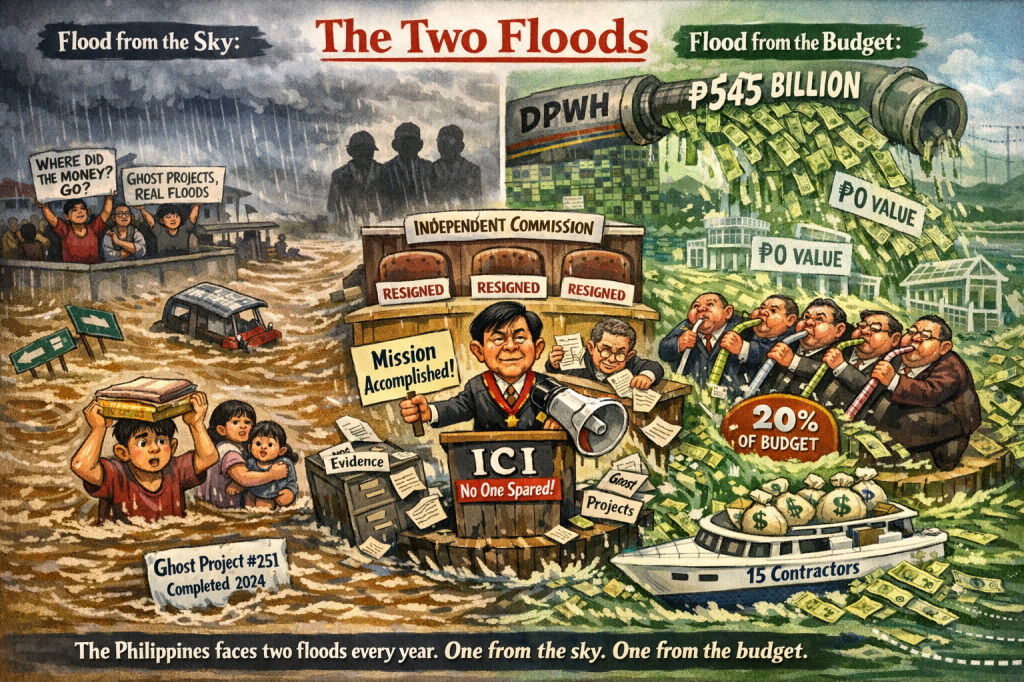
- “Mahiya Naman Kayo!” Marcos’ Anti-Corruption Vow Faces a Flood of Doubt

- “Meow, I’m calling you from my new Globe SIM!”

- “No Special Jail for Crooks!” Boying Remulla Slams VIP Perks for Flood Scammers

- “PLUNDER IS OVERRATED”? TRY AGAIN — IT’S A CALCULATED KILL SHOT

- “Several Lifetimes,” Said Fajardo — Translation: “I’m Not Spending Even One More Day on This Circus”

- “Shimenet”: The Term That Broke the Internet and the Budget
- “We Did Not Yield”: Marcos’s Stand and the Soul of Filipino Sovereignty




 KWEBA ni BAROK
Leave a comment