By Louis ‘Barok’ C Biraogo — August 26, 2024
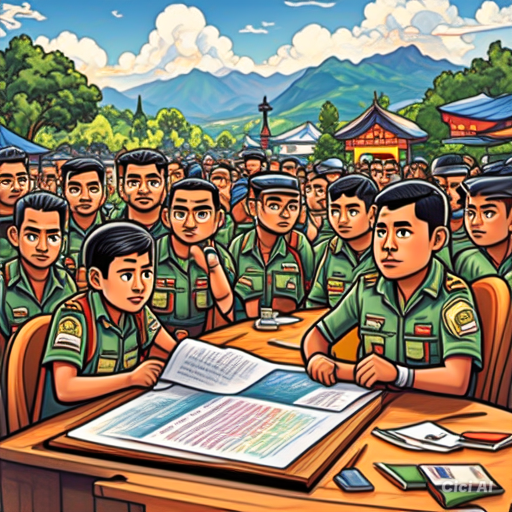
THE August 25, 2024, raid on the Kingdom of Jesus Christ (KOJC) compound in Davao City wasn’t just another police operation. It was a full-scale assault, a spectacle of 2,000 officers descending upon a 30-hectare compound, their target: Pastor Apollo Quiboloy, accused of heinous crimes. The raid, a dramatic clash between law and faith, instantly sparked a firestorm of controversy, with Vice President Sara Duterte leading the chorus of dissent.
Historical and Political Context: The Shadow of Rivalry
The raid on KOJC cannot be divorced from the broader political context, particularly the escalating rivalry between the Marcos and Duterte camps. This raid marks another chapter in the political chess game that has defined the post-Duterte era in the Philippines.
Quiboloy, a long-time ally and spiritual advisor to former President Rodrigo Duterte, had provided a significant support base for Duterte’s political machinery. His influence, both spiritual and political, extends deep into Davao, a stronghold of the Duterte family. For years, Quiboloy’s relationship with the Dutertes granted him a kind of untouchable status, allowing him to operate his religious empire with little interference.
However, the Marcos administration, inheriting a delicate balance of power from the Dutertes, has been increasingly assertive in its efforts to distance itself from the remnants of the Duterte regime, a move aimed at consolidating its authority. The raid on Quiboloy’s compound, therefore, can be seen as more than just a law enforcement action—it is a calculated political maneuver designed to weaken the Duterte bloc and undermine its influence.
Sara Duterte’s Criticisms: A Question of Ethics and Politics
Sara Duterte’s vehement condemnation of the raid is as much a defense of her family’s legacy as it is an ethical stance. Her criticisms hinge on three main arguments: the alleged abuse of police power, the violation of constitutionally protected rights, and the excessive use of force.
From an ethical perspective, Sara Duterte’s concerns are not without merit. The Philippine Constitution enshrines the rights of individuals against unreasonable searches and seizures, and any operation that results in the death of an individual and injuries to others must be scrutinized to ensure that it was conducted within the bounds of the law. The death of a 51-year-old KOJC member from a heart attack and the injuries sustained by 18 others during the raid raise serious questions about the proportionality of the force used by the police.
Legally, Duterte’s accusations of a “betrayal of public trust” may resonate with those who view the police action as overreach. The use of ground-penetrating radar and the massive police presence could be perceived as excessive, especially if Quiboloy’s camp’s claims of irregularities in the raid are substantiated. The legal underpinnings of the operation—rooted in the enforcement of arrest warrants for grave crimes—must be weighed against the potential violations of civil liberties.
However, critics argue that Duterte’s stance is hypocritical. During her father’s presidency, the same police force was frequently accused of human rights violations under the guise of the war on drugs—a campaign she staunchly defended. Her sudden advocacy for the rights of KOJC members might be seen as opportunistic, a calculated move to solidify her base in Mindanao and undermine Marcos’ authority.
The Raid on KOJC: Legal and Political Justifications
On the other hand, the Philippine National Police (PNP) has robustly defended the raid, citing the size and complexity of the KOJC compound and the resistance encountered from Quiboloy’s followers as justifications for the scale of the operation. The use of ground-penetrating radar, typically reserved for search and rescue operations, indicates the seriousness with which the authorities pursued Quiboloy.
Legally, the PNP’s actions are anchored in their mandate to enforce court-issued warrants, particularly in cases involving serious offenses such as sex trafficking and child abuse. The charges against Quiboloy are severe, and the need to apprehend him is a matter of both legal obligation and public safety. The police operation’s intensity can be justified by the potential risks posed by Quiboloy’s supporters, who have a history of fiercely defending their leader.
However, the transformation of the KOJC compound into what Quiboloy’s lawyer describes as a “garrison” raises legal concerns. The Rules of Criminal Procedure do not explicitly allow for such actions, and turning a religious property into a de facto military zone could be seen as an infringement on religious freedom and property rights. The legal battle over this interpretation is likely to become a focal point in the coming weeks.
The Power Play: Who Has the Edge?
In this complex scenario, both sides present compelling arguments, but the scales seem to tip slightly in favor of the PNP and the Marcos administration. The legal basis for the raid, backed by serious criminal charges and the need to enforce judicial orders, provides a strong justification for the operation. Furthermore, the PNP’s ability to maintain a controlled and sustained presence at the compound suggests a well-planned and legally sound strategy, even if its execution has been criticized.
Conversely, Sara Duterte’s criticisms, while powerful, may be seen as politically motivated, aimed at rallying her base and protecting her family’s legacy rather than addressing the legal nuances of the raid. Her apology to KOJC members and her rebuke of the Marcos administration, although resonating with her supporters, might not gain the same traction outside her political sphere.
Bridging the Divide: Recommendations for a Balanced Approach
For the Marcos administration and the PNP, transparency is crucial. Detailed reports on the raid’s conduct, including an independent investigation into the use of force and the circumstances surrounding the casualties, would help to quell public unrest and reinforce the legitimacy of the operation. Engaging in dialogue with religious leaders and human rights organizations could also mitigate the negative fallout.
For Sara Duterte and her allies, a more measured approach may be advisable. While defending the rights of individuals and criticizing potential overreach is important, aligning these arguments with broader legal principles rather than purely political rhetoric could strengthen their position. Seeking legal recourse through the courts, perhaps challenging the constitutionality of the raid’s execution, would add weight to their criticisms.
In the final analysis, the raid on the KOJC compound is a microcosm of the larger struggle for power and influence in the Philippines. As the Marcos administration and the Duterte camp continue their tug-of-war, the implications of this raid will reverberate far beyond Davao, potentially shaping the country’s political landscape for years to come. The question remains: will this be remembered as a necessary enforcement of the law, or as a pivotal moment of overreach that further polarized an already divided nation? Only time will tell.

- “Forthwith” to Farce: How the Senate is Killing Impeachment—And Why Enrile’s Right (Even If You Can’t Trust Him)
- “HINDI AKO NAG-RESIGN!”

- “I’m calling you from my new Globe SIM. Send load!”

- “Mahiya Naman Kayo!” Marcos’ Anti-Corruption Vow Faces a Flood of Doubt

- “Meow, I’m calling you from my new Globe SIM!”

- “No Special Jail for Crooks!” Boying Remulla Slams VIP Perks for Flood Scammers
- “PLUNDER IS OVERRATED”? TRY AGAIN — IT’S A CALCULATED KILL SHOT

- “Several Lifetimes,” Said Fajardo — Translation: “I’m Not Spending Even One More Day on This Circus”

- “Shimenet”: The Term That Broke the Internet and the Budget
- “We Did Not Yield”: Marcos’s Stand and the Soul of Filipino Sovereignty






 KWEBA ni BAROK
Leave a comment