By Louis ‘Barok‘ C. Biraogo — August 28, 2024
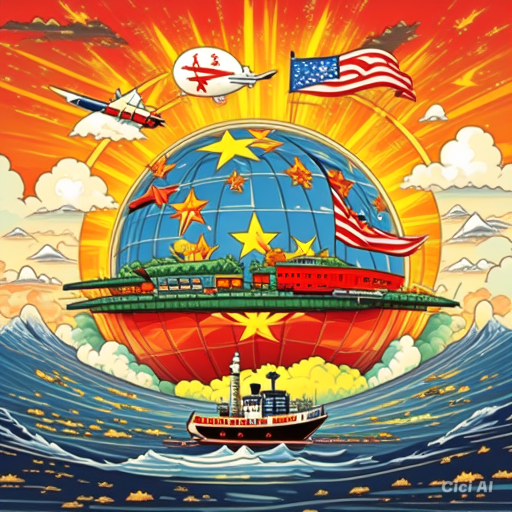
IS ASIA on the brink of war? That’s the alarming claim of Zheng Yongnian, a prominent Chinese academic, who warns that the United States is pushing the region towards a dangerous precipice. Zheng, a professor at the Chinese University of Hong Kong’s Shenzhen campus, has long been a vocal commentator on China’s role in the global order, but his recent assertions have sparked controversy. In a thought-provoking article published on a WeChat public platform, he argues that the U.S. shift of NATO’s strategic focus towards the Indo-Pacific, coupled with rising nuclear tensions on the Korean peninsula, could trigger a crisis. But is Zheng’s warning a realistic assessment of the situation, or a strategic narrative designed to shift blame and obscure China’s own actions?
The Historical and Contemporary Geopolitical Context
To understand the weight of Zheng’s claims, one must first unravel the complex geopolitical tapestry that weaves together the interests of the United States, China, the Philippines, and other Asian nations. The U.S.-China rivalry, long-standing and multifaceted, has intensified in recent years, particularly as China’s economic and military rise challenges the established global order. The United States, wary of China’s growing influence, has sought to reinforce its alliances in the region, most notably through initiatives like the Quad (comprising the U.S., Japan, India, and Australia) and AUKUS (an Australia-UK-U.S. security pact). These efforts, while ostensibly aimed at maintaining regional stability, have been perceived by China as encirclement strategies, provoking assertive responses.
In the South China Sea, China has aggressively pursued territorial claims, constructing artificial islands and militarizing them despite international legal rulings against its actions. This has fueled tensions not just with the U.S., but also with Southeast Asian nations like the Philippines and Vietnam, who view these actions as direct threats to their sovereignty and access to natural resources. Meanwhile, on the Korean peninsula, North Korea’s continued nuclear weapons development has created a persistent flashpoint, with China and the U.S. often at odds over how best to manage the rogue state’s provocations.
Zheng’s assertions that the U.S. is solely responsible for the region’s slide towards war ignores these broader dynamics and oversimplifies the complex interplay of regional actors, each with their own motivations and fears.
Analyzing the Arguments: For and Against Zheng’s Claims
For Zheng’s Claims:
- NATO’s Strategic Shift: Zheng highlights the U.S.’s strategic pivot, including NATO’s increasing focus on China, as a destabilizing factor. While NATO’s primary mission remains the defense of Europe, recent documents and summits have indeed acknowledged China’s growing military capabilities as a global concern. For China, this shift signals a broader alignment of Western military powers against it, heightening its sense of encirclement and vulnerability.
- U.S. Alliance Networks: The strengthening of U.S. alliances in Asia, particularly through AUKUS and the Quad, can be seen as an effort to counterbalance China’s influence. To Zheng, these alliances represent not just a defensive posture but an aggressive strategy aimed at isolating and containing China, thereby increasing the risk of conflict.
- Nuclear Tensions on the Korean Peninsula: The U.S.’s military presence and its role in shaping security dynamics on the Korean peninsula are undeniable. Zheng argues that the U.S. approach, including its insistence on denuclearization and its military exercises with South Korea, exacerbates tensions with North Korea, creating a potential flashpoint for wider conflict.
Against Zheng’s Claims:
- China’s Aggressive Posturing: Critics of Zheng’s narrative argue that China’s actions in the South China Sea and its military buildup are significant contributors to regional instability. The construction of military facilities on disputed islands, coupled with aggressive rhetoric towards Taiwan, has escalated tensions and provoked responses from the U.S. and its allies. This perspective sees China’s own actions as a primary driver of the region’s slide towards conflict.
- Regional Responses: The countries of ASEAN, while maintaining economic ties with China, have also expressed concerns about its growing assertiveness. The Philippines, for example, has sought to balance its relationship with China by strengthening its defense ties with the U.S., a move that reflects regional fears of Chinese hegemony rather than American provocation.
- Economic Interdependence: Another counterpoint to Zheng’s argument is the deep economic interdependence between the U.S. and China, and between China and other regional actors. Despite rising tensions, both the U.S. and China have a vested interest in avoiding outright conflict, as it would be economically catastrophic for both sides. This interdependence serves as a significant, albeit fragile, deterrent to war.
Key Considerations and Potential Consequences
The implications of Zheng’s claims are profound. If taken at face value, they suggest an imminent and inevitable conflict, with the U.S. bearing full responsibility. However, this perspective risks overlooking the nuanced realities of Asia’s geopolitical landscape. A war in Asia, particularly involving nuclear powers, would have catastrophic consequences not just for the region, but for the entire world. The potential for miscalculation, especially in the South China Sea or on the Korean peninsula, is high, and the stakes could not be greater.
The Brink of Conflict: Is War a Real Threat?
While Zheng raises legitimate concerns about the risks posed by the U.S.’s strategic maneuvers, his argument is weakened by its failure to acknowledge China’s significant role in escalating tensions. The reality is that both the U.S. and China share responsibility for the current state of affairs. The U.S.’s actions, though provocative, are largely reactions to China’s increasingly assertive posture, particularly in contested waters and airspaces.
On balance, the stronger argument lies in recognizing the complex interplay of actions and reactions between the U.S. and China, rather than assigning blame to one side. The geopolitical, legal, and economic stakes are too high for a simplistic narrative to suffice.
Recommendations
To Zheng Yongnian and Chinese Leadership:
China should reconsider its aggressive strategies, particularly in the South China Sea, and seek diplomatic avenues to resolve territorial disputes. Engaging in multilateral dialogue, rather than unilateral actions, will reduce regional tensions and foster a more stable environment. Additionally, China should work towards confidence-building measures with the U.S. and its allies to mitigate the risks of accidental conflict.
To the United States and Its Allies:
The U.S. must balance its strategy of containment with efforts to engage China diplomatically. While strengthening alliances is necessary, it should be accompanied by clear communication channels to avoid misunderstandings. The U.S. should also support regional initiatives, such as ASEAN’s peace efforts, which seek to mediate disputes without resorting to military confrontation.
In conclusion, the specter of conflict in Asia is real, but it is not inevitable. Both the U.S. and China, along with their regional partners, have the power to steer the region away from the brink. The key lies in mutual recognition of each other’s legitimate security concerns and a commitment to resolving differences through dialogue, not force.

- ₱75 Million Heist: Cops Gone Full Bandit

- ₱6.7-Trillion Temptation: The Great Pork Zombie Revival and the “Collegial” Vote-Buying Circus

- ₱1.9 Billion for 382 Units and a Rooftop Pool: Poverty Solved, Next Problem Please

- ₱1.35 Trillion for Education: Bigger Budget, Same Old Thieves’ Banquet
- ₱1 Billion Congressional Seat? Sorry, Sold Out Na Raw — Si Bello Raw Ang Hindi Bumili

- “We Will Take Care of It”: Bersamin’s P52-Billion Love Letter to Corruption

- “Skewed Narrative”? More Like Skewered Taxpayers!

- “Scared to Sign Vouchers” Is Now Official GDP Policy – Welcome to the Philippines’ Permanent Paralysis Economy
- “Robbed by Restitution?” Curlee Discaya’s Tears Over Returning What He Never Earned

- “No Pressure” Luistro? The House Pork Bazaar Exposed



 KWEBA ni BAROK
Leave a comment