By Louis ‘Barok‘ C. Biraogo — August 31, 2024
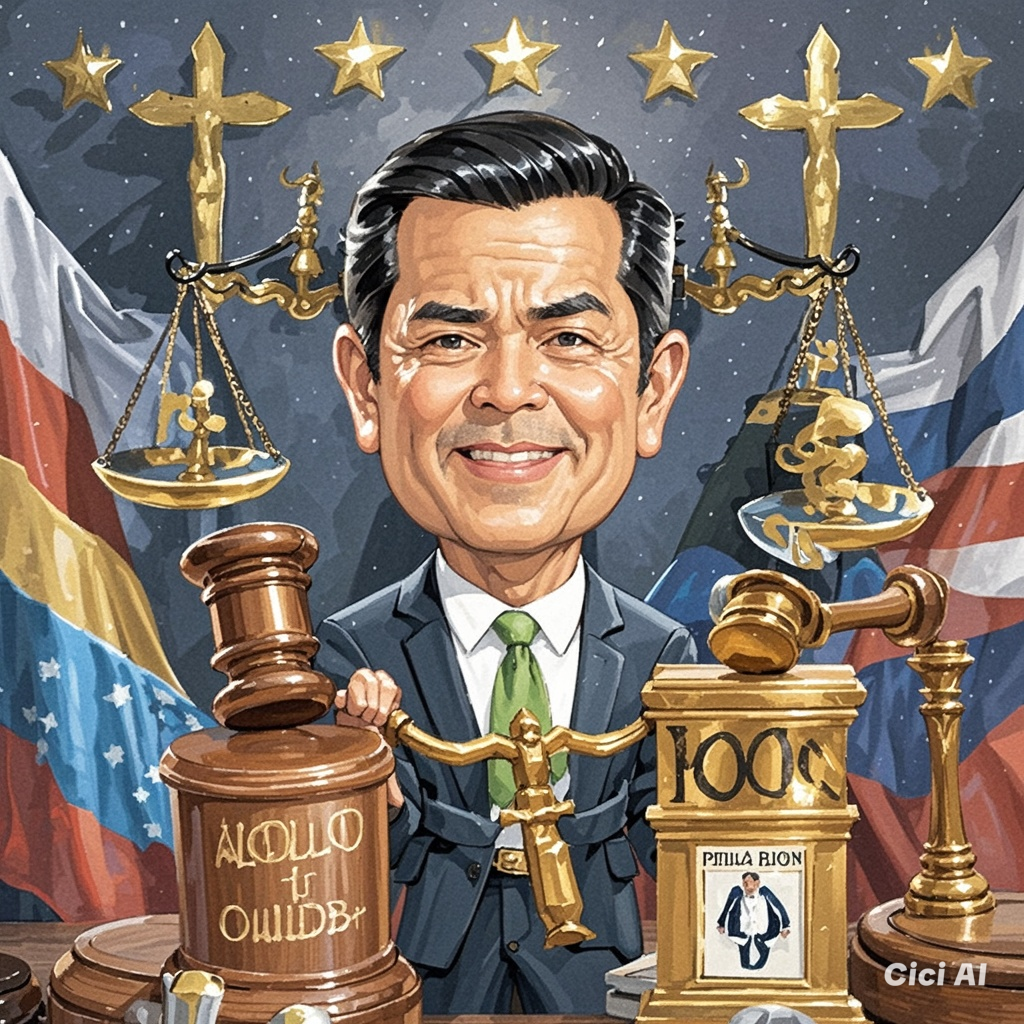
HOW can a nation grappling with the complexities of faith, power, and justice reconcile the image of a revered spiritual leader with accusations of heinous crimes? This is the question at the heart of the case against Pastor Apollo Quiboloy, once a beloved figure in the Philippines, now facing charges of human trafficking and sexual exploitation of children. This story dives into the tangled web of legal and political maneuvering that surrounds Quiboloy’s case, revealing the challenges of achieving justice in a nation where the lines between faith and power are often blurred.
A History of Evading Accountability
Quiboloy’s legal woes are not a recent development. For years, accusations of misconduct have swirled around him, yet he managed to navigate the treacherous waters of accountability with remarkable dexterity. His influence, both spiritual and political, has afforded him a degree of protection that few could ever hope to achieve. But as the walls of justice began closing in, particularly with the issuance of arrest warrants by courts in Pasig, Davao, and California, Quiboloy employed every available legal and political maneuver to evade accountability.
Central to his strategy has been the demand for a written guarantee from President Ferdinand Marcos Jr. that he would not be rendered to the United States—a condition that he argues is necessary to ensure a fair trial. His lawyer, Atty. Israelito Torreon, has been vocal in asserting that this demand is not only within Quiboloy’s rights but also a reasonable request, given the perceived risk of US interference in Philippine legal matters.
The DOJ’s Reluctance and Legal Boundaries
On the other side of the legal battle stands DOJ Undersecretary Raul Vasquez, whose position has been clear: no one in the government can provide such a guarantee. Citing the Philippines’ obligations under its extradition treaty with the United States, Vasquez has emphasized that the law must prevail above individual interests. The treaty, once signed and ratified by the Senate, becomes part of the law of the land, binding the government to its provisions regardless of who holds office. To relent to Quiboloy’s demands, Vasquez argues, would set a dangerous precedent—one that could undermine the nation’s commitment to international law and compromise the integrity of its legal system.
The argument against Quiboloy’s demand is not merely theoretical. Vasquez highlights the inherent unfairness of granting such a privilege to one individual while countless others face the full weight of the law without similar accommodations. This point touches on the core principle of equal protection under the law, enshrined in the Philippine Constitution and upheld in various Supreme Court rulings, including the landmark case of People vs. Hernandez (G.R. No. L-6025, July 18, 1956), which affirmed that all citizens, regardless of status, are subject to the same legal standards.
Torreon’s Counterargument: The President’s Power to Protect
In contrast, Torreon’s argument hinges on a different interpretation of the law. He cites Section 48 of the Anti-Terrorism Act (RA 11479), which prohibits the extraordinary rendition of individuals accused or convicted of terrorism, as a basis for the President’s authority to issue the requested guarantee. Torreon contends that if such protections are afforded to individuals accused of terrorism, they should all the more apply to someone accused of lesser offenses, such as human trafficking. Moreover, Torreon invokes the President’s constitutional duty to protect Filipino citizens, suggesting that this duty extends to preventing the potential abuse of international legal processes against them.
While Torreon’s argument raises important questions about the scope of presidential powers, it also brings to the forefront the tension between national sovereignty and international obligations. The Philippine Supreme Court has historically grappled with this tension, as seen in the case of Secretary of Justice vs. Lantion (G.R. No. 139465, January 18, 2000), where the Court upheld the government’s duty to honor its extradition commitments while also ensuring that the rights of the accused are protected. This delicate balance is at the heart of the current debate surrounding Quiboloy’s case.
Assessing the Balance of Power
As the legal battle unfolds, it is clear that both sides present compelling arguments. On one hand, Vasquez’s position is rooted in the rule of law and the importance of upholding international agreements. On the other hand, Torreon’s argument appeals to the President’s broader constitutional responsibilities and the need to protect citizens from potential injustices abroad.
However, in the grand scheme of legal and political maneuvering, it appears that Vasquez’s position holds the upper hand. The Philippine government’s commitment to its treaty obligations is a cornerstone of its international relations, and any deviation from this commitment could have far-reaching consequences. Additionally, the principle of equal protection under the law remains a fundamental aspect of the nation’s justice system, one that cannot be easily circumvented for the sake of political expediency.
Recommendations and the Road Ahead
For Quiboloy and his legal team, the path forward is fraught with challenges. While they may continue to exhaust all legal remedies available to them, the reality is that the Philippine government’s hands are tied by its treaty obligations. Rather than seeking special treatment, Quiboloy’s best course of action may be to face the charges against him head-on, trusting that the judicial process—both in the Philippines and the United States—will afford him a fair trial.
For the government, the focus must remain on upholding the rule of law and ensuring that justice is served without fear or favor. The authorities must continue to pursue the case with integrity, demonstrating to the world that the Philippines is a nation where justice prevails, even when powerful individuals are involved. This commitment to justice, more than any legal maneuvering, will ultimately determine the outcome of this high-stakes legal drama.
The case of Apollo Quiboloy is a mirror reflecting the soul of the Philippine justice system. Will it be a system that bends to the will of the powerful, or one that stands firm in its commitment to fairness and accountability? The answer will shape not only the fate of one man, but the future of our nation. The struggle between power and justice is a constant battle, and the outcome will determine whether the scales of justice remain balanced or tip in favor of those who seek to exploit their influence.
- ₱75 Million Heist: Cops Gone Full Bandit

- ₱6.7-Trillion Temptation: The Great Pork Zombie Revival and the “Collegial” Vote-Buying Circus

- ₱1.9 Billion for 382 Units and a Rooftop Pool: Poverty Solved, Next Problem Please

- ₱1.35 Trillion for Education: Bigger Budget, Same Old Thieves’ Banquet

- ₱1 Billion Congressional Seat? Sorry, Sold Out Na Raw — Si Bello Raw Ang Hindi Bumili

- “We Will Take Care of It”: Bersamin’s P52-Billion Love Letter to Corruption

- “Skewed Narrative”? More Like Skewered Taxpayers!

- “Scared to Sign Vouchers” Is Now Official GDP Policy – Welcome to the Philippines’ Permanent Paralysis Economy
- “Robbed by Restitution?” Curlee Discaya’s Tears Over Returning What He Never Earned

- “No Pressure” Luistro? The House Pork Bazaar Exposed


 KWEBA ni BAROK
Leave a comment