By Louis ‘Barok‘ C. Biraogo — September 2, 2024
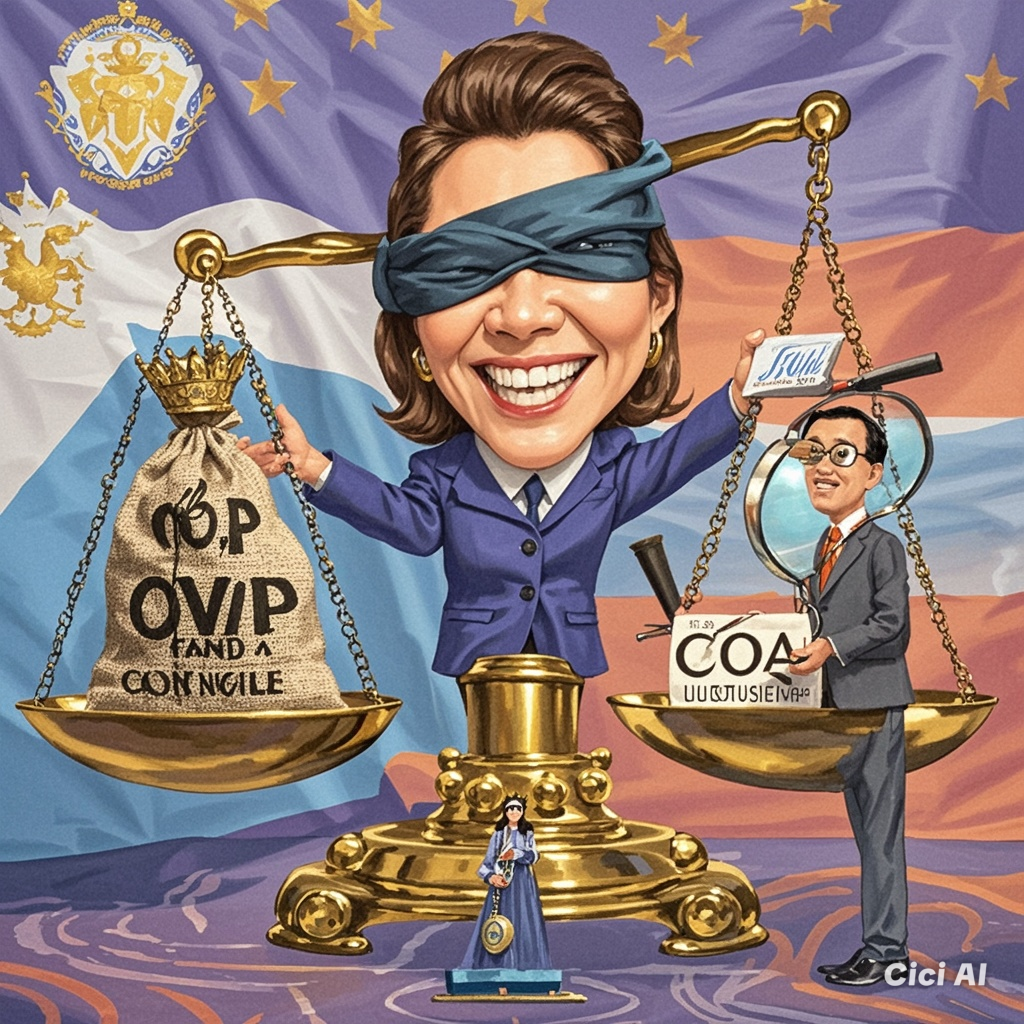
THE recent controversy surrounding Vice President Sara Duterte and her office’s confidential and intelligence funds has thrown the spotlight on the persistent tension between government transparency and the exercise of executive discretion. The Office of the Vice President (OVP), under Duterte’s leadership, has come under intense scrutiny following revelations by Batangas Rep. Gerville Luistro that the OVP attempted to block the Commission on Audit (CoA) from submitting an audit report to the House Appropriations Committee. This move has been described by Luistro as tantamount to “suppression of public information,” triggering widespread concerns over the OVP’s commitment to accountability.
The controversy centers on the OVP’s management of its confidential funds for the years 2022 and 2023. According to Luistro, a letter dated August 21, 2024, from OVP Undersecretary Zuleika Lopez advised the CoA against complying with the House committee’s subpoena duces tecum, arguing that the nature of confidential funds rendered such a subpoena unenforceable. This argument raises significant legal and ethical questions, as the CoA’s audit had already identified P73.287 million of the OVP’s P125 million allocation as questionable due to a lack of supporting documents, thus deepening suspicions of potential misuse of public funds.
The Legal and Political Landscape
This situation does not occur in a vacuum. The CoA is constitutionally mandated to audit government agencies, ensuring that public funds are used properly and legally. The principle of transparency and accountability, enshrined in Article XI, Section 1 of the Philippine Constitution, mandates that all public officers are accountable to the people. In light of this constitutional mandate, the OVP’s actions appear to challenge the very foundations of good governance.
The legal frameworks governing confidential funds are also clear. The 2015 Joint Circular issued by the CoA, Department of Budget and Management, and other relevant agencies outlines the specific guidelines for the use of these funds, including strict documentation requirements. The CoA has the authority to issue Notices of Disallowance (ND) for any expenditures that lack proper documentation or appear to be irregular, as was the case with the OVP’s spending.
Arguments Supporting Luistro’s Assertions
Luistro’s assertions are grounded in several key legal and ethical principles:
- Constitutional Duty of Transparency: The OVP’s attempt to block the CoA report could be viewed as a violation of the constitutional duty of transparency and accountability. Public funds, even those allocated as confidential or intelligence funds, are subject to public scrutiny, particularly when their use is questioned.
- CoA’s Auditing Power: The CoA’s independent auditing power, upheld in cases like COA vs. DBM (2012), is critical in ensuring that government expenditures are legal and justified. Any attempt to obstruct the CoA from fulfilling this duty could be seen as an obstruction of justice.
- Congressional Oversight: The power of Congress to oversee government agencies, including the OVP, through budget hearings and investigations is well-established, as affirmed in Senate vs. Ermita (2007). The OVP’s refusal to comply with a congressional subpoena could potentially be classified as contempt of Congress.
The OVP’s Perspective: Arguments for Confidentiality
The OVP may argue the following in its defense:
- Confidential Nature of Funds: The OVP might argue that the very nature of confidential funds necessitates a degree of discretion and that full transparency could compromise the operational security of sensitive activities. This argument, however, would need to be balanced against the need for accountability in the use of public resources.
- Separation of Powers: The OVP could assert that its actions were aimed at preserving the integrity of the executive branch’s operations, in line with the separation of powers doctrine. However, this argument would be weak in the face of the CoA’s constitutional mandate to audit government expenditures and Congress’s oversight role.
Unbiased Assessment
While the OVP’s arguments regarding the confidential nature of its funds have some merit, they fall short when weighed against the constitutional principles of transparency and accountability. The CoA’s findings of undocumented expenditures significantly weaken the OVP’s position, as they suggest a potential misuse of funds that warrants public scrutiny.
The attempt to block the CoA report not only undermines public trust but also raises serious legal implications, including potential contempt of Congress and obstruction of justice. The legal precedents strongly support Luistro’s position that transparency cannot be sacrificed, even for confidential funds.
Potential Legal Consequences
The OVP and its officials could face several legal consequences:
- Contempt of Congress: The refusal to comply with a congressional subpoena could lead to contempt charges, which carry penalties including fines and imprisonment.
- Impeachment Proceedings: Although less likely, the Vice President could potentially face impeachment if the House of Representatives finds sufficient evidence of wrongdoing or abuse of power.
- Criminal Investigations: Should the CoA’s report indicate criminal activity, such as embezzlement or corruption, the OVP officials involved could face criminal charges.
Best Options and Recommendations
Given the gravity of the situation, the following steps are advisable:
- For the OVP and Sara Duterte: It would be prudent to cooperate fully with the CoA and Congress, providing all necessary documentation and explanations for the use of confidential funds. Transparency, even in matters involving confidential funds, is essential to maintaining public trust.
- For the CoA: The Commission should continue to exercise its auditing powers independently and without interference, ensuring that all government expenditures are properly accounted for.
- For the House of Representatives: Congress should assert its oversight role, ensuring that all branches of government are held accountable for their use of public funds. Legislative measures to tighten the regulations surrounding confidential funds may also be considered.
The OVP’s attempt to block the CoA report is not just a legal or ethical issue; it’s a blatant disregard for the public’s right to know. In a democracy, transparency is not a privilege; it’s a fundamental right. The resolution of this controversy will determine whether the Philippines will continue to uphold the principles of good governance or whether it will succumb to a culture of secrecy and unchecked power.

- Andres Heralds DoJ’s Transformative Justice

- Sailing to New Horizons: PEZA Sets Ambitious PHP250-B Approval Target for 2024

- Panga’s Bold Vision: The Paradigm Shift of Iwahig Mega Economic Zone

- Panga’s Pragmatic Approach to Sino-Philippine Investments

- The Shadow Over Manila

- Shadow of the Red Notice: Remulla hunts down Teves

- Frozen Enigma: NBI Bacolod’s Tussle with Darkness

- Quiboloy’s Supreme Court Shenanigans: A Pathetic Attempt to Dodge Justice

- RP’s cunundrum: A pawn in the SCS geopolitical chessboard

- Macapagal Leads: Navigating Relocation Challenges



 KWEBA ni BAROK
Leave a comment