By Louis ‘Barok‘ C. Biraogo — September 11, 2024
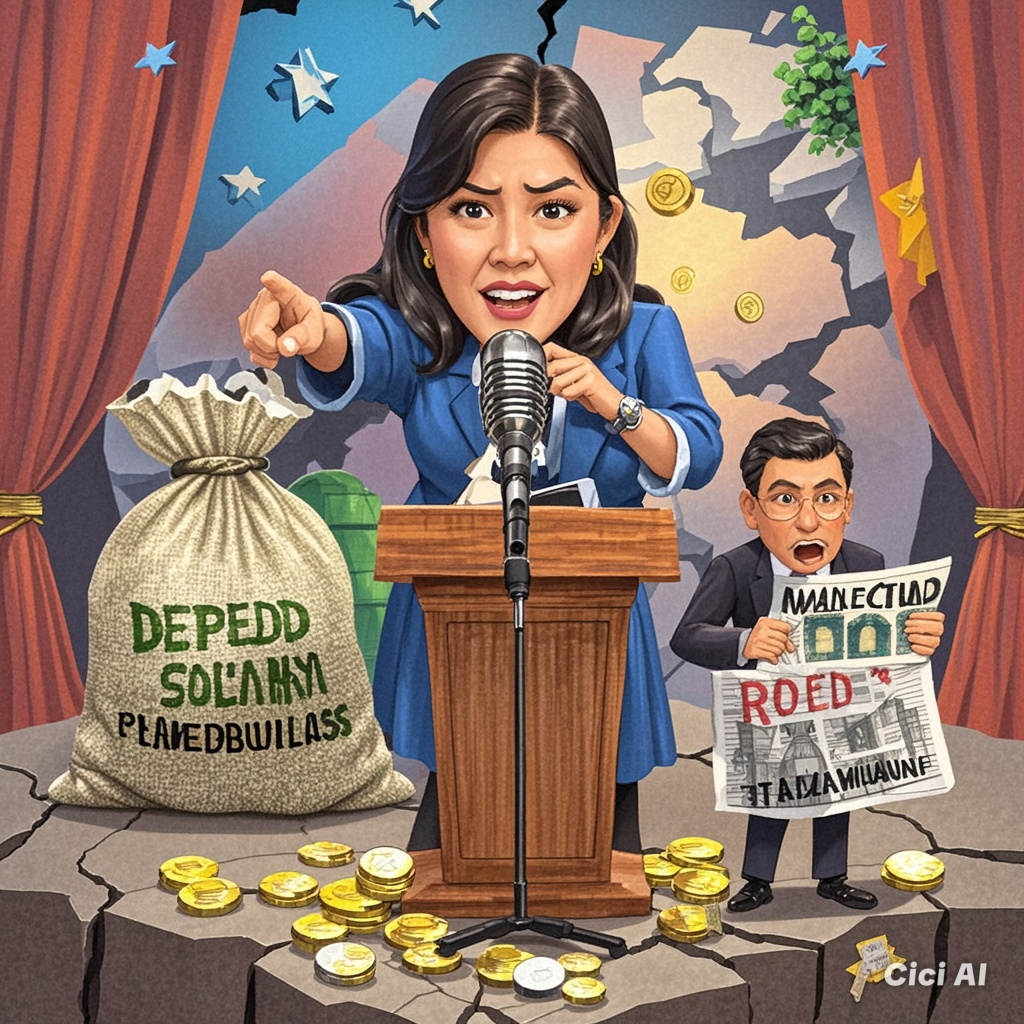
“THEY manipulated the budget, controlling billions meant for classrooms,” Vice President Sara Duterte declared, leveling bombshell accusations at House Speaker Martin Romualdez and Appropriations Committee Chairman Zaldy Co. Her claims have sent shockwaves through the Philippines, further straining an already fragile relationship between the Duterte and Marcos political clans. The political drama engulfing the country has taken a sharp turn, with Duterte’s accusations setting the stage for a potential showdown between these powerful figures.
In the charged atmosphere surrounding the 2025 budget hearings, this confrontation between Duterte and Romualdez is not just a political spat—it is an unraveling of an alliance once seen as invincible. As each side hurls accusations, the stakes rise not just for these political titans but for the entire system of governance in the Philippines.
The Broken Alliance: Marcos vs. Duterte
The Marcos-Duterte alliance, which brought President Ferdinand “Bongbong” Marcos Jr. and Sara Duterte to power in 2022, was a formidable one. But like many political partnerships, it has been fraying at the edges. Sara Duterte’s resignation from the Marcos Cabinet earlier in 2024 signaled the beginning of a public rift. Now, her explosive accusations against Romualdez and Co could mark the alliance’s final unraveling.
Duterte claims Romualdez and Co interfered in DepEd’s budget process, particularly over a P5 billion allocation for classroom construction. According to her, when she refused to allow Congress members to take a cut of this budget, Romualdez and Co raised the classroom construction budget to P15 billion, with the extra P10 billion outside her department’s control.
This rift reflects a deeper political schism. By openly accusing Romualdez, an ally of the Marcos family, Duterte is taking a hardline stance, painting herself as a victim of budget manipulation and political intrigue. The move is both a strategic gamble and a reflection of the shifting dynamics of power. Duterte’s decision to go public with these claims suggests she is ready for a fight, knowing full well that it could permanently sever ties with the Marcoses.
Duterte’s Accusations: Corruption and Political Manipulation
In her defense, Duterte portrays herself as a whistleblower, attempting to protect public funds from corrupt practices. She argues that the initial P5 billion classroom construction budget was meant to address the classroom backlog—one of DepEd’s most pressing issues. The alleged interference from Romualdez and Co, as she frames it, jeopardized DepEd’s ability to meet its objectives. Duterte’s claim that additional funds were manipulated and controlled by Romualdez and Co outside DepEd’s jurisdiction highlights her accusations of budget meddling for personal or political gain.
From a legal perspective, Duterte’s accusations could potentially invoke provisions under the Anti-Graft and Corrupt Practices Act (RA 3019), which prohibits the illegal diversion of public funds and abuse of discretion by public officials. If her claims are proven true, Romualdez and Co could face serious legal consequences for malversation of public funds, a charge that has toppled political careers before. Additionally, Republic Act No. 6713, which mandates public officials to act with accountability and integrity, could come into play.
Politically, Duterte’s allegations are a bold move designed to position her as a crusader for transparency. If she can substantiate her claims, it could elevate her standing with the public, especially those disillusioned with traditional power players. However, the stakes are high, and without concrete evidence, Duterte’s allegations could backfire, painting her as a divisive figure unwilling to collaborate with her former allies.
Co’s Counterattack: Diversion, Deflection, and a Focus on Duterte’s Shortcomings
For his part, Zaldy Co has dismissed Duterte’s claims as nothing more than a “diversionary tactic.” Co argues that Duterte’s accusations are a way to deflect attention from her own failings—particularly her office’s controversial use of P125 million in confidential funds, which were allegedly spent in just 11 days. The Commission on Audit (COA) has flagged these expenses, and Duterte’s refusal to explain the disbursement during budget hearings has raised more questions than answers.
Co further attacked Duterte’s performance as DepEd Secretary, pointing out that under her leadership, Filipino students lagged in international rankings in math and science. He also referenced the poor conditions of nutribuns distributed to students, which were found to be moldy or infested with insects. Co’s strategy is clear: undermine Duterte’s credibility by shifting the focus to her own administrative shortcomings.
From a political strategy perspective, Co’s rebuttal is grounded in practicality. By focusing on Duterte’s perceived failures in DepEd, he not only deflects her accusations but also frames her as a leader unable to deliver on her promises. Legally, Co could argue that budget adjustments are a routine part of legislative proceedings, and that any additional funds approved by Congress were done in accordance with the General Appropriations Act (GAA), which gives lawmakers the power to amend budget proposals.
The Fallout: Legal and Political Ramifications of the Budget Dispute
The legal ramifications of Duterte’s accusations could be profound. If her claims of budget manipulation are substantiated, Romualdez and Co could face investigations under the Anti-Graft and Corrupt Practices Act. However, the burden of proof lies heavily on Duterte. Without clear evidence, her allegations may be seen as politically motivated, designed to distract from her own budget issues with the OVP and DepEd.
Politically, the stakes are enormous. The confrontation with Romualdez, a key Marcos ally, could lead to a realignment of forces within Congress, with lawmakers choosing sides between the Romualdez-Marcos faction and Duterte. If Romualdez and Co are able to weather this storm, Duterte risks isolating herself further from the political mainstream, potentially undermining her long-term ambitions, including a rumored run for the presidency in 2028.
For Romualdez, the accusations present a significant threat. His close ties to President Marcos Jr. and his position as House Speaker make him one of the most powerful figures in Philippine politics. A drawn-out scandal could weaken his influence, particularly if an investigation into the DepEd budget leads to broader questions about his role in the allocation of funds.
Recommendations
For Sara Duterte: Duterte must tread carefully. While her accusations have given her a platform to champion transparency, without irrefutable evidence, she risks losing credibility. She should present hard facts and documentation that support her claims, potentially calling for an independent investigation into the budget allocation. Engaging constructively with lawmakers, rather than dismissing budget hearings, would also help rehabilitate her image as a leader willing to face scrutiny.
For Martin Romualdez and Zaldy Co: Romualdez and Co should address the allegations head-on by releasing detailed budget records and providing clear explanations of how funds were allocated. Transparency is key. By doing so, they can neutralize Duterte’s claims and demonstrate that budget adjustments were in line with legal procedures. Avoiding personal attacks on Duterte and sticking to facts would help them avoid being perceived as playing political games.
For the Public: The public must demand greater transparency from both sides. As the stewards of taxpayer money, all public officials, whether in the executive or legislative branches, must be held accountable. An independent audit of both the OVP and DepEd’s budget allocation could provide clarity and restore faith in the system.
Conclusion: The Impacts of Duterte’s Allegations
This political skirmish will undoubtedly reshape the dynamics within the Marcos-Duterte alliance and beyond. If Duterte succeeds in proving her claims, it could trigger a wave of budgetary reforms and investigations, significantly curbing the influence of Romualdez and his allies. On the other hand, if her accusations falter, Duterte’s credibility could be seriously damaged, weakening her political standing.
In the end, this saga is not just about the billions of pesos allegedly mismanaged or the internal power struggles of the Philippine political elite. It is about the future of governance in a nation where accountability, transparency, and trust are too often sacrificed at the altar of political expediency. The country now watches, waiting to see which narrative will prevail in this ever-intensifying drama. Will the Philippines choose to embrace a future where the needs of its people are prioritized over political gamesmanship, or will the cycle of corruption and power struggles continue?

- ₱75 Million Heist: Cops Gone Full Bandit

- ₱6.7-Trillion Temptation: The Great Pork Zombie Revival and the “Collegial” Vote-Buying Circus

- ₱1.9 Billion for 382 Units and a Rooftop Pool: Poverty Solved, Next Problem Please

- ₱1.35 Trillion for Education: Bigger Budget, Same Old Thieves’ Banquet

- ₱1 Billion Congressional Seat? Sorry, Sold Out Na Raw — Si Bello Raw Ang Hindi Bumili

- “We Will Take Care of It”: Bersamin’s P52-Billion Love Letter to Corruption

- “Skewed Narrative”? More Like Skewered Taxpayers!

- “Scared to Sign Vouchers” Is Now Official GDP Policy – Welcome to the Philippines’ Permanent Paralysis Economy
- “Robbed by Restitution?” Curlee Discaya’s Tears Over Returning What He Never Earned

- “My Brother the President Is a Junkie”: A Marcos Family Reunion Special





 KWEBA ni BAROK
Leave a comment