By Louis ‘Barok‘ C. Biraogo — September 12, 2024
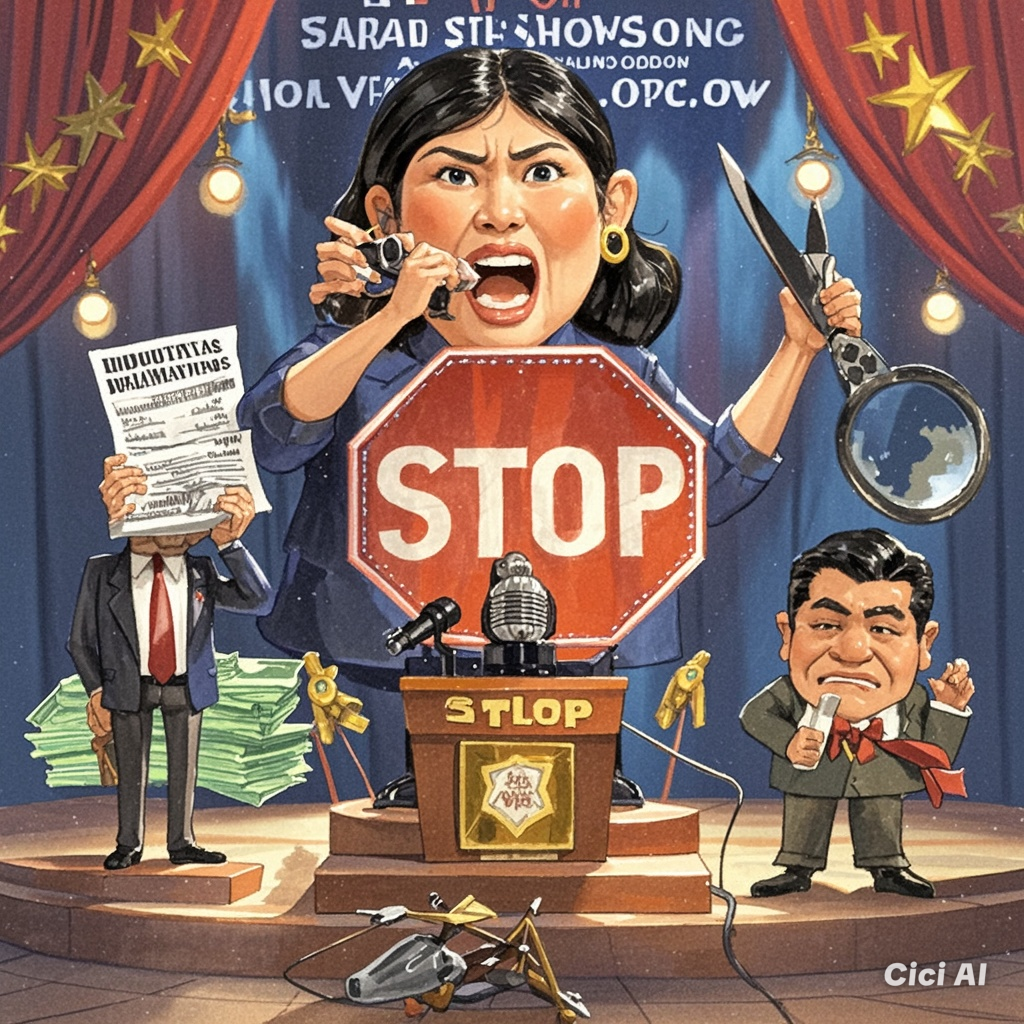
THE political landscape in the Philippines is about to get a whole lot more volatile. Vice President Sara Duterte has declared she is prepared to run the Office of the Vice President (OVP) without a budget, framing the potential defunding of her office as part of a coordinated attack against her. Duterte’s bombshell claim that House Speaker Martin Romualdez and Appropriations Committee Chairman Zaldy Co manipulate the national budget for their own interests has ignited an intense standoff between the branches of government. At the center of this storm is not just the fate of the OVP, but the deeper power struggles reshaping the Marcos-Duterte alliance and Philippine politics as a whole.
With the House of Representatives seriously considering slashing or even zeroing out the OVP’s 2025 budget, Duterte’s fight is not just one of numbers but of survival. And as the political chessboard rearranges itself in real-time, the repercussions could be seismic.
The Context: Scrutiny, Budget Battles, and the Marcos Rift
Sara Duterte has faced growing scrutiny over her handling of public funds, particularly the use of confidential funds during her tenure as DepEd Secretary and as Vice President. The Commission on Audit (COA) has flagged suspicious spending patterns, including P125 million in confidential funds spent in just 11 days. This triggered congressional scrutiny during the OVP’s budget hearings, where Duterte repeatedly sidestepped questions, further inflaming tensions.
Complicating matters, Duterte resigned from the Marcos Cabinet earlier this year, in a clear break from the administration of President Ferdinand Marcos Jr. Her claims of budget manipulation by Romualdez and Co came shortly after, suggesting that the rupture in the alliance between the Marcos and Duterte camps has turned personal, with control over national resources at the heart of the feud.
Duterte’s Position: Prepared for Zero Funding
The Logic Behind Duterte’s Accusations: Examining the Evidence
Duterte’s claim that she can run the OVP with no budget is, on its face, a strategic maneuver aimed at deflecting criticism. By signaling that her office could function without financial resources, she portrays herself as a resilient public servant willing to endure hardships for the sake of the Filipino people. This plays into the narrative of political victimhood, where Duterte is cast as a reformer under attack by entrenched interests.
Legally, Duterte could argue that she has the constitutional mandate to fulfill her duties as Vice President even without the full financial support of the House. Article VII, Section 3 of the Philippine Constitution provides the Vice President with an essential, if limited, role: to assume the presidency if needed. Duterte’s claim could be seen as her asserting that, regardless of budgetary squabbles, her constitutional responsibilities remain intact.
Historically, the OVP has operated on relatively modest budgets, particularly under previous Vice Presidents like Leni Robredo, who also faced political friction with the sitting administration. Duterte might draw on this precedent to justify her willingness to work without significant resources.
Duterte’s Claims Under Scrutiny: Counterarguments to Her Zero-Budget Stance
On the other hand, a zero-budget scenario would paralyze the OVP’s operations. It is impractical to expect the office to function effectively without financial support. Administrative functions, public engagements, and social services—the lifeblood of the Vice President’s public role—would grind to a halt. Critics argue that Duterte’s statement is more rhetorical than practical and that in reality, a zero-budget OVP would mean a Vice President unable to fulfill the office’s fundamental duties.
The Lawmakers’ Perspective: A Justifiable Reduction?
Defunding the OVP: A Closer Look at the Arguments
Lawmakers who advocate for a drastic reduction in the OVP’s budget, or even a “P1 budget,” justify it on the grounds of accountability. The scrutiny over Duterte’s confidential fund spending, flagged by the COA, raises serious questions about fiscal responsibility. Under the Anti-Graft and Corrupt Practices Act (RA 3019), public officials are prohibited from misusing public funds, and irregularities in the OVP’s financial management provide a strong basis for calls to restrict its budget.
From a political strategy standpoint, reducing the OVP’s budget could also be a power move by the Marcos camp to weaken Duterte’s position, further isolating her in the political arena. In recent history, budget cuts have been used as a tool to marginalize political adversaries. A zero-budget for the OVP would send a strong message about who controls the purse strings in Philippine politics.
The Case for OVP Funding: Reasons to Maintain Support
Yet, there is a strong counter-argument against defunding the OVP, rooted in both the Philippine Constitution and political tradition. The OVP, as a constitutional office, requires a baseline level of funding to function. Completely defunding the OVP could be viewed as a dereliction of duty by Congress, and it could even trigger legal challenges. The Supreme Court has consistently upheld the necessity of maintaining the functions of constitutional offices, and setting a precedent of defunding the Vice Presidency could be dangerous.
Historically, even in periods of intense political rivalry—such as during the Duterte-Robredo years—the OVP was still granted an operational budget. Zeroing out the budget could be seen as an overreach by Congress and a dangerous step toward undermining constitutional checks and balances.
The OVP’s Zero-Budget Gamble: A SWOT Analysis of the Situation
Strengths
- Political Victimhood: Duterte can capitalize on the narrative that she is being unfairly targeted by powerful interests, rallying her base.
- Reduced Accountability: With no budget, there would be less financial scrutiny over the OVP’s actions, giving Duterte more room to maneuver politically.
Weaknesses
- Operational Paralysis: A zero budget would effectively cripple the OVP, halting essential functions and weakening Duterte’s influence.
- Public Backlash: A zero-budget scenario might be seen as petty politicking, damaging the credibility of both Duterte and her opponents.
Opportunities
- Political Resurgence: If Duterte can frame the zero-budget scenario as an attack on her integrity, she could emerge stronger, positioning herself as a reformist figure ahead of 2028.
- Fiscal Reform: The situation could lead to broader discussions about transparency and accountability in government budgeting, potentially strengthening governance.
Threats
- Impeachment: The controversy could escalate into a full-blown impeachment process, which, even if unsuccessful, would significantly damage Duterte’s political standing.
- Public Distrust: Continued controversy over budget mismanagement could erode public trust, not only in Duterte but in the broader political establishment.
The Impacts of a Zero Budget
A zero budget for the OVP would have far-reaching consequences. It would signal a breakdown in the relationship between the executive and legislative branches, likely exacerbating the already tense political climate. The office would be unable to carry out its programs, reducing the Vice President’s visibility and impact. Moreover, the public could view such a move as punitive and politically motivated, leading to further distrust of government institutions.
A zero budget could also weaken the institutional role of the Vice Presidency, setting a dangerous precedent for future administrations. If political rivalries lead to the defunding of constitutional offices, it risks undermining the very checks and balances that safeguard democracy.
Assessing the Chances of a Zero Budget
While the defunding of the OVP remains a possibility, it is unlikely to be fully realized. The political and public backlash would be significant, and the practical difficulties of completely defunding a constitutional office make it an extreme measure. More likely is a significant reduction in the OVP’s budget, with conditions attached for greater transparency and accountability.
Recommendations
For Sara Duterte: To avoid further political isolation, Duterte should engage constructively with the House and address the COA’s findings head-on. Transparency will be her best defense against claims of financial mismanagement. Additionally, she should reframe her position not as a victim, but as a reformer seeking to improve governance.
For Lawmakers: The House should pursue accountability without overreaching. Reducing the OVP’s budget is a legitimate tool, but zeroing it out risks undermining the institution itself. Lawmakers should ensure that any cuts are tied to specific reforms and conditions for greater transparency.
For the Public: The public must demand accountability from both sides. Citizens should push for transparency in the budget process and hold all parties accountable, ensuring that political battles do not detract from governance.
This budget crisis has become a litmus test—not just for Sara Duterte, but for the integrity of Philippine governance. As her every move is scrutinized, we are witnessing the shaping of her political destiny. Will she rewrite the rules of power, or will this be the moment history records as her fall from grace?

- Andres Heralds DoJ’s Transformative Justice

- Sailing to New Horizons: PEZA Sets Ambitious PHP250-B Approval Target for 2024

- Panga’s Bold Vision: The Paradigm Shift of Iwahig Mega Economic Zone

- Panga’s Pragmatic Approach to Sino-Philippine Investments

- The Shadow Over Manila

- Shadow of the Red Notice: Remulla hunts down Teves

- Frozen Enigma: NBI Bacolod’s Tussle with Darkness

- Quiboloy’s Supreme Court Shenanigans: A Pathetic Attempt to Dodge Justice

- RP’s cunundrum: A pawn in the SCS geopolitical chessboard

- Macapagal Leads: Navigating Relocation Challenges



 KWEBA ni BAROK
Leave a comment