By Louis ‘Barok‘ C. Biraogo — September 12, 2024
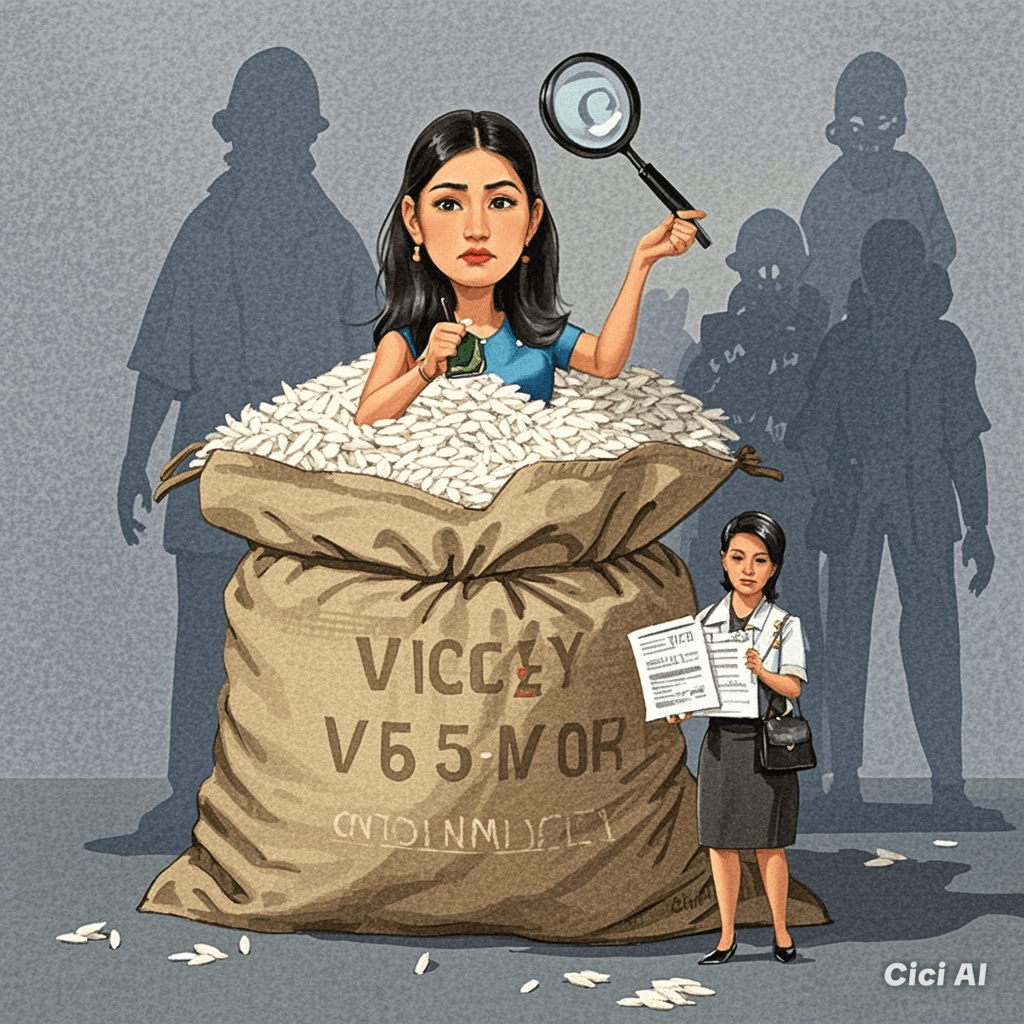
“NEARLY P65 million allocated for welfare goods were improperly liquidated,” a damning report from the Commission on Audit (COA) reveals, raising serious questions about the Office of the Vice President in the Philippines. The COA’s findings point to a potential misuse of funds meant to help the most vulnerable Filipinos, highlighting a troubling lack of accountability in the handling of public resources.
At the heart of the controversy is the fundamental obligation of government agencies to transparently report expenditures, an obligation underlined by Presidential Decree 1445, the State Audit Code of the Philippines. Sections 123 and 124 of this decree mandate the installation of a robust system of internal controls to ensure the reliability of financial reports. These requirements are not optional. They are the backbone of financial integrity, safeguarding public funds from misuse or misappropriation.
Rep. Gerville “Jinky” Luistro, an astute lawmaker known for her legal acumen, pointed out that the OVP failed to submit critical post-activity reports (PARs) verifying the distribution of welfare goods. These reports serve as more than paperwork—they are evidence that the goods reached the intended beneficiaries. Without them, the door opens to the possibility of ghost deliveries, a term dreaded in the annals of public fund mismanagement. Luistro’s suspicion is not far-fetched. The absence of documentation, the improper handling of supplies, and the COA’s findings suggest that the OVP did not fully adhere to the internal control mechanisms required by law.
The COA’s position is clear: the OVP’s liquidation of supplies—rice sacks, food packs, and PanSarap buns—was inadequately documented. This is a direct violation of the principles outlined in Presidential Decree 1445. The internal control failures outlined in Section 123, which mandates a coordinated method to protect public assets, and Section 124, which places responsibility on the agency head to install these controls, show a glaring lapse in the OVP’s financial management. In failing to submit the PARs, the OVP undermines the principles of accountability and transparency that are the foundation of ethical governance.
Championing Transparency: Why COA and Luistro’s Findings Matter
COA’s insistence on proper documentation is rooted in sound legal precedent. The case of Presidential Commission on Good Government (PCGG) v. Sandiganbayan (GR No. 151809, April 12, 2005) sets a vital standard for transparency in government transactions, emphasizing that public officers must be able to account for every peso spent. Similarly, the Tan v. COA decision (GR No. 137156, February 21, 2000) underscores the necessity of a well-documented audit trail. Luistro’s concerns are further bolstered by Republic Act No. 3019, the Anti-Graft and Corrupt Practices Act, which prohibits the approval of projects without sufficient transparency or oversight.
The proper liquidation of funds is not a matter of administrative convenience—it is a legal imperative. The COA has, in previous rulings, emphasized that without proper documentation, government transactions can be rendered invalid, and the public officials involved can be held administratively or even criminally liable for technical malversation under the Revised Penal Code.
OVP’s Counterpoints: Examining the Defense Against the Allegations
The OVP, for its part, argues that there was no improper liquidation, stating that the PARs were attached to the liquidation of the cash advances rather than the liquidation of the supplies themselves. While this may suggest a procedural misunderstanding rather than intentional malfeasance, it does not absolve the OVP of responsibility. The law, after all, requires precision in the reporting of both cash advances and the distribution of supplies.
OVP spokesperson Michael Poa contends that the COA did not request additional copies of the PARs because distribution lists, signed by beneficiaries, had already been provided. This defense invokes Section 4 of Republic Act 6713, the Code of Conduct and Ethical Standards for Public Officials and Employees, which promotes transparency and honesty in public transactions. However, the COA’s position remains strong: PARs are the formal document required to verify the distribution of welfare goods, and their absence still constitutes an improper liquidation under the audit code.
An Objective Review: Evaluating the Case with Impartiality
From a legal standpoint, the OVP’s defense appears weak. The argument that the PARs were misfiled does not negate the requirement for proper documentation. The burden of proof rests on the OVP to demonstrate that these funds were used as intended, with the requisite reports to verify it. The failure to follow internal control mechanisms, as mandated by Presidential Decree 1445, leaves the OVP vulnerable to sanctions. Moreover, the potential for ghost deliveries casts a shadow over their credibility. While no evidence has yet surfaced to definitively prove this, the absence of documentation raises enough suspicion to warrant further scrutiny.
The Cost of Missteps: Legal and Political Repercussions Explored
Should the allegations be proven, the repercussions for Vice President Sara Duterte and her office could be severe. Administratively, the COA could issue a notice of suspension, halting the OVP’s operations related to these funds until proper documentation is submitted. The implications could escalate, with the OVP potentially facing charges of technical malversation, as outlined in Article 220 of the Revised Penal Code, which criminalizes the improper application of public funds. Such a charge could lead to imprisonment and fines for those found guilty.
Politically, the OVP’s reputation is already on the line. Public trust, once eroded, is difficult to restore. The opposition could leverage this issue, calling for legislative investigations or even impeachment proceedings under the grounds of betrayal of public trust—a possibility, though remote, in a country where accountability in high office is often murky.
Recommendations
To avoid these dire outcomes, Vice President Duterte must take immediate steps to rectify the situation. First, her office should submit all missing documentation and implement stronger internal controls to prevent future issues. The COA, for its part, should pursue a thorough investigation, holding the OVP accountable while providing guidance on compliance with audit requirements. Finally, Rep. Luistro’s call for the Department of Social Welfare and Development (DSWD) to oversee the welfare distribution programs holds merit. The DSWD, with its expertise in community service, is better equipped to manage these initiatives, ensuring that they are conducted transparently and efficiently.
As this scandal unfolds, it is a stark reminder for the Filipino people: vigilance and accountability must be our guiding principles. Every peso mismanaged is not just a failure of governance but a betrayal of public trust. In an era where transparency is paramount and every action scrutinized, the OVP’s predicament challenges the very essence of institutional integrity. The future of Philippine governance hinges on how decisively and transparently we address these issues—our commitment to the law will be tested like never before.

- Andres Heralds DoJ’s Transformative Justice

- Sailing to New Horizons: PEZA Sets Ambitious PHP250-B Approval Target for 2024

- Panga’s Bold Vision: The Paradigm Shift of Iwahig Mega Economic Zone

- Panga’s Pragmatic Approach to Sino-Philippine Investments

- The Shadow Over Manila

- Shadow of the Red Notice: Remulla hunts down Teves

- Frozen Enigma: NBI Bacolod’s Tussle with Darkness

- Quiboloy’s Supreme Court Shenanigans: A Pathetic Attempt to Dodge Justice

- RP’s cunundrum: A pawn in the SCS geopolitical chessboard

- Macapagal Leads: Navigating Relocation Challenges


 KWEBA ni BAROK
Leave a comment