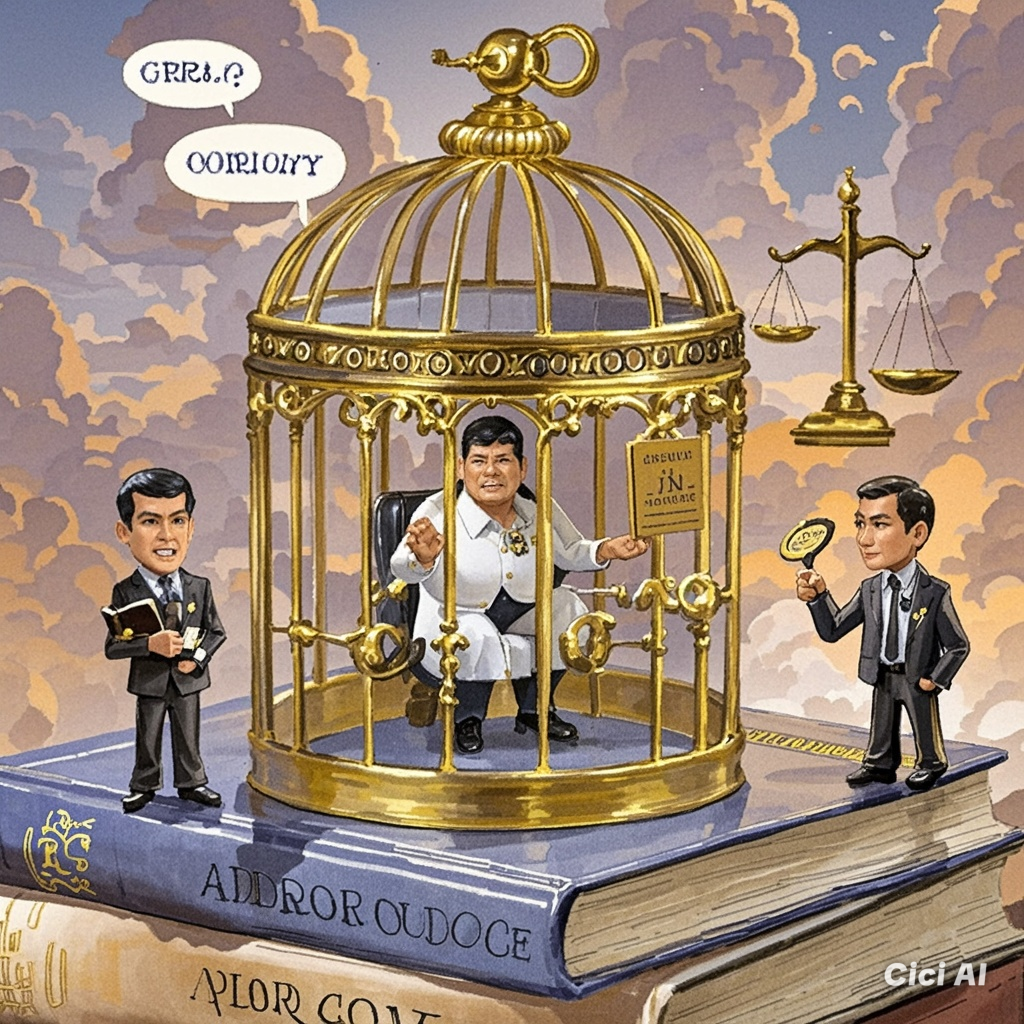
By Louis ‘Barok‘ C. Biraogo — September 13, 2024
WHAT happens when a former president becomes entangled in the web of a fugitive’s escape? Rodrigo Duterte’s deep connection to Pastor Apollo Quiboloy—accused of child abuse and human trafficking—places him in hot water. As the administrator of Quiboloy’s properties, Duterte faces growing allegations from lawmakers accusing him of complicity in hiding the embattled church leader. Now, the public is left to wonder: How far does Duterte’s loyalty to his spiritual advisor really go?
This commentary analyzes the legal responsibilities Duterte may have as the administrator of Quiboloy’s properties and evaluates the case’s strength based on Philippine law and precedents. We will also assess the potential legal consequences for Duterte and his available legal options.
Contextual Background of the Controversy
Duterte and Quiboloy’s relationship is not merely professional; Quiboloy has long been regarded as Duterte’s spiritual adviser. This close bond has made the controversy surrounding Quiboloy’s fugitive status even more politically charged. In March 2024, Duterte was appointed as the administrator of Quiboloy’s estate, including the KOJC compound in Davao City. When authorities arrested Quiboloy in the same compound, questions arose about whether Duterte knowingly provided him refuge, especially given the controlled nature of access to the compound.
Rep. Chua and Rep. Bongalon argue that Duterte’s role as the estate administrator places him in a position where he had both the knowledge and control to prevent Quiboloy from using the KOJC compound as a hideout. Both solons assert that Duterte could be liable for “harboring a fugitive” and possibly be considered an accomplice under the law.
The Case Against Duterte: Arguments Supporting Chua and Bongalon’s Assertions
1. Harboring a Fugitive (Revised Penal Code, Art. 151):
- Philippine law defines harboring a fugitive as knowingly concealing or assisting a person evading arrest. By virtue of his role as the administrator of the KOJC compound, Duterte had control over access to the premises. Rep. Chua’s argument is that Duterte cannot claim ignorance of Quiboloy’s presence, especially since the compound is a controlled area. Art. 151 of the Revised Penal Code imposes penalties on those who assist in concealing a fugitive, which, in this case, could apply to Duterte if it is proven that he knowingly allowed Quiboloy to evade arrest.
2. Accomplice Liability (Revised Penal Code, Art. 18):
- An accomplice is defined as one who, while not directly committing a crime, cooperates in its commission by previous or simultaneous acts. Rep. Bongalon argues that Duterte’s role as the estate administrator makes him complicit in harboring a fugitive. Bongalon further points out that Duterte, as a lawyer and officer of the court, should have a heightened awareness of the law and its violations. Under Art. 18 of the Revised Penal Code, Duterte could be held as an accomplice if it is proven that he knew of Quiboloy’s fugitive status and still allowed him to take refuge at the KOJC compound.
3. Professional Responsibility and Disbarment:
- As a member of the Philippine Bar, Duterte is bound by the Code of Professional Responsibility, which obligates lawyers to uphold the law and refrain from actions that obstruct justice. If evidence shows that Duterte deliberately helped Quiboloy evade the law, he could face disbarment under Rule 1.01 of the Code, which prohibits lawyers from engaging in unlawful, dishonest, immoral, or deceitful conduct. Bongalon’s assertion that Duterte could face disbarment is supported by precedent, such as the case of In re: Aliposa, where a lawyer was disbarred for obstructing justice.
Debunking the Claims: Counterarguments Against Chua and Bongalon’s Assertions
1. Lack of Direct Evidence of Knowledge or Intent:
- Duterte’s defense could argue that being the administrator of Quiboloy’s properties does not automatically imply that he was aware of Quiboloy’s presence or that he had any intent to harbor him. Under the Revised Penal Code, criminal liability for harboring a fugitive requires actual knowledge of the fugitive’s status and deliberate assistance in concealing the individual. Without concrete evidence proving Duterte’s knowledge of Quiboloy’s hiding within the compound, any charges of harboring may be difficult to sustain.
2. No Clear Act of Assistance:
- Being the administrator of a property, while implying responsibility for the property’s operations, does not necessarily mean that Duterte played a role in actively assisting Quiboloy’s evasion of arrest. As seen in cases such as People vs. Agustin, mere association with a fugitive does not constitute harboring unless there is proof of specific acts of assistance in avoiding arrest.
3. Political Motivation Behind the Accusations:
- Duterte’s camp may argue that the calls for investigation are politically motivated. Given his influence and past presidency, the allegations may be viewed as an attempt by his opponents to undermine his legacy. This defense has been used in previous politically charged cases, such as People vs. Jalosjos, where political bias was cited as a factor influencing the case’s outcome.
Legal Consequences for Duterte
If the allegations against Duterte are proven, the following legal consequences could arise:
- Criminal Liability (Art. 151 and 18, Revised Penal Code): Duterte could face imprisonment for harboring a fugitive or aiding and abetting Quiboloy’s evasion of law enforcement.
- Disbarment: Duterte could lose his legal license, which would tarnish his professional reputation significantly.
- Political Fallout: Even if Duterte avoids criminal conviction, the damage to his reputation may be irreversible, affecting his future political ambitions and diminishing his legacy.
Duterte’s Legal Recourse: Options for Addressing the Allegations
1. Claim Lack of Knowledge:
- Duterte can argue that he was unaware of Quiboloy’s presence in the compound, shifting the burden of proof to the prosecution to demonstrate that he had actual knowledge of Quiboloy’s fugitive status.
2. Challenge the Definition of Harboring:
- Duterte could challenge the interpretation of the harboring law, arguing that his role as an estate administrator does not equate to intentionally concealing a fugitive.
The Legal Ramifications: Duterte’s Potential Liability
If the allegations against Duterte are proven, the following legal consequences could arise:
- Criminal Liability (Art. 151 and 18, Revised Penal Code): Duterte could face imprisonment for harboring a fugitive or aiding and abetting Quiboloy’s evasion of law enforcement.
- Disbarment: Duterte could lose his legal license, which would tarnish his professional reputation significantly.
- Political Fallout: Even if Duterte avoids criminal conviction, the damage to his reputation may be irreversible, affecting his future political ambitions and diminishing his legacy.
The Law and Duterte: Exploring Legal Recourse
1. Claim Lack of Knowledge: Duterte can argue that he was unaware of Quiboloy’s presence in the compound, shifting the burden of proof to the prosecution to demonstrate that he had actual knowledge of Quiboloy’s fugitive status.
2. Challenge the Definition of Harboring: Duterte could challenge the interpretation of the harboring law, arguing that his role as an estate administrator does not equate to intentionally concealing a fugitive.
3. Invoke Political Immunity: While Duterte no longer holds office, he may attempt to argue that the case is politically motivated and aim to discredit the legitimacy of the investigation.
Recommendations
For Chua and Bongalon:
They should gather substantial evidence demonstrating Duterte’s knowledge of Quiboloy’s fugitive status and his active role in harboring him. Given the legal hurdles in proving intent, focusing on circumstantial evidence, such as communications between Duterte and Quiboloy during the period in question, will strengthen their case.
For Duterte:
Duterte should assert his defense vigorously, emphasizing the lack of direct evidence of his knowledge of Quiboloy’s presence. Additionally, seeking to frame the accusations as politically motivated may shift public perception in his favor.
Conclusion
As the legal spotlight shines on Duterte, the complexities of the case underscore a larger question: Can personal loyalty blur the lines of justice? The allegations against him are weighty, but the burden of proof remains steep. In a case where politics and law intertwine, the truth may not emerge easily. Only time—and the courts—will reveal whether Duterte’s role as Quiboloy’s gatekeeper crosses into criminal territory.

- Andres Heralds DoJ’s Transformative Justice

- Sailing to New Horizons: PEZA Sets Ambitious PHP250-B Approval Target for 2024

- Panga’s Bold Vision: The Paradigm Shift of Iwahig Mega Economic Zone

- Panga’s Pragmatic Approach to Sino-Philippine Investments

- The Shadow Over Manila

- Shadow of the Red Notice: Remulla hunts down Teves

- Frozen Enigma: NBI Bacolod’s Tussle with Darkness

- Quiboloy’s Supreme Court Shenanigans: A Pathetic Attempt to Dodge Justice

- RP’s cunundrum: A pawn in the SCS geopolitical chessboard

- Macapagal Leads: Navigating Relocation Challenges




 KWEBA ni BAROK
Leave a comment