By Louis ‘Barok‘ C. Biraogo — September 13, 2024
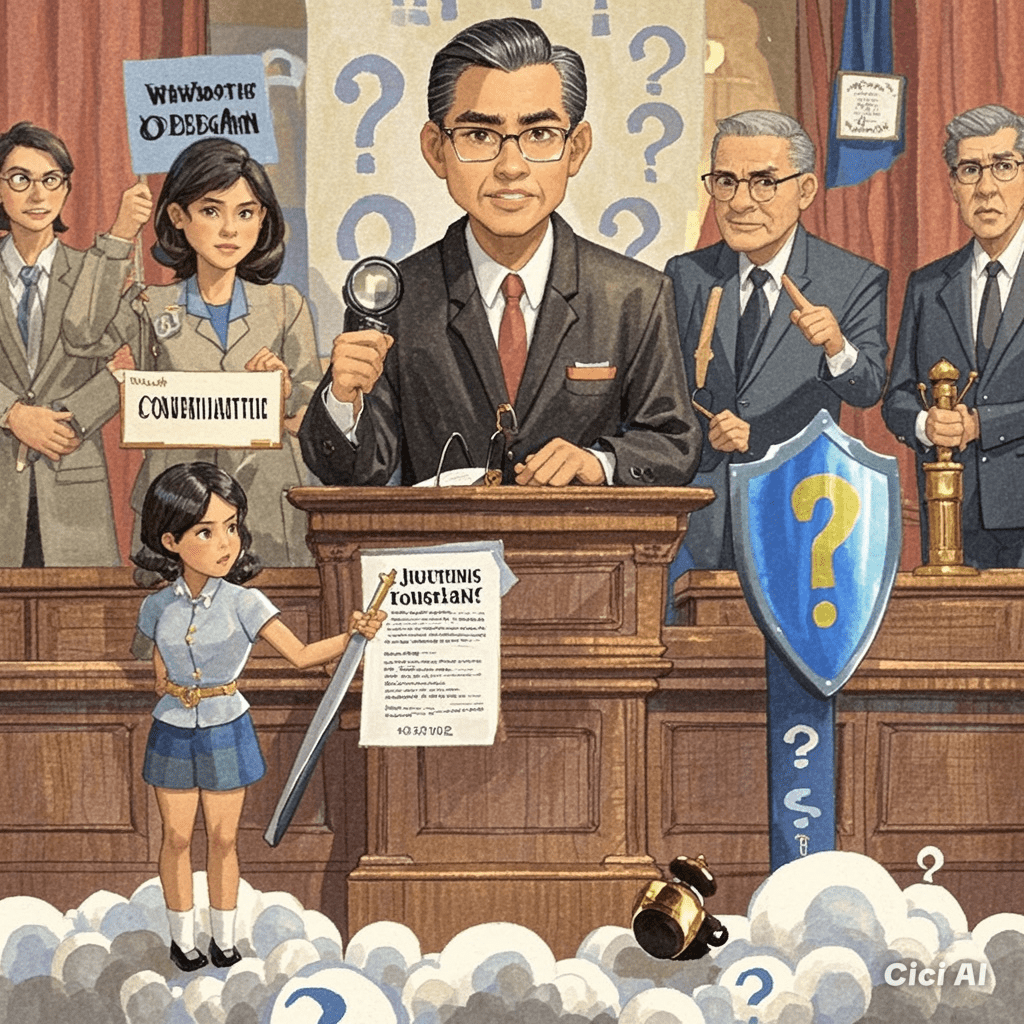
CAN a single woman’s fight to remain silent topple the authority of Congress? Katherine Cassandra Ong, entangled in the shadowy world of offshore gaming, has drawn battle lines with Philippine lawmakers. As she turns to the Supreme Court for protection, the stage is set for a showdown between personal liberty and public accountability.
Background: Topacio, Legislative Overreach, and Ong’s Legal Predicaments
Ferdinand Topacio, a lawyer renowned for representing high-profile figures entangled in legal battles, has often walked a fine line between staunch defense of clients and pushing legal boundaries. His reputation as a tenacious attorney makes him the ideal representative for Ong, who finds herself at the center of a legislative inquiry into illicit activities surrounding the POGO industry.
Ong, as the representative of Lucky South 99 in Porac, Pampanga, is now fighting for her constitutional right to remain silent and avoid self-incrimination during legislative hearings. However, her refusal to fully cooperate with both Senate and House inquiries led to a contempt charge, culminating in her detention after a brief arrest in Indonesia. Legislative oversight, intended to serve the public by holding individuals accountable, has often been criticized for overreach—especially when its proceedings appear more punitive than investigatory. Ong’s petition to the Supreme Court is rooted in her argument that the legislative probes into POGOs, and specifically her involvement, infringe upon her constitutional rights.
Topacio and Ong’s Strategy: Examining Their Key Claims
Topacio has carefully positioned Ong’s case as a constitutional battle. Ong invokes two fundamental protections under the 1987 Constitution:
1. Right to Remain Silent (Article III, Section 12(1)) and
2. Right Against Self-Incrimination (Article III, Section 17).
Ong asserts that these rights are inviolable even in legislative proceedings. Topacio’s main argument is that Ong is willing to attend the hearings as a gesture of respect toward Congress but will invoke her constitutional right to remain silent to prevent self-incrimination. Topacio argues that once this right is invoked, no further questions should be posed to her, and legislative bodies must honor this.
Precedent for this argument can be found in Sabio v. Gordon (2006), where the Supreme Court stated that the right against self-incrimination can be invoked during legislative inquiries when an incriminating question is posed. Additionally, Romero II v. Senate Committee on Labor further cemented that individuals have no duty to pre-emptively cooperate in a manner that would incriminate themselves.
From an ethical standpoint, Topacio argues that legislative bodies are not courts, and their primary function is to create laws, not prosecute individuals. To respect due process and uphold constitutional rights, the legislature must allow Ong to invoke her rights during any potentially incriminating questioning.
The Other Side of the Argument: Counterpoints to Topacio and Ong’s Claims
On the other side, the legislative bodies have a duty to conduct thorough investigations in matters of public interest, particularly when these issues involve potential criminal activity. The Senate and House of Representatives have legislative oversight power as provided by the Constitution (Article VI, Section 21), which allows them to compel testimony and demand accountability. Their argument against Ong’s refusal to cooperate stems from the principle that individuals called before Congress must respond to valid inquiries, even if they involve uncomfortable truths.
Romero II v. Senate Committee on Labor clarified that the right to remain silent and avoid self-incrimination does not provide blanket immunity from testifying. Instead, individuals must respond to non-incriminating questions and invoke their rights only when a specific question risks self-incrimination. The legislative bodies, therefore, argue that Ong cannot preemptively refuse to answer all questions and must respect their investigatory role.
Ong’s previous arrest for contempt and limited cooperation during hearings further strengthens the argument that her petition is a strategic ploy to obstruct the investigation. By refusing to answer key questions, Ong appears to be avoiding accountability rather than legitimately invoking her constitutional rights. Allowing such actions could potentially embolden others to sidestep legislative oversight, undermining Congress’s role in addressing pressing issues like human trafficking and illegal activities tied to the POGO industry.
Weighing the Arguments: Who Holds the Stronger Position?
In this legal clash, the legislative bodies have a stronger argument. The Romero II decision and Senate rules on self-incrimination provide a clear framework: Ong can invoke her right against self-incrimination only in response to specific questions. However, she cannot blanketly refuse to testify.
While Topacio’s defense is rooted in solid constitutional principles, it risks being viewed as an attempt to stonewall legislative probes, especially considering Ong’s ties to serious allegations involving human trafficking and money laundering. The Senate and House, meanwhile, have the constitutional power to investigate matters of public concern, and their argument aligns with legal precedents that limit the application of self-incrimination defenses.
The Fallout: Legal and Political Ramifications
If the Supreme Court rules in Ong’s favor, this decision could significantly weaken the legislature’s ability to compel testimony from individuals linked to criminal activities. The ruling would set a precedent for broader invocation of the right to remain silent, making it more difficult for the Senate and House to fulfill their oversight responsibilities. In politically charged investigations, this could lead to more frequent refusals to cooperate, eroding public trust in legislative inquiries.
Conversely, if the Supreme Court rejects Ong’s petition, it would reaffirm the balance between individual rights and legislative authority. The ruling would underscore that while individuals are protected against self-incrimination, they must still respond to non-incriminating questions. This would likely result in Ong facing further legislative scrutiny, as well as possible criminal charges linked to the ongoing POGO investigations. Politically, it would enhance the legislature’s role as a watchdog, ensuring transparency and accountability.
Recommendations
For Ong and Topacio, they must consider partial cooperation, answering non-incriminating questions while carefully invoking the right to remain silent when necessary. This strategy would both honor Ong’s constitutional rights and mitigate the perception that she is deliberately obstructing the investigation. Additionally, seeking a compromise where her testimony is given in closed sessions may alleviate her concerns about public shaming while still fulfilling her legal obligations.
For the legislative bodies, they should continue respecting constitutional rights but maintain pressure on Ong to provide relevant testimony. To ensure that future investigations are not bogged down by similar petitions, the legislature should clarify the rules surrounding the invocation of the right to remain silent in legislative proceedings, ensuring a fair but firm investigatory process.
As the Supreme Court weighs its decision, the outcome will either fortify or challenge the very pillars of democracy and justice in the Philippines. This case will not only decide the future of legislative oversight but will also leave an indelible mark on how the nation defines its fundamental rights and freedoms.
- “Forthwith” to Farce: How the Senate is Killing Impeachment—And Why Enrile’s Right (Even If You Can’t Trust Him)
- “HINDI AKO NAG-RESIGN!”

- “I’m calling you from my new Globe SIM. Send load!”

- “Mahiya Naman Kayo!” Marcos’ Anti-Corruption Vow Faces a Flood of Doubt

- “Meow, I’m calling you from my new Globe SIM!”

- “No Special Jail for Crooks!” Boying Remulla Slams VIP Perks for Flood Scammers

- “PLUNDER IS OVERRATED”? TRY AGAIN — IT’S A CALCULATED KILL SHOT

- “Several Lifetimes,” Said Fajardo — Translation: “I’m Not Spending Even One More Day on This Circus”

- “Shimenet”: The Term That Broke the Internet and the Budget
- “We Did Not Yield”: Marcos’s Stand and the Soul of Filipino Sovereignty






 KWEBA ni BAROK
Leave a comment