By Louis ‘Barok’ C Biraogo — September 14, 2024
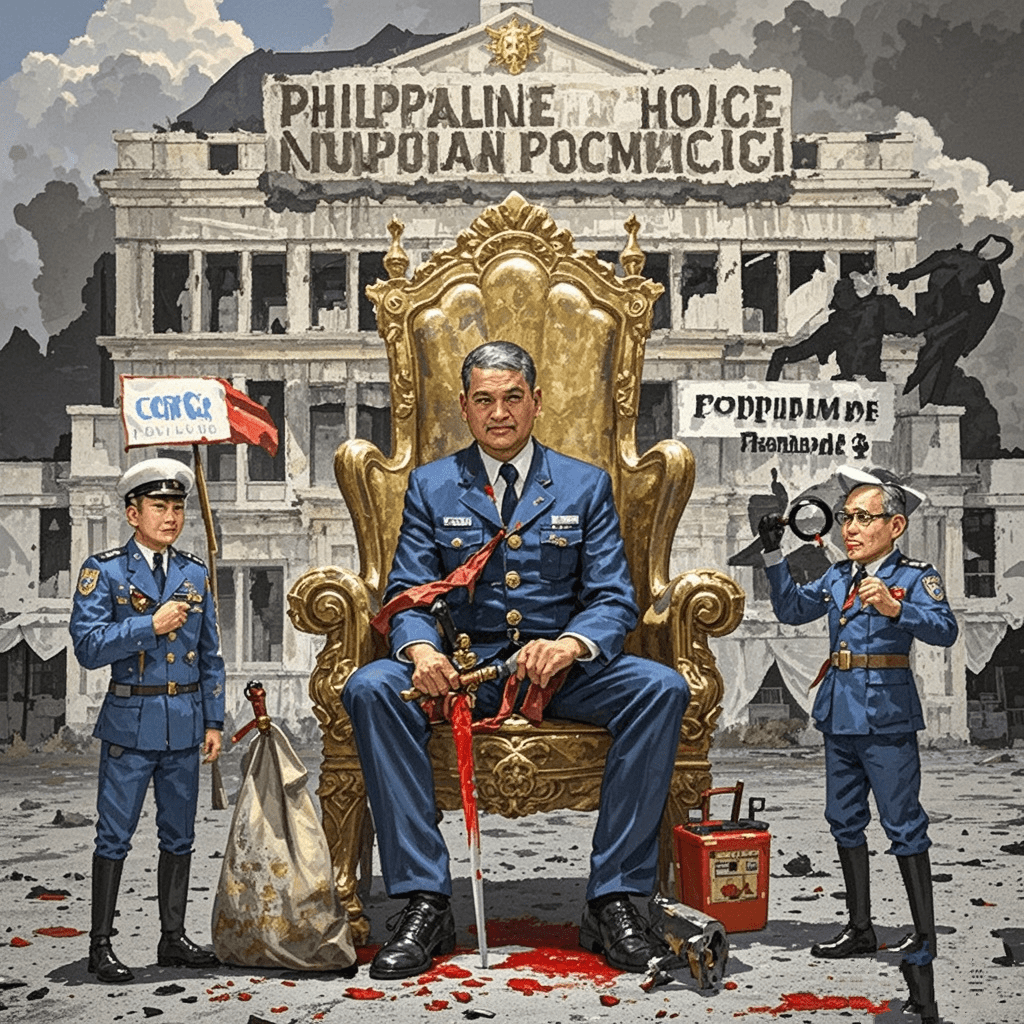
DID a single police memo unleash a wave of extrajudicial killings? The Philippine war on drugs—an endeavor launched with intense fanfare by President Rodrigo Duterte—has drawn scrutiny for its brutal methods and opaque governance. Central to this campaign is the Philippine National Police’s Command Memorandum Circular (CMC) No. 16-2016, issued under the watch of then PNP chief, now Senator, Ronald “Bato” dela Rosa. Human rights lawyer Chel Diokno has called on the House of Representatives to probe this crucial document, arguing that the language of “neutralization” and “negation” may have been interpreted by police as a license to kill. This, he claims, sits at the heart of the thousands of extrajudicial killings tied to Duterte’s drug war.
As the House continues to examine the layers of the drug war, Diokno’s voice stands out, urging not only accountability but also robust reforms. His proposals—a Death Investigation System Law, a PNP Discipline Act, and the requirement of clearance from the Commission on Human Rights (CHR) for police promotions—aim to rectify the systemic abuses and lack of accountability that have come to define this campaign. But are these reforms feasible in the current political climate? Are they enough to foster real change?
The Language of Death: “Neutralization” and “Negation”
CMC No. 16-2016’s ambiguous language—particularly the terms “neutralization” and “negation”—is at the center of the controversy. Historically, these terms in law enforcement parlance often refer to the use of lethal force. The circular outlines the PNP’s “Double Barrel” campaign, detailing the eradication of drug suspects as a key operational goal. Diokno contends that this language has been weaponized to justify extrajudicial killings. In fact, testimonies from officers like Police Lt. Col. Jovie Espenido suggest that these terms were broadly interpreted as calls to eliminate suspects “by all means,” including killing. This interpretation has tragically transformed communities across the Philippines into battle zones.
The circular’s issuance one day after Duterte’s inauguration signaled a seismic shift in how law enforcement viewed its mandate: no longer was it simply about arrest and charge; it had become an all-out war on drug suspects. The “tokhang” operations—house-to-house visits that often ended in death—quickly became notorious.
Diokno’s Call for Reform
Chel Diokno has long stood as a legal bulwark against authoritarianism. A staunch advocate of transparency and human rights, he has been one of the few who continuously challenged the Duterte administration’s excesses. His call for the House to investigate the underpinnings of the drug war offers a critical turning point: instead of focusing on individual actors, Diokno urges lawmakers to scrutinize the policy framework that allowed abuses to flourish.
Diokno’s proposals are significant in their scope:
- A Death Investigation System Law: Diokno suggests a comprehensive law that would require autopsies for all individuals killed under suspicious circumstances. The law would establish an independent crime and forensic laboratory free from PNP influence. This would reduce the ability of police to manipulate or obscure investigations, ensuring more objective analyses of suspicious deaths.
- A PNP Discipline Act: The current disciplinary system within the PNP is, in Diokno’s words, overly complicated. His proposed act would streamline internal accountability mechanisms, addressing the culture of impunity that has permeated the police force. It would hold officers accountable for misconduct, preventing the blatant disregard for human rights that characterized the drug war.
- CHR Clearance for Promotions: Perhaps the most innovative of Diokno’s suggestions is to require officers to seek clearance from the Commission on Human Rights before they can be promoted or appointed to senior positions. This would create an additional layer of accountability, ensuring that officers with questionable human rights records cannot easily ascend through the ranks.
Can Diokno’s Reforms Work? An Assessment of His Proposals for Change
To assess the viability of these reforms, we must consider their feasibility, acceptability, and potential for creating long-lasting change.
- Feasibility: Requiring CHR clearance for police promotions is likely the most challenging aspect of Diokno’s proposals, as it would face stiff resistance from law enforcement and likely from political figures aligned with Duterte. However, a Death Investigation System Law and a PNP Discipline Act are more feasible within the current legal framework, though they would still require significant political will.
- Acceptability: These proposals align with the growing clamor for accountability in the aftermath of Duterte’s drug war. However, getting buy-in from police institutions, which have long operated with minimal oversight, may prove difficult. The idea of independent oversight, particularly by the CHR, is likely to be met with opposition from the PNP.
- Suitability: The reforms are suitable to address the primary concerns of impunity and lack of accountability. The Death Investigation System would directly tackle the problem of falsified or incomplete investigations, while the PNP Discipline Act would streamline mechanisms to discipline rogue officers. The CHR clearance would ensure that human rights remain a central consideration in policing.
- Results: If implemented, these reforms would lead to more transparent investigations and an increased sense of accountability within the police force. However, the results would depend on the consistent enforcement of these reforms and the broader political will to change the culture within the PNP.
- Flexibility: The proposed reforms are relatively flexible and could be adapted to evolving political and social contexts. A strong legal framework, combined with mechanisms for review and adjustment, would allow the laws to remain relevant in the face of changing challenges.
- Innovation: The CHR clearance proposal is a particularly innovative approach, pushing the boundaries of what police accountability can look like. It introduces a third-party oversight mechanism that could become a model for other countries grappling with police abuses.
- Sustainability: While the Death Investigation System and PNP Discipline Act are sustainable through regular government funding, the CHR clearance process would require a robust CHR that is well-funded and autonomous, both of which are difficult to guarantee in the Philippines’ current political climate.
- Alignment with Values: Diokno’s reforms are firmly aligned with values of transparency, human rights, and accountability—values that were largely sidelined during the Duterte administration.
- Communication: Effective communication would be essential to build public support for these reforms. Diokno’s reputation as a champion of human rights gives him credibility, but sustained media campaigns and public advocacy would be necessary to convince lawmakers and the general public of the importance of these measures.
- Learning: Implementing these reforms would require an ongoing process of learning and adaptation. Regular reviews of their effectiveness, as well as openness to adjusting the laws based on new developments, would ensure their long-term success.
The Path Forward
The ongoing investigation into the Duterte drug war is an opportunity for the Philippines to confront the darkness of its recent past. Chel Diokno’s proposals offer a roadmap for a more accountable, transparent, and human rights-centered future. However, implementing these reforms will require courage from lawmakers, resilience from human rights advocates, and unwavering commitment from the public.
The time for accountability is now. The House must not only investigate the violence but also address the policies that fueled it, ensuring they can never be used again. The question is whether the country is ready to confront its legacy of impunity and commit to a future where justice prevails.

- Andres Heralds DoJ’s Transformative Justice

- Sailing to New Horizons: PEZA Sets Ambitious PHP250-B Approval Target for 2024

- Panga’s Bold Vision: The Paradigm Shift of Iwahig Mega Economic Zone

- Panga’s Pragmatic Approach to Sino-Philippine Investments

- The Shadow Over Manila

- Shadow of the Red Notice: Remulla hunts down Teves

- Frozen Enigma: NBI Bacolod’s Tussle with Darkness

- Quiboloy’s Supreme Court Shenanigans: A Pathetic Attempt to Dodge Justice

- RP’s cunundrum: A pawn in the SCS geopolitical chessboard

- Macapagal Leads: Navigating Relocation Challenges



 KWEBA ni BAROK
Leave a comment